
My House
/
By Andleeb Shadani
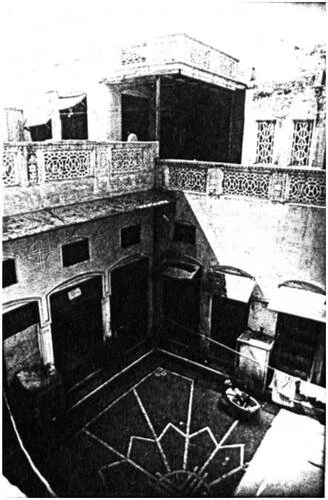
I still remember that house. A grand palace, like a child’s dream, with endless doors and corridors, no shadows, no screams. It was once a bustling house, and we all lived there, our Grandpa Nawab Kaleem, his many brothers, and their infinite children, and the ghost of his ancestors. It was once a rose garden, now a dried rose, in some forgotten book of a closed library. The house, now in ruins, will soon be demolished. And then it would become a memory. ‘The house would then remain only inside the heads of those who lived there’, said Maman. ‘But what would happen to the house when we all die?’ ‘Then it will exist in the dreams of the dead.’
What happens to a memory when we die? Or as the Austrian Psychoanalyst Sigmund Freud asked, ‘Where does a thought go when it is forgotten?’ Well, to tell frankly, I don’t know. All I know is the memory of that house, which is now in ruins, like my Grandpa’s corpse. Please give him a funeral. I loved him a lot, as I loved Sigmund Freud. My Grandpa looked like Sigmund Freud. I love everyone who looks like my Grandpa. Maman never liked Sigmund Freud. She didn’t like anyone who looked like Grandpa. She is haunted by the memory of my childhood house, she had hired masons to demolish it inside our heads.
We left Lucknow after India’s partition. And then a border was created that we could never cross. Though the house was away from us. We still lived inside, inside the house, which was still inside our heads. It wasn’t always a house in ruins. It was a house where humans lived, my family lived, and my old Grandpa died. I still remember that house, the house of my childhood, like a young boy who remembers the first kiss he got in the vacant class after school was over. And the sound of the footsteps of his lover, as she ran outside. She is still trying to run outside, the boy is still standing there, smiling, caressing his cheeks on a loop. We don’t live in houses, we live in the memory of houses, that don’t exist anymore, schools, now graveyards, the whole city is dead, even the ghosts, resurrected, and then crucified again. We live inside a past that was never there, a memory that was forgotten, replaced by alternate memories, houses by alternate dwellings, women by another women, having the same face, we love a face, an old house. I wish I was an old house, without doors and windows, those who lived inside me, could never go outside, like characters in a Velazquez painting, we would have played hopscotch on my roof, in those almirahs we have hidden playing hide and seek, I wish I had held your hand for a minute longer, two days, cold hands, like the hands of a newly dead girl, I want to kiss them, please put your hands inside my coat’s pocket, please knock on my door one more time, even if I am a house, without a door, please knock and stay for two minutes, two days, I know you are there, behind that door, I wish I could have said how I much loved you Mahdia, your hand is still inside my red blazer’s pocket, the sound of that knock echoes inside my head, like the wails of a possessed woman, inside that empty tomb, like beating of empty drums inside a city, where no one is alive to observe Muharram anymore, a crowd of black ghosts, I see the taziyas and the alams, I see that woman whom I loved, inside that taziya, a mosaic of mirror, a wound of lifetime.
I can still see that house, also. It’s there, very much alive in a corner of my head. I can see, feel, and run inside like a little thief. I can see it like I can see the two moons in the sky. I can feel it, like the wrinkled hand of Grandpa, which I kissed when he died. The touch of which I will never forget, like the memory of that house, which now exists in my head only.
I remember that house, my cradle. Those chandeliers, like a young bride’s necklace, her mother sold her dreams and body, so that her daughter could get married to a King. The house was lit, like a young bride’s eyes. In those days, it was black, like an old man’s desires. The house was always black except for some time during the day. The house had infinite rooms adjacent to each other. There was always some construction going on, you could hear the sound of the chisels, the large shadows of the masons, the lighting of cheap cigarettes, their whispers like young lovers, but no one saw their faces or that whole vast house. There was an array of rooms, always closed, like rooms inside a painting. Our ancestors were buried inside our house. It was less of a house and more like a graveyard.
Some rooms were open, but most of them were always closed. Some new rooms were always being constructed, the masons would take our sizes, like tailors on the eve of Eid, Mahdia said she wanted a grave full of roses, I wanted a grave beside her, in death we would be neighbors, resurrected we will make a house for us alone, a house without doors, only for lovers, you can’t leave me, no more. Please don’t go, please don’t take off your hand from my coat, I am feeling cold, like furniture inside houses, where no one lives anymore.
The house was always black except for some time during the day. When it was filled with fading sunlight and geometric shadows. There was no electricity. The rooms were lit with little candles, which were kept inside glass vessels of an old chandelier. Every day, it was Maman’s duty to light the candles exactly at dusk. She would do it even when she was sick. She asked me to do it once, but I broke the vessel. Papa was angry. He cried at Maman. ‘How could you be so careless?’ Papa said the breaking of a glass vessel brought bad luck. He remembered when he was four years old, and his mother had accidentally broken a glass vessel. They cried the whole night and asked God’s forgiveness. He knew someone was going to die. And then Grandma died.
That dusk when the glass vessel broke, Papa was in tears. His father was sick. He knew he would die. He cried like a little child whose toy had been stolen. We heard his sobs. No one lit the candle. Maman said he is crying because he is scared that God will take his life, and not his father's? But that very dawn, we heard a long sigh. Like the coming of the wind when someone opens an old window of a locked house. Grandpa was dead. His mouth was closed, but his eyes were open. I knew he wanted to have a last look at the house where he died. Like lovers on a railway platform looking at each other, for one last time, they know they will forget each other’s face in a day or two.
The house transformed when Mahdia was born. Little Mahdia, my cousin, my friend. I still remember those cold winter afternoons when I and Mahdiya would roam around the city, looking at the ruins of houses, the rose gardens, with no roses, or any traces of trees, the fallen palaces, like the corpse of an angel, closed shops, the names of owners written on dirty white marble with black ink, we would read the names, and we would see the family seated on a dastarkhwan, looking at us, as if we were going to click their picture. Whenever we looked at the house, we knew what was there before, and before, and before. Every house in the city transformed as time progressed. Even our own house. Now there were fewer glass vessels and more new lanterns. The lanterns didn’t fall and break. Papa knew if another glass vessel broke, he would die. I still remember those nights when Papa was away for work. I and Mahdia would roam around the house with the lantern in our hands. We would look at those old paintings. The landscapes with a ship sailing near the horizon. I had never seen the sea. Nor a ship. Maman’s father was a sailor. She had seen the sea once when she had gone with her mother to bid her father farewell. Maman hated the sea. And the ship. She said you can either live on land or the sea. Those who live or the sea never come back. Like her old father. Whose ghost still wanders over an unknown ocean, like an albatross, looking for the ship from which he fell.
Maman doesn’t like those paintings. She never looks at them. She can’t sleep. She sees nightmares. Of her death. They were all scared of death. Maman, Papa, Grandpa, and even little Mahdia. But they all died slowly, one after the other, like leaves falling from an old Cedar tree. They all died on their own. Believe me, no one broke a glass vessel. They all died like that house of my childhood, which is now in ruins. I saw their corpses, cold and untouched. Like the dead body of a sick man kept inside a house for prayers. Like the corpses inside those houses, where there is never any funeral.
I forgot everything. Slowly, silently. How long can anyone keep the memory intact? It’s like keeping a plucked rose fresh, no, you can’t, it would lose the smell in a day, and then dry like those dry roses, you accidentally discover in books bought from thrift markets, they dry, then they die, and then the ghost of the rose comes back.
I forgot everything slowly and silently. The touch of my Grandpa’s dead hand. The sound of Mahdia’s laughter. Maman’s whispers. And Papa’s late-night sobs, ‘God please help me become a poet like Cavafy.’ I forgot their faces, those landscapes, the painting of that ship from which Maman’s father fell and died. What I didn’t forget or would never forget is the memory of that house—the ruins of my childhood. I still remember it very clearly like a sailor remembers the sea, even if he hadn’t been there for 47 years. I remember the house and the many houses that existed inside it, like seeds of a pomegranate fallen from heaven. I remember all those rooms(which got changed over the years), the old dining table made of teak(Maman’s dowry gift) under which I once kissed Mahdia’s sweaty palm and then wrote my name, the old damp walls where Papa’s portrait hung when he was a young poet, the black soot on the kitchen’s chimney, the lizards which became black over time. Everything is there in my head, and no one to disturb their ontology. Like the remains of a nightmare. I still remember that house. My house, my ruins. And that city. And that weather. And all those dusks. And the long nights. The sound of the crickets. The yellow light of candles. The ghost of the chandelier. The essence of the camphor, when Grandpa died. The washing of the corpses. The water over my body. The fragrance of Mahdia. I remember them all. Except for those faces, those men and women who slowly died-like that house in ruins. Maybe one day I will forget the memory of that house like one forgets a childhood dream. Where would that house go, then? In whose head? Who would dream of that house? Maybe my dead ancestors. Grandpa, who now must be a skeleton in his grave. My parents, God knows where they are buried. Or little Mahdia. Who must be still young in her grave? Young like a newly blossomed rose. Or her stepfather, who loved her. He would keep the memory of the house in his dirty pocket amid a crowd of orange candies, coins, and crumpled cigarettes. Mahdia doesn’t want him to keep the memory of the house. She hated him. But he loved her. Mahdia couldn’t understand why he loved her when he was married to her mother. He said, ‘She was beautiful like morning roses.’ Mahdia’s face would twitch. She cursed herself when someone said she was beautiful, especially the man whom her mother loved madly. He said that when she became a grown-up woman, he would marry her. Mahdia would run inside the house and hide under the dining table. Some afternoons he would make love to her, she didn’t like it, like I didn’t liked the taste of those cough syrups, sometimes she would cry, even today when you would pass through that house if that existed you would hear her cry, like we heard the cry of that girl, who was married to an old man belonging to the family of kings, we used to hear the cry from that locked house, though the old man and the young girl had died long ago. Old men die, even young girls, houses also die, after a time, first they get abandoned, families leave, how long can one love in a falling city, families leave, and the houses become ruins, some gets demolished, even after a house gets demolished and a shopping center or a cinema hall is erected over it, even then you could hear the sound and voices of those who used to live inside. A man knocking on the door, children playing over the roof, a maid cutting onions in the kitchen for a dinner of the family that is now dead. Everyone dies, Mahdia also died. One night, her mother poisoned her bedtime milk. And then by the morning, she was lifeless, pale, and cold, like a plastic rose.
Mahdia is gone, and also that house, where we kissed and played. I can’t remember her face, but can see that house, and her footsteps, little children running over my grave. It’s still there very much alive in a corner of my head. I can see, feel, and run inside like a little thief. I can see it like I can see the two moons in the sky. I can feel it, like the wrinkled hand of Grandpa which I kissed when he died. The touch of which I will never forget like the memory of that house which now exists in my head only.
Mahdia is dead. And so are others. Who is going to lament for that house now? Maybe no one. And then it will be forgotten like all other things, like those faces, smells, kisses, and old memories. No one would think of it. No one would cry for it. My old house, my ruins beyond that barbed border, like thorns or dead roses, would stay untouched, covered with large grasses and dirty cobwebs, a handful of tears, a fistful of memories. It would get demolished in reality, it would get resurrected inside a dream of a dead girl.
Andleeb Shadani (mshadani@gmail.com) is a poet, essayist, and short story writer. His works have appeared in EPW, Salt Hill Journal, The Rumpus, Waxwing, CriticalMuslims, among others. He is working on a collection of stories, My House, My Ruins. He is also the winner of Washington Square Review's New Voices Award, 2025.