Postcard from... Koh Kret

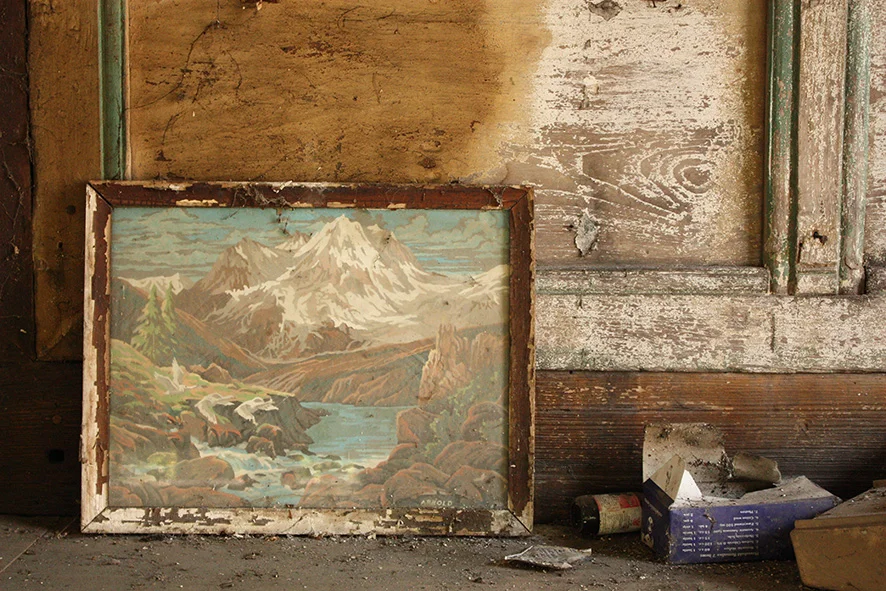
The house was abandoned, with objects strewn across the dusty wooden floors, but they offered clues as to those who once lived there. This island, Koh Kret, was once a bend in the Chao Phraya River before a canal was built as a shortcut for boats in 1722, separating it from the mainland. Mon people settled here and today Koh Kret is still known for the Mon style pottery produced there as well as  several temples, including one next door to the house. Had this been the home of monks? It seemed that way, based on the things we found as we picked our way over the open terrace in the middle of this traditional Thai style house.

One object in particular caught our eye; a mountain scene, the peak high and snowy, looking down on a lake. Rocky paths, leading from the shore up towards the summit. Where was it? Certainly not Thailand… We tried to imagine the person that once looked upon this painting. Where had he got the painting from? How did it make him feel? Why hadn’t he taken it with him when he left? But we had no access to him, or any of them who had once called these ruins home. Any stories we could pull from the wooden walls were only those of the imagination, pieced together with what had been left behind. The next time we came to the island we resolved to find out more, but the house had gone. It had been cleared away, and all the objects in it.

Watch: The Places of Austerlitz

On a gloomy December Friday I sat down in the kitchen and began to read Austerlitz by W.G. Sebald. About five hours later I finished the book. Apart from to make a couple of cups of coffee, I did not move from my chair with a view to the courtyard of our Berlin apartment until the book was finished. It is a powerful piece of work, a novel that brings elements of memoir and travelogue to create a book that is about place, about memory and imagination, and about the stories to be found both within and without.

One thing that strikes the reader of Austerlitz are the images, black and white photographs very deliberately placed at specific moments within the text that, by their very existence, help to blur the line between fact and fiction. The film from SOURCE Photographic Review above follows scholar Jonathan Long as he explores the locations of the images, as well as speaking to those who helped Sebald source, select and layout the images.

SOURCE Photographic Review is a quarterly print and digital magazine published in Belfast, Northern Ireland. The Austerlitz film was written and directed by Richard West. Full film credits are on the Youtube page.

Postcard from... Berlin

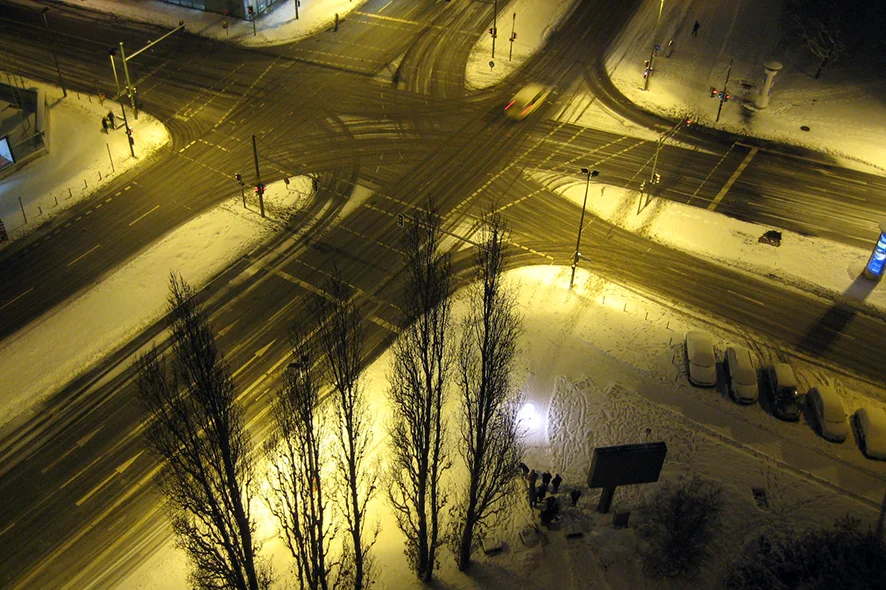
The first morning of the year in Berlin never feels like the start of something. In the aftermath of the party, the remains of a million and more fireworks strewn across the pavements and parks, the empty bottles and the piles of fag ends, the resolute joggers picking their way through the wreckage, it feels more like the final staggering steps of the previous twelve months than a new dawn. The streets, so full of noise and smoke and people in the early hours are now deserted, so much so that those joggers get polite greetings from strollers and dog walkers, a conspiracy of friendliness between the early risers that is usually absent in the anonymity of the city.

Slowly the rest of Berlin wakes, checking the weather through the curtains or from apartment balconies. It doesn’t matter what the reality is, New Year’s Day always feels in the memory as if it was grey, no wind or weather to speak of, as if that too is taking a few hours off. In this city where brunch is routinely served until 4pm the breakfast period stretches on into the evening. The shops are shut. Some restaurants too.

“Our cafe is closed today on account of yesterday…” reads a sign in the window. New Year’s Day? Nah… the city agrees: it can start tomorrow.

Read: Place on the Web #1

Alongside our own interests in exploring place, be it outside our front doors or a long way from home, there is plenty that has inspired us to create Elsewhere: A Journal of Place, not least the community of writers and photographers who share such interests. We want to use the blog to highlight some of our favourites, from books to exhibitions and, of course, online. So this is the first in a semi-regular series of posts that brings together some of the best - in our eyes - online projects on place in no particular order.

Slow Travel Berlin

First, a disclaimer - both of us here at Elsewhere are involved in Slow Travel Berlin, including articles, tours and book projects. The website hosts a broad range of articles, from practical guides to essays that cover topics from the history of the Turkish community in the city to psychogeographic rambles along the S-Bahn ring. The content is as varied as the contributors that help bring the site together, but one things is clear is a commitment to exploring and understanding the city that goes beyond the superficial, digging deep into the neighbourhoods, communities and the history that makes Berlin what it is. (Link)

Caught by the River

Paul has written a few pieces for Caught by the River, and indeed it has been one of the profound influences on his interests and work over the past couple of years. What began as an online conversation between friends, it has developed into a collection of all things relating to the outdoors, from angling and birding to walking, drinking, listening and living. It has spawned a semi-regular fanzine as well as print anthologies, but most of all it is a community of like-minded people who share a commitment to finding the magic in the world around them. (Link)

The Island Review

The Island Review is an online journal commited to writing and visual arts from islands all over the world. Within that remit, there is a world of fascinating stories to discover… just to illustrate, the Island Review has recently published features on the food of Tasmania, a short story set in Hawaii, black and white photography from the Shetland Coast and a travelogue from Tierra del Fuego.  (Link)

That’s How The Light Gets In

A personal website, written by Gerry Cordon, That’s How The Light Gets In takes its name, we presume, from a Leonard Cohen lyric and is modestly described by its author as “books, exhibitions, films, music, places - anything that inspires. Here so I don’t forget.” What you get as a reader on all those things are incredibly thoughtful essays on a wide variety of subjects from art and music to places, nature and the environment. It also contains some of the finest writing and reflection on the city of Liverpool that can be found online.  (Link)

Ephemeral New York

This is a fascinating online history project that traces and chronicles the changing nature of the city through various artefacts. This could be an old Christmas menu from Brooklyn in 1835, a postcard of a long-destroyed and forgotten hotel that was once the height of New York sophistication or the history of the City Hall fountrain. Sometimes the posts deal with the hidden tales of buildings, streets and even alleyways that still exist, how “Gotham City” got its nickname, or the social history of neighbourhoods, the subway or the city parks. (Link)

So these are the first five to be added to our list of “Place on the Web” - we hope you enjoy them as much as we do, and if you have any suggestions of your own, let us know either via email or on twitter / facebook.

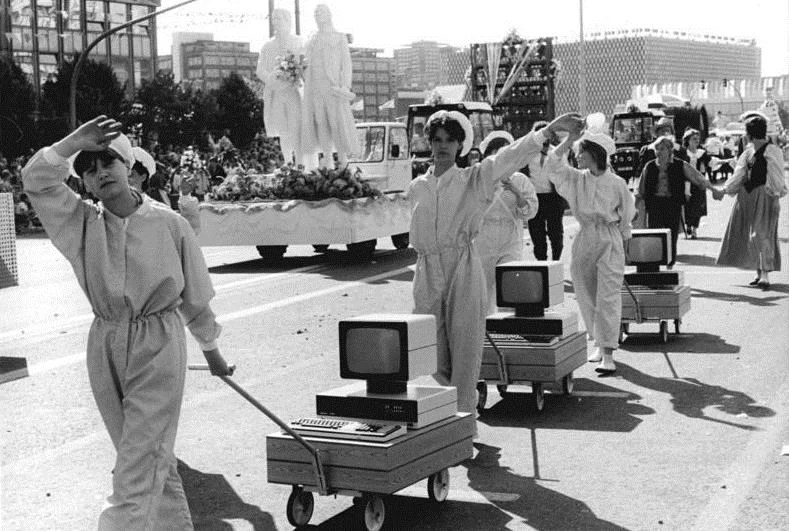
(Image credit: Computer display in East Berlin for the 750th Anniversary of the city in 1987 - Bundesarchiv, Bild 183-1987-0704-077 / CC-BY-SA)

JOURNEY TO ELSEWHERE

With the blog for Elsewhere: A Journal of Place, we want to take the opportunity to introduce ourselves, tell you a little bit more about the project, what we have done so far and what you can expect in the months leading up to the launch of our first print issue in June 2015.

Who are we?

The co-founders of the journal are Julia Stone and Paul Scraton. Both are based in Berlin, Germany, although they were born elsewhere… Julia in Bangkok, Thailand, Paul in Ormskirk, northern England. Over the past couple of years we have worked together on a number of different projects, and we often talked about launching our own project together that would explore our interests in travel and place, and at the end of the summer 2014 we were ready to begin.

Why “Place”?

The literature of place is many and varied. Within the pages of the journal we will publish involved and intelligent writing, whether from travel writers or local ramblers, deep topographers or psychogeographers, overland wanderers or edgeland explorers.

This might include drifting excursions through city suburbs and journeys on foot along the ancient old ways; written sketches of airports and market squares, forests and riverbanks; the legends that linger on mountainsides and the folklore of the flatlands; the everyday realities of island communities and the streetlife of city neighbourhoods.

We will also feature interviews with those for whom place is central to their work, whether photographers, artists or filmmakers, craftspeople, historians or musicians. And we also have space for those places that exist only in our heads – whether lost but remembered, or imagined and invented.

Some of the writers who have inspired this project include Jan Morris, Rebecca Solnit, W.G. Sebald, Julian Hoffman, Frederic Gros, Joseph Roth, Iain Sinclair, Patrick Leigh Fermor, Paul Farley and Michael Symmons Roberts, Kathleen Jamie, Max Egremont, Robert Macfarlane, Gareth Rees, Colin Thubron, Paul Theroux, Franz Hessel… (among many, many more).

Why Print?

As writers, photographers, designers and - most of all - readers, we are both sure that there is a place for print and paper in this increasingly digital world of ours. We think the experience of reading a book or a magazine on paper is still different, and has a value worth preserving. We want to publish work that is considered, intelligent and which deserves people’s attention. We also like to touch paper and spent quite a lot of time rubbing samples together between our fingers to decide how we want our journal to feel.

We also think this internet that you are reading us on right now has - for all the difficulties of copyright, piracy and other issues that have impacted on writers, artists, photographers and musicians and how they get paid for their work - opened up many possibilities. We are pretty sure that without the chance to build a community through the internet we would never get this project off the ground.

What have we done so far?

Aside from visiting printers here in Berlin to make choices about paper stock and to find a partner to work with long term, we have been working on a digital-only sample issue which we will release in the new year. Although the journal is (at this time) envisaged as a print-only product, we wanted to give people the chance to get an idea of what to expect through a small sample, easily accessed.

This will also help to inform potential contributors, and we have been working on the submission guidelines as well as working on content for the website and the blog, and making the first steps to spreading the word about the journal far and wide.

What’s next?

In the next six months, as we move towards the launch of the first issue in June 2015 we will be working on the following:

- The release of the sample issue
- Finding and working with contributors to produce the first print edition
- Begin to commission writers for future editions (September and December 2015)
- Work on the crowd-funding campaign to help finance the project (more on this coming soon on the blog)

Here on the blog and through our social media channels we will keep you informed about the project, as well as presenting writing and photography that interests us and other place-related books, exhibitions, events and more that has caught our eye.

What you can do…

If you think that our journal sounds like something you would like to read, please follow us on facebook and twitter, and sign up for our information newsletter here on the website. We promise we will not overload you with emails, rather we will simply let you know when certain major moments are upon us - such as the launch of the sample issue, the start of the crowdfunding campaign and, of course, the launch of issue one in early summer 2015.

We are really excited about our journal, and we are sure we can build a community of readers, writers, photographers and illustrators that will keep the project moving forward. We really hope you will join us.

Paul Scraton and Julia Stone
Berlin, December 2014