100 Years Bauhaus: Bauhaus Museum in Weimar

Foto: Andrew Alberts, © heike hanada laboratory of art and architecture 2019

Foto: Andrew Alberts, © heike hanada laboratory of art and architecture 2019

This year marks the centenary of the Bauhaus, and there are celebrations taking place all around the world – anywhere, in fact, that the design school’s influence can be felt. In Weimar, the city where it all began back in 1919, a new museum has opened in a building designed by Heike Hanada and inaugurated earlier this month.

The intention of the Bauhaus Museum in Weimar is to be both a dialogue with the past and an interrogation of the future, and developed around the fundamental question: “How do we want to live together?”* In an echo of the founders of the Bauhaus, questions of how we build a society and where art and technology, architecture and everyday life function together, are key themes of the new space.

As a reflection on the past, present and future, the location of the Bauhaus Museum itself, close to the Nazi Gauform and the Jakobsplan student accommodation from the GDR, is a reminder of how the political-economic landscape, architecture and community life are always intertwined.

Bauhaus Museum, Weimar (Google Maps)
From April 2019
Museum website

*Wie wollen wir zusammenleben?


Cities in the rain

DLewis.jpg

By David Lewis:

Once, in Amsterdam, it rained forever.  Rain spattered the aeroplane window and the strange and beautiful journey to Centraal Station, rain shrouded the Hotel Botel’s solid presence on the swollen Ij river, rain seemed to drain the flat sky of the last of the light.  For three days we woke to the rain outside the cabin, felt a cool rain-wind in our faces on the deck, watched a coot’s nest bobbing in the wake of a passing barge. Rain on the red-brick façade of the railway station, darkening the old walls, rain on the cobbles, rain in the canals, falling softly, unceasingly.  Our days were dominated by water.

We were guided by the memories – not the ghost, for he is still mooching through the rain, still causing trouble - of writer Jeff Young, fresh with Amsterdam stories when I first met him thirty years ago.  From his Amsterdam days I inherited a brown leather jacket and a heavy Dutch butcher’s bicycle, and in my mind’s eye he limps along Herrengracht in his junk shop overcoat, turns a corner, disappears. We drank in his bars, smoked Dutch roll-ups, had coffee in the windows of his brown cafés.  I remember young leaves on the trees along the canals, the endless silver curtain of the rain, soft, gentle, almost apologetic. In the flea market on Waaterloplein I found a battered book, sepia images of the vulnerable doorways and ornate windows that we passed daily, generating a sense of déjà vu, of having known the city in the past.  It gave a watery depth to our walks: we never seemed to be dry. From the Rijksmuseum the old painters reached out to us through the rain, washing the tall counting houses along the great canals in clouds and bright skies, illuminating street conversations with a sunshine we never saw. I remember the Frans Hals canvases in Haarlem, scrubbed puritan faces in blacks and greys, explosive white lace flashes at throat or cuff: outside, the rain-crunch of gravel, the green shine of leaves in a clipped garden, the screaming of swifts falling on us like an unseen cloudburst.

Amsterdam was a sea city on the edge of Europe.  At night we walked home through Centraal station, beneath the great trains silently leaving for Antwerp, Rome, Vienna.  It was city of wet golden distances and black waters, a city of brick streets, cyclists, walkers.  On the evening of our last day we drank in the little hotel bar, a glass box on the deck, the golden lights and blue flags outside smeared by the streams of water.

If we choose, if we are fortunate, places do not leave us.  Liverpool too is a sea city on the edge of Europe and, cycling along old brick streets to city parks and smoky bohemian cafes, I allowed Amsterdam to tint the whole city.  Eventually all Jeff’s gifts continued their journeys without me – the butcher’s bicycle was given to the elderly American in the flat downstairs; beyond repair, the leather jacket was artfully displayed on a dustbin and walked off on its own.  And it was not hard to imagine the city as a water-city, as had once been dreamed; canals and huge industrial channels opening from the Mersey, seeing Liverpool’s old streets as a criss-cross of narrow waterways. Gradually this feeling slipped away, and the old streets felt less watery.  But even today, if I am lucky enough to walk the city in the rain, the belief that Liverpool is a city of ghost canals rises to the surface once again.

***

David Lewis has written five books of history/landscape/psychogeography about his native Liverpool and Merseyside.  He posts urban/rural images on Instagram - davidlewis4168 and mutters about the world on Twitter - @dlewiswriter

Sound of the times: Chalk Hill Blue by Will Burns & Hannah Peel

Directed by Kieran Evans Artwork by Chris Turner 'Summer Blues' is taken from new Will Burns & Hannah Peel album, Chalk Hill Blue. Released Friday 22nd March 2019 on Rivertones. Pre-order the record here: http://smarturl.it/WB_HP_CHB Please visit www.hannahpeel.com/live for info about shows. www.willburns.co.uk

By Paul Scraton:

The final track reaches an end and the record stops. I pick it up and turn it over. Start again from the beginning. The music comes in waves, a fragmented, crackling, sweeping electronica that brings first to mind a desire path close to my mum’s in Yorkshire, where it passes beneath a huge, humming electricity pylon in the grounds of an old asylum transformed into a whole new village on the edge of the moors. But then I am taken, via a gentle voice, to the chalk landscapes of the south, and the stories to be found if we only “look beyond the intensive agriculture, the lookalike market towns, the wealth, the gold course and the four-wheel drive cars…”

Chalk Hill Blue is the name of a butterfly that can be found in those chalk landscapes around Wendover in Buckinghamshire, where the poet Will Burns lives and writes. It is also the name of the album Burns has created with the artist, producer and composer Hannah Peel, with his words and her music coming together to create a haunting, unsettling and strangely beautiful portrait of a place and its stories. Burns and Peel met in 2016 and two years later began working on the album. Sometimes the music came first, with Burns then selecting the poem that fit best with the sounds Peel was composing. Sometimes it was the poem that inspired the composition. The result was this album, released by Rivertones label of Caught by the River.

In a way this album is specific, telling as it does the stories of a particular place and of particular moments in time. The track titles themselves are rooted in location (Ridgeway), season (Spring Dawn On Mad Mile, Summer Blues), date (May 9th, February) and, of course, the local wildlife (Chalk Hill Blue). It is an attempt, as has already been mentioned, to look beyond the identikit everywhere of the 21st century world and find the real place that lies within or beneath. And it is a recognition that there are elements that have been lost. This might be true of the stories, which are now half-remembered, or the routines, work lives and traditions of the people. This loss it is most definitely felt when the album considers those other lives, the non-human lives, with which a place is shared. There is, Burns writes in the sleeve notes, “not as much as there should be, no, we must admit that.”

If stories, of people and other living things, of places and what they contain, exist only in memory then they become by nature fragmented and infused with loss. This atmosphere of change, melancholy and absence permeates Chalk Hill Blue and is perhaps why, on the second and third listen, I am taken away from Wendover once more and back to my mum’s Yorkshire village and then on, to the flat landscapes around Berlin or an empty square in a crumbling French market town. For while the album tells the fragmented stories of a particular place, it resonates because of the questions it poses for places far beyond:

What role does place play in our identity?
What does belonging mean?
How do we find our feet in an ever-shifting world?
How do we make sense of what has been lost?

There is a danger in these questions, but it doesn’t mean they shouldn’t be asked. Questions of home and belonging, of the lost stories of place and an impending environmental catastrophe are key questions of our time. It is not possible to observe the movements that gave us Brexit, the rise of the AfD in Germany or the Gilets Jaunes of the French periphery without understanding how these questions link in. As we mop out our flooded towns and we try to protect our villages from raging forest fires, as we wonder where the bees have gone or why the cranes are staying through the winter, these questions return to us time and again.

These are uncomfortable questions, and it is to Will Burns’ and Hannah Peel’s credit that Chalk Hill Blue provokes us to ask them. We cannot ignore them. We have to find the answers to these questions and find the answers that are not rooted in nostalgia or the exclusion of others. There is no going back. However we find a answer, and one which rejects the dead ends of nationalism and nativism, the first step is to tell the stories. The first step is to know what is happening. How did we get here? It can be the role of music, of poetry and of art, to bring those stories to light. Through its thoughtful, thought-provoking poetry and beautiful, atmospheric music, Chalk Hill Blue does just that.

***

burnspeel.jpeg

Will Burns & Hannah Peel will be performing Chalk Hill Blue live at dates around the UK. More info on Caught by the River here. The album is released by Rivertones and is available on CD or 12” Vinyl here.

Paul Scraton is the editor in chief of Elsewhere: A Journal of Place. His debut novel Built on Sand is published by Influx Press in April 2019.

Exhibition: Queer Spaces at Whitechapel Gallery

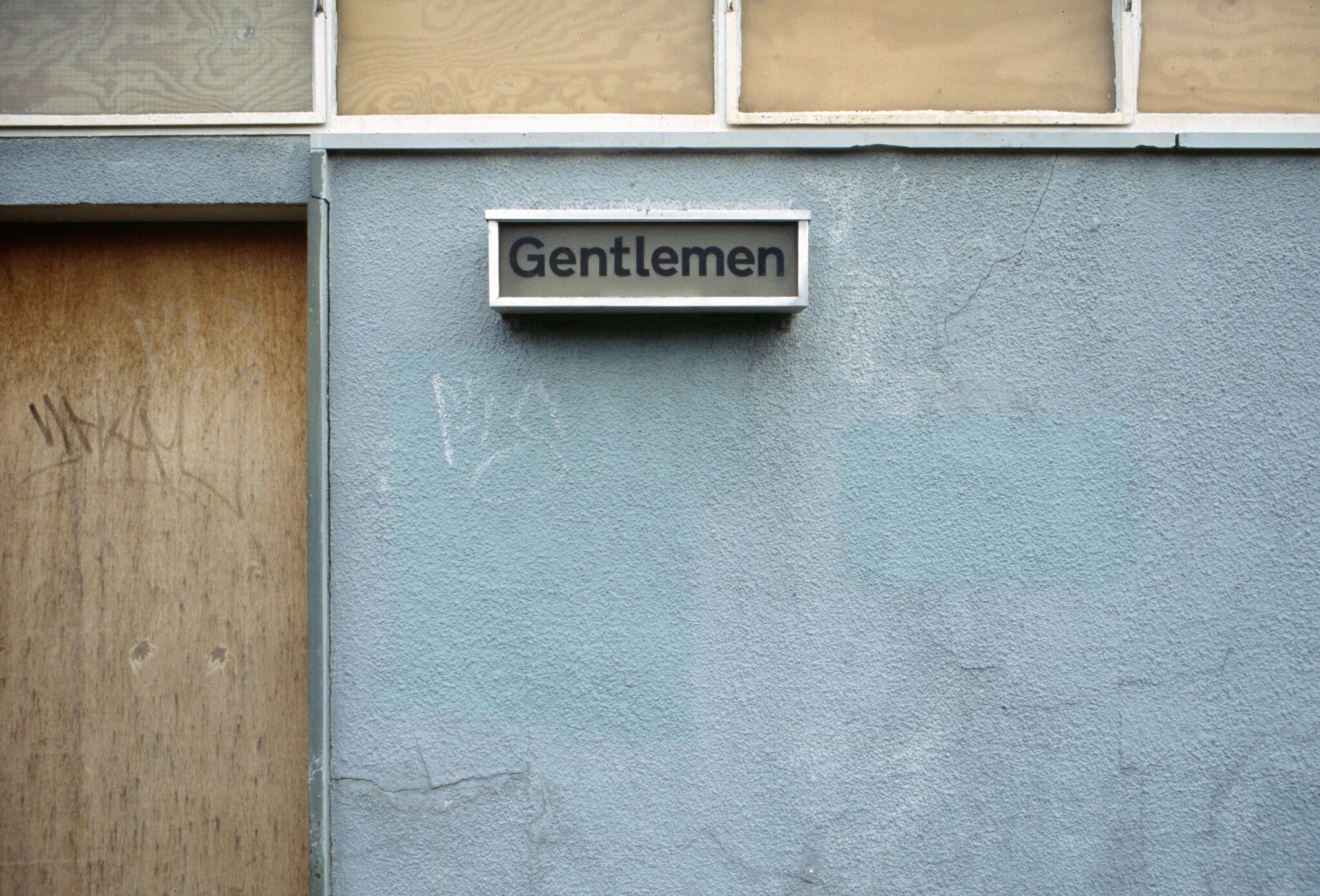
Ralph Dunn / Public Toilets / 2004 / Photograph: Courtesy the artist

Ralph Dunn / Public Toilets / 2004 / Photograph: Courtesy the artist

How has the London cityscape influenced the social life of the LGBTQ+ community in the past thirty years? And what are the effects of the current redevelopment plans on queer spaces? These are the core questions explored in the exhibition Queer Spaces: London 1980s – Today, which opened at the Whitechapel Gallery on 2 April.

The exhibition includes the ongoing research on queer venues compiled by UCL Urban Laboratory from 1986. Parallel to this archive, works focussed on the recent past are presented by contemporary artists like Tom Burr, Evan Ifekoya, Hannah Quinlan & Rosie Hastings, Prem Sahib and Ralph Dunn.

Hannah Quinlan & Rosie Hastings / The Scarcity of Liberty #1 / 2016 / Cork board mounted on wooden frame,magazine pages, pins / Courtesy the artists and Arcadia Missa

Hannah Quinlan & Rosie Hastings / The Scarcity of Liberty #1 / 2016 / Cork board mounted on wooden frame,magazine pages, pins / Courtesy the artists and Arcadia Missa

In the past decade around half of the LGBTQ+ venues in London have shut down due to rising rents and capitalistic ventures. This exhibition aims to show why identity-specific cultural infrastructures are important and what is threatening them, and how the diverse queer community contributes to London activism, creativity and self-expression.

Queer Spaces: London 1980s - Today
Whitechapel Gallery, London (Google Maps)
2 April - 25 August 2019
Exhibition website


And we're back... with a call for submissions!

Elsewhere_To the Mountains_A.jpg

Did you miss us? It has taken a little longer than we would have liked but the good ship Elsewhere is sailing once more. Starting this week, we will be bringing more writing, visual arts, music, events, interviews and other place-related literature and art to the Elsewhere: A Journal of Place website as well as a revamped newsletter detailing everything we are up to that we plan to send out twice a month. You can sign up for the newsletter here. To get us started though, the big news is that we have finalised our plans for the next print issue of the journal, and we want your submissions.

ELSEWHERE NO.06: TO THE MOUNTAINS!

The sixth issue of our print journal will be published in Autumn 2019 in a limited edition print run and we have opened a submissions window that will run until the 30 June.

We are doing something different with this sixth edition of our print journal and invite submissions of prose, poetry, illustration, photography or other visual arts that are related to our theme of place and that have the name of an individual mountain as the title.

GUIDELINES FOR PRINT SUBMISSIONS

Beyond the limitations set by the title, for prose (fiction or nonfiction) there is an upper word limit of 5000 words and we would like to read completed pieces. For visual arts we are happy to consider a proposal but it would be great to see some examples of your work. Please send all submissions for Elsewhere No.06 to paul@elsewhere-journal.com.

Please note that, unfortunately, we do not pay contributors to Elsewhere. We have long had this as our aim, but the project as it is right now cannot sustain it. As a literary journal with a small print-run and sales, with no advertising or any external support, we have very little room for manoeuvre. In the four years since we have launched, neither Paul, Julia or any of the team have been paid for their work on the journal.

Remember: The deadline for all submissions is 30 June 2019

WRITING FOR THE BLOG

We are always open to submissions for the blog where there is no theme other than place. We are especially interested in work that would benefit from being published online, such as film and music, and when it comes to prose we rarely accept work for online publication that is more than 1000 words. To submit your writing, photography, artwork, music, illustration or film on the subject of place for the blog the address is paul@elsewhere-journal.com.

EVENTS & EXHIBITIONS

We would also like to use the blog to showcase any place-related events, readings and exhibitions, anywhere in the world. If you have something that you think would be of interest to our readers, please let us know.

PRE-ORDERS FOR ELSEWHERE NO.06

The financial situation at a literary journal such as ours is always precarious, and so we will be hoping to sell as many copies of Elsewhere No.06 in advance as possible. Unlike with previous issues, No.06 will be only available through our website. We will be making the issue available for pre-order in the summer so please sign up for our newsletter to keep track of where we are up to. In the meantime, if you would like to support the journal, please consider buying one of our back issues or a double set via our online shop.

We are really pleased to be moving with Elsewhere once more, and we can’t wait to see what we get, both for the print issue and also for here on the blog. Thanks to everything who has supported the project up to now, and for your patience since Christmas.

Paul & Julia


A Boxing Day Letter from Elsewhere

Scotland Highlands.JPG

Dear friends,

In that week between the celebrations of Christmas and the coming of the New Year, it often feels like a good time to stop for a while, take stock and think about all that has gone and all that is to come. We do this on a personal level and we also think about Elsewhere, this project of ours that began at the end of 2014 and which has seen us publish five editions of the print journal and countless articles, essays, stories and reviews online through the blog.

We have big plans for 2019, both in print and on the website, but before we begin we need a little break. So there will be radio silence from Elsewhere HQ over the next couple of weeks as we relax, walk, think and prepare for all that is to come. We will return at some point in late January with news of the next steps and how you can get involved. We hope that you will continue to join us on our journeys to Elsewhere and that you have an excellent start to 2019.

Ever onward!

Paul and Julia,
Berlin & Hamburg, December 2018


Beacon Bound, Part V: Equilibrium

1.jpg

Since Spring 2018 we have followed Nicholas Herrmann as he walked the length of The Ridgeway, an ancient road stretching for eighty-seven miles across chalk downland between Overton Hill and Ivinghoe Beacon, in memory of his grandfather. With this final installment, Nicholas’s journey is completed. You can read all five parts of his walk here.

Tiredness threatens to fell me like a storm-damaged tree. It squats in my skull, crawls down my body: tightening tendons, tying muscles into knots. My back is rigid, my legs are locked, and the ankle injury that started in Uffington has spread to the ball of my foot. I feel semi-petrified, almost stone. At the Ridgeway’s eastern extremity, I step from the car stiffly. I might have forgotten to stretch this morning, or I could have a cold coming on, but maybe this is what seventy-three miles feels like – an accumulated tiredness, the journey catching up with me, the way adding weight. It’s the eve of my thirtieth birthday, and I feel old.

I just have to make it another fourteen miles, today only half: Coombe Hill to the hamlet of Hastoe. We arrive to mud and wind, the night’s rain wiping the world of colour. A short walk along a road and across a field takes us to the lip of the scarp, which we traverse like trapeze artists, balancing high above the Aylesbury Vale. Shortly, we reach the Coombe Hill Monument: erected in memory of the men from Buckinghamshire who died during the Second Boer War. The huge column has on top a torch of gilded flame, with four stone orbs positioned on plinths around its base.

2.jpg

It marks the Edge of the World. This is where, on Sundays, my grandparents would bring the children to run off steam when they lived in nearby Chalfont. I can see why they gave this place such a striking title: sitting on one of the highest spurs of the Chilterns, the monument marks a precipice, transforming the hill into a battlement. With my neck craned, I circle the column that has twice been damaged by lightning since it was first erected in 1904. Before pushing on, I look back the way we’ve come, searching the horizon for the scrawl of the Berkshire Downs. Gradually, the sun pushes through the tangled sky to illuminate the landscape, bringing back words from another Ridgeway memorial: Light after darkness. Hope in light.

The path eases us on to Bacombe Hill, the last chalk hill before the Wendover Gap, and down into Wendover. We stroll along the main street past the town’s many pubs, resisting the siren song of red lions and white swans, opting instead for take-away pasties to warm our wind-bitten hands. I scold my mouth on the cheese and onion filling, as ahead of us clouds shroud the hillside, Wendover Woods becoming Fangorn Forest in my mind.

3.jpg

Then, through a small park and past the burgeoning Wendover Memorial Community Orchard, planted for the fifty-nine men from the Parish of Wendover who died in the First World War. The River Misbourne joins us for a way – a charming chalk stream that runs clear and shallow. Once more, the path slopes gently upwards and away from the town, the ground yellowing as we trample the last of autumn into the earth. We’ve walked all the way to winter: the trees are skin and bone now, bark and branch. Old chalk pits riddle the hill like ancient craters from a meteor storm. As we approach the summit, a sudden gust of wind eviscerates the clouds, the sun hurling our shadows into the trees and igniting the forest.

4.jpg

We reach the car as the world grows dim, vapour trails skating across the glacial sky. Back at Coombe Hill, we walk out to the Edge of the World, its torch now dark. On a cold bench we drink the last of our coffee, as the lights down in the Vale – Wendover, Oxford, Aylesbury – shiver into life.

*

The last day starts with a detour. A mile or so from Hastoe is Hardings Wood, a sixteen-acre patch of ancient forest that Richard Mabey bought in the early 1980s, turning it into a community wood project to clear out inappropriate plantings, and free up regeneration. When Mabey’s depression struck, the land was almost lost, saved at the last minute by a local trust set up by two of his friends. It’s a difficult place to find – at first we drive past the coordinates, expecting a sign or stopping place. After consulting the map, we double back to find the entrance hidden beside a narrow country lane. The wood itself is steep and compact, the path barely visible beneath the brambles. It feels untouched, almost forgotten. I’m with my parents and brother for the final day of our journey, the four of us winding our way to the wood’s centre where we unpack our flasks and have coffee in the trees. The bitter steam mingles with the smell of the forest floor: earthy and warm. It’s quiet, the wood sheltering us from the morning’s chill. Above, beech trees bend in the breeze that cannot reach us.

I don’t know if my grandfather ever came here. I never spoke to him about Richard Mabey – I only discovered the writer’s work this year. But something about Mabey reminds me of John; the two seem like kindred spirits – the same generation, the same interests, the same bewildering knowledge. I know my brother bought him The Cabaret of Plants, and he owned a copy of Flora Britannica that he kept on a shelf guarded by dragons. Perhaps John did make the trip here once, or at least imagined he was here, sipping coffee in the leafy quiet beneath a creaking beech as he flicked through Nature Cure or Home Country.

On the Ridgeway, we amble along the tree-lined King Charles Ride – the straight, main path through the woodland of Tring Park. Further on, my mother picks a palmful of rose hips and shows me how to eat them, gently squeezing out the sour orange jam. To me, rose hips aren’t delicacies – they’ll forever be ‘itch bombs’, the stuff my friends and I would put down each other’s backs at school when we weren’t pelting each other with ‘puff balls’, the strange white berries that burst on impact and popped underfoot. I find these beside the path, too: snowberries. My father tells me he used to do the same, weaponising nature in the playground. I picture him tearing around Coombe Hill with a fistful of puff balls, and wonder if John ever did the same. To children, some things are so perfect, they’re obvious. Twenty years ago, the site of rose hips and snowberries would have caused the walk to descend into war, but my brother and I move on, leaving behind the ammunition and continuing into the next field.

5.jpg

We cross over the A41, where from the footbridge I glimpse the Beacon for the first time. My feet feel lighter as we hurry past the train station at Tring – a town famous for a pair of dressed-up fleas at its Natural History Museum, which John loved and took us to see when we were small. We pause on a bench at the foot of a hill to look back at the town. The final outpost before the Beacon.

As we start the last ascent, I feel the familiar swell of fatigue. My family must feel it too – the next couple of miles are covered in silence. We crunch over beech masts and climb through a wood, emerging to turbulence. The end is now in sight. We can feel its pull. Our pace quickens: a race against the dying of the light. Beneath us, a disused quarry floods the landscape with green water. As if to urge us on, a red kite sweeps up the hillside and hovers unsteadily overhead, before pitching and rolling away. Our party continues, floundering along the undulating ridge, the distance between us growing, the Beacon bobbing in and out of site like a life raft.

6.jpg

I wait for my father at the bottom of Ivinghoe Beacon, and together we finish the trail. A trig point and a map are waiting at the top. We trace the path with our fingers, recalling the places we’ve passed through. Then we walk to the edge and look back towards Avebury, finding nothing much in the haze. The wind soars up the slope and swirls around us; in the Vale, the clouds lean on Ivinghoe. The forecast promised rain this weekend, but miraculously not a single drop has fallen.

Before heading back, I whistle across the valley, weee-ooh, ee oo ee oo ee oo, and wait for a reply that doesn’t come.

It’s been twelve months and a cycle of seasons since my grandfather died and we unfolded the map. It’s hard to remember a time before the Ridgeway, and I don’t want to. The path has been a lifeline, a conductor, a tether. It’s allowed me to learn about John, understand the rhythms of his mind. Now I’m faced with the end: in front of me the path stops, cut off by a steep slope, the lights of Leighton Buzzard blocking the way ahead. But when I turn to leave, I realise where I’m standing isn’t the end at all. It’s the beginning of the trail – the old road is unfurling in front of me, eighty-seven miles to the west. It’s all yet to come: the beechwoods and berries, Thames and downs, the castles, chalk and sarsens. On the way back to the car, my father and I start discussing where to walk next, making plans for the new year.

When a star dies, the collapse can create an event of such immense gravitational force, matter is compelled from far and wide, and all light is extinguished. That point in space, once brilliant and warm, turns impossibly dark.

But after the collapse, the remnants might form something new. Drifting through space to gather together, finding each other, beginning to grow. And maybe, if the conditions are right, infalling molecules will gather momentum to create light from nothing; a blinding equilibrium to eradicate the dark.

Light after darkness. Hope in light.

The farewell was beautiful.

7.jpg

About the author:
Nicholas Herrmann is a writer and photographer based in Bath. His work has appeared in journals and online, and his writing has been shortlisted for the Bath Novel Award and Janklow and Nesbit Prize. He is a graduate of the Creative Writing MA at Bath Spa University. He is currently working on his first novel. You can find him on Twitter: @NickPSH.

The Library - Babylons on the Black Sea

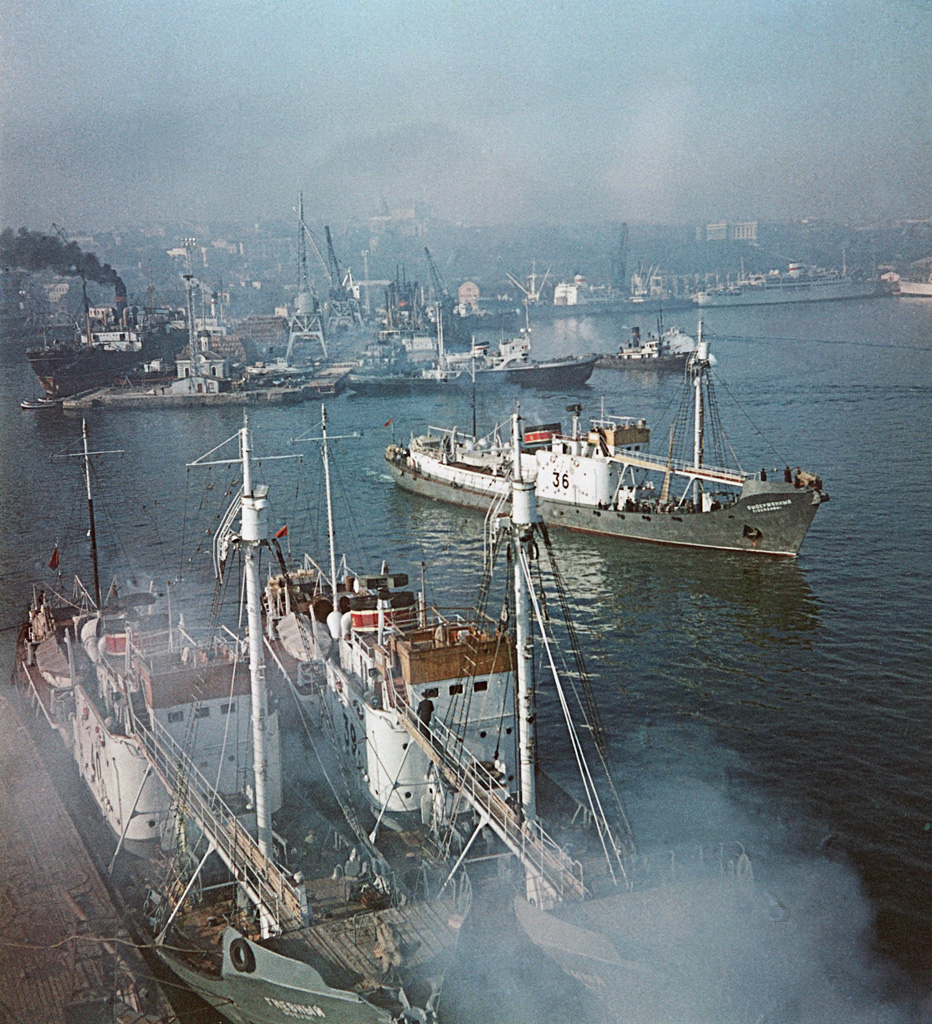
Fleet of whalers lying up in Odessa port: RIA Novosti archive, image #171693 / Vsevolod Tarasevich / CC-BY-SA 3.0

Fleet of whalers lying up in Odessa port: RIA Novosti archive, image #171693 / Vsevolod Tarasevich / CC-BY-SA 3.0

Odessa Stories, by Isaac Babel (Pushkin Press, 2018)
Black Sea – Through Darkness and Light. Dispatches and Recipes, by Caroline Eden (Quadrille, 2018)

Read by Marcel Krueger:

In the foyer of a hotel in Romania’s capital Bucharest a few years back, I struck up conversation with a group of English travellers. We talked about our travel plans, and when they heard that I was going to the Black Sea coast they told me to ‘watch out for the fireworks across the water’. The year was 2014, and the conflict in the Ukraine had just exploded into full military confrontation. I was saddened by that remark, as it made me realise that potentially a trip to Odessa was out of the question for the foreseeable future.

Odessa. Does that name not have a lovely ring to it? It speaks of the south, of spices and rum delivered via steamer, of gefilte fish and spices, of dark harbour taverns filled with sailors and farmers speaking a lovely mishmash of Russian, English, French, Greek, Turkish. These are all stereotypes of course, acquired over many years of never properly researching the city, only ever imagining what it must be like. To this day, Odessa and the sound of its name to me remains one of the last untainted travel ideals from my youth.

I was therefore delighted to discover that the Pushkin Press was re-issuing the stories of one of the city’s most famous sons, Isaac Emmanuilovich Babel. Babel ( 1894 — 1940) was a Jewish-Russian writer, journalist, playwright and revolutionary and is best known as the author of Red Cavalry, his fictionalised account of his time with the 1st Cavalry Army of the Red Army during the Polish-Soviet war of 1920, published in 1926 . Babel was born in Odessa, and the melting pot on the Black Sea had a lasting influence on his art: his Odessa Tales collection of short stories was first published in Russian in 1926. The stories shine a spotlight on Odessa roughly between 1900 and 1920, on its criminal underbelly and the life of the large Jewish community in the city. The tales gathered in Odessa Stories (a re-edition of Pushkin Press’ 2016 edition) contain the original stories in two sections entitled Gangsters and other “Old Odessans” and Childhood and Youth and also 2 more in a section entitled Loose Leaves that were not part of the original collection. Babel’s juicy prose has been newly and delightfully translated by Boris Dralyuk.   

The collection is Babel’s unflinching but tender look back at his hometown, stories about gangsters, merchants, pogroms and the antics of foreign sailors. The city however always takes centre stage:

In summertime, its beaches glisten with the bronze muscled figures of young men who live for sports, the powerful bodies of fishermen who aren’t much for sports, the meaty, potbellied and jolly trunks of “merchants”, alongside pimply and scrawny dreamers, inventors and brokers. While some distance from the wide sea, smoke rises from factories and Karl Marx does his usual work.

Odessa has a terribly poor; crowded and long-suffering Jewish ghetto, a terribly smug bourgeoisie and a terribly reactionary City Council.

Odessa has sweet and wearying evening in springtime, the spicy aroma of acacia trees, and a moon overflowing with even, irresistible light above a dark sea. 

Reading Babel’s tales today does of course nothing to dispel my ideal of Odessa, and while I will forever wonder what more stories the NKVD bullet that killed Isaac Babel on 27 January 1940 robbed us of, I am thankful that he created this wonderful snapshot of his home.

A fine complement to Babel’s fabulous tales is Caroline Eden’s Black Sea, linking the Odessa and the Black Sea of Isaac’s time to ours.  This travel book follows Eden’s journey from Odessa via Romania, Bulgaria and Istanbul along the Turkish Black Sea coast all the way to Trabzon in eastern Turkey. Her dispatches are interspersed with traditional or contemporary recipes from each of the regions she visits, or literary recipes based on some of the characters she encounters. This a beautiful book. From the lovely shimmering wave cover designed by Dave Brown over the exquisite images of both food and place to Eden’s flawless prose, it was a delight opening it and delving in.

Here Caroline Eden talks about Strandja, the mountainous border region between Bulgaria and Turkey:

Often, the edges of countries are rooted and fixed – a border crossing, a fence, a sea – here, demarcation is unfathomable. All we had were rustling oak woods as far as the eye could see, shaken by land winds and sea gales, all washed with a slightly Turkish climate and a southern, eastern air. It was a beautiful but befuddling landscape, a ‘terra incognita’ in our over-mapped world.

But sadly, the more I read the more I discovered that this book tries to be too many things at the same time, which diminished my enjoyment a good bit. The ‘dispatches’ are wonderful and induce both wanderlust and longing for all the places on the Black Sea that I visited before, but I feel that this is a book that should be stuffed into hand luggage and be read, dog-eared, on a bus trudging from Odessa to Bucharest. But due to format and heavy weight this is out of the question. For a coffee table book there are too few images, and for a book of recipes not enough of those. For me the recipes more interrupted the reading flow between dispatches than enhance it. Ideally, this is a great book for an armchair or kitchen stool traveller; but it sometimes stumbles over its own fragmentation.

That being said, the two books make an ideal pair for a Luftmensch like me: again fuelling my imagination of the Babylons on the Black Sea, their salt air and fried anchovies and kompot glasses. Maybe one day I’ll visit.

Wherever possible, we encourage readers of Elsewhere to purchase books directly from the publisher or via your nearest independent bookshop.