
Sámi Stories
/
Read by Anna Evans
Ӕdnan: An Epic by Linnea Axelsson, translated from the Swedish by Saskia Vogel, published by Pushkin Press in 2024
The Rocks Will Echo Our Sorrow: The Forced Displacement of the Northern Sámi by Elin Anna Labba, translated by Fiona Graham, published by University of Minnesota Press in 2024
No we didn’t belong to
those who still remembered
this river’s
voice in song
when it had flowed freely
In Ædnan, rivers have a presence, and throughout the book there are references to place names and migration pathways that follow the routes of rivers. Following the course of these river valleys means making journeys that encompass diverse landscapes crossing the Arctic Circle, islands, pasture and grazing lands, woodland and vast mountain landscapes. Sámi languages follow the rivers ‘along which our dialects had been carried and spread across the earth,’ and not the boundaries of nations. There are recurring images of rivers as tamed and trapped, by dam-builders and developers. An awareness of the river as constrained and cut off from its source, ‘the tortured river’s silence’, feels like the loss of language and identity experienced by the Sámi people themselves, cast adrift from the places that connect them to their history.
Ædnan is a novel written in verse that tells the story of two Sámi families spanning across a century. The title is an old Northern Sámi word that means ‘the land’, ‘the earth’ and echoes the words for ‘river’ and ‘mother’. The book begins in the early twentieth century, when the tightening of borders between countries were confining the Sámi within narrower territories and restricting their movement. These events, the separation of families, loss of land and the breaking of patterns of migration, are imagined through the voices of several storytellers. Within these broad sweeps of history are intensely personal stories that trace the impact for the lives of those who follow, and the echoes across generations.
Boundaries have always existed, but they used to follow the edges of marshes, valleys, forests, and mountain ranges. The new borders of the Nordic nations cut across all natural systems. They cut through pastureland, family ties, and transhumance routes that have been in use for thousands of years. When land is partitioned, people are separated. (The Rocks Will Echo Our Sorrow, Elin Anna Labba)
The Rocks Will Echo Our Sorrow tells the story of these forced displacements through the words of those who were willing to tell their stories, or who have left a record of their journeys in oral archives. Through oral histories and photographs, along with letters and official records from archives and museums, the book weaves together fragmented memories. The book describes how in the author’s search to find a way to tell the story of her family, she encounters a history with few traces remaining. She asks, ‘Do I have the right to mourn for a place that has never been mine?’ Returning to lands that were emptied, in search of trails and old pathways, she visits the deserted sites of old Sámi camps and settlements, the sites of her family origins before the forced relocations and journeys they undertook. Listening closely, she finds ‘a place that whispers.’
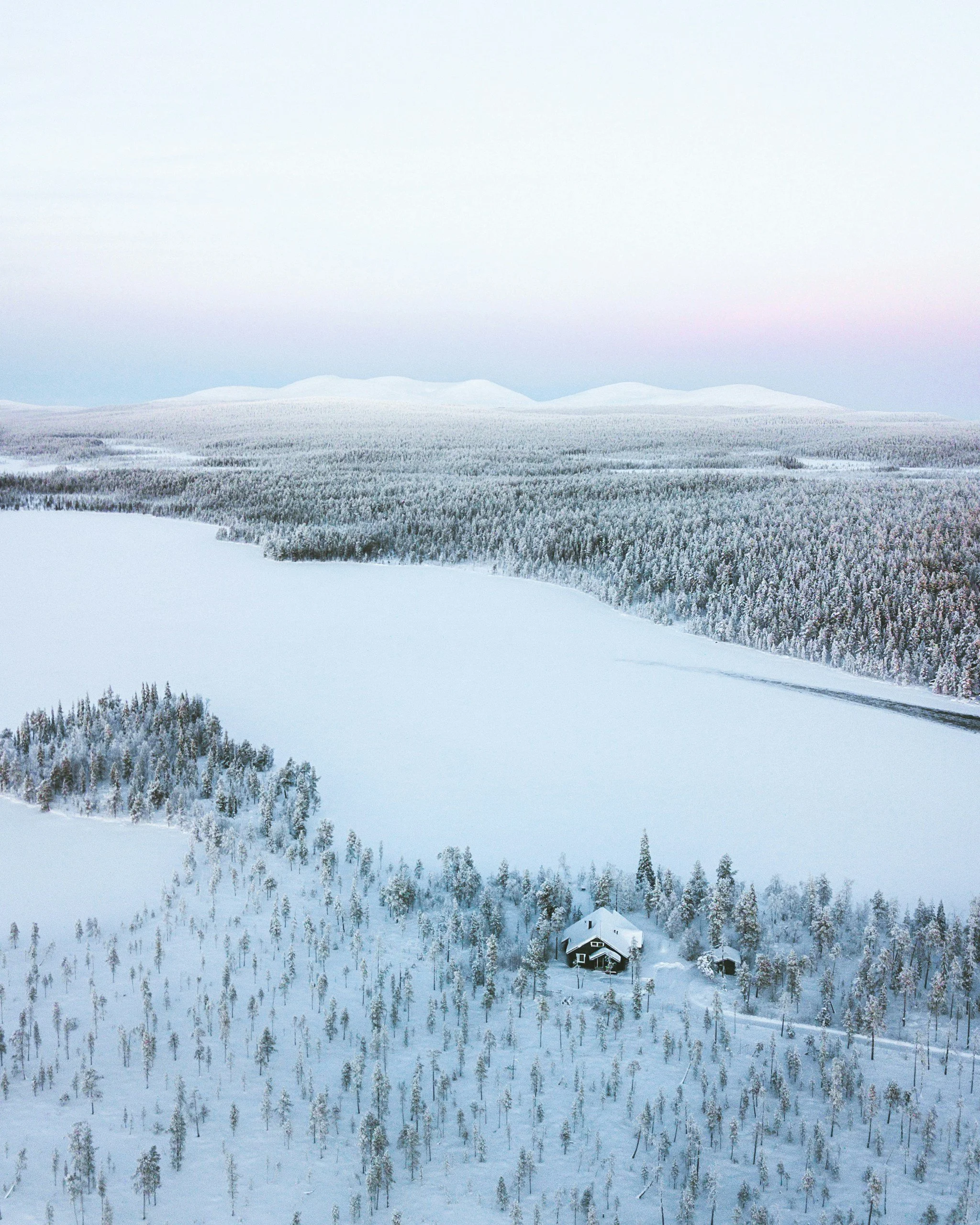
The Sámi are Europe’s only remaining Indigenous people, with a population spread over several countries. For thousands of years, they lived in a borderless region known as Sápmi, an area spanning the Arctic Circle and the far north of Norway, Sweden, Finland and part of Russia’s Kola Peninsula. The recent history of the Sámi is a familiar story of Indigenous peoples, resulting in colonial displacement through forced relocations, loss of language and culture, and erasure of voices and histories.
These recent English-language translations both engage with the idea of how to tell these stories, and how to represent histories of absence and loss. They are published at a time when more voices are being heard and form part of a growing body of literature and greater representation of Sámi voices internationally. The English-language translations of these two books open these stories to a wider audience and create space for Sámi writers, at a time of revitalised language, culture and identities, as well as a reckoning for Sámi rights to the land, and of greater awareness of displacement and the ongoing legacies of policies of assimilation and the colonial actions of the state.
For the Sámi, language and memory are deeply connected to place. Traditionally many Sámi were reindeer herders, who followed migration routes and the Arctic landscape’s natural cycles, not divided by geographic or seasonal boundaries. In this ecological understanding, that is rooted in language and place names, the land is viewed as interconnected, with each element having significance. As they are displaced from the land, they are forced to move against these natural patterns, and to leave behind places that are cut off behind borders. Elin Anna Labba writes that ‘the way the Swedish authorities interpret the word “nomad” is based on a stark contrast. Since, by definition, nomads are people who travel around, the authorities think they can simply be moved from one place to another.’
Everyone knows that reindeer herding demands a close relationship with the land and a knowledge of its smallest features. Everyone knows that those who migrate from one place to another aren’t rootless; they just travel between different homes.
Elin Anna Labba’s book gives space to joiks, a traditional form of song in Sámi music and a part of life and work; they are often a way of expressing emotion, telling stories and connecting with surroundings. There are joiks to dwelling places, joiks of mourning for the land, ‘When there’s a special feeling in your heart, you have to joik.’ She writes that many of these joiks fell silent and disappeared with the forced displacements: ‘When you are forced to leave an area, the joiks that belong to it are also left behind.’ In Ӕdnan, they are ‘singing forth/ the world around us.’ A loss of language becomes the silencing of these forms of memory, and their relation to place: ‘Migration paths and songs/ had to be stifled/ stricken from memory.’ It is a part of Sámi culture that is seeing a resurgence with artists reviving and blending these traditional forms of music with other genres.
For many families, photo albums act as a call to memory, through the touch of old photographs. As a child, I always loved to look at old albums and photographs of those I’d never met, ask what their names were, imagine their lives. But sometimes the gaps in memory are the only thing left. Elin Anna Labba begins her book with this question of memory, and the missing stories of her own family: ‘I wanted to start writing about them but got nowhere.’ She comes from ‘a network of displaced families, with this history woven into their very sinews’. All she has is a black and white photograph that she finds in the archives: ‘They never wanted to talk about it […] my family is not the only one like this; the Sápmi where I grew up is full of people wo have bound their wounds with silence.’ In writing this book, and in piecing together the voices of those who will tell their story, in letting them speak, she finds glimpses of her own past. ‘Word by word, I write my own family back into existence.’
These books both encounter the legacy of displacement and loss on notions of belonging, and the impact of intergenerational trauma and repressed memory. In Ӕdnan, the suppression of memory is described as ‘the latticework of silence’. It is ‘memories guesswork and traces’, the unspoken losses and sadnesses of the preceding generations, that make it difficult to put into words:
How am I to
explain to them
that the ruin
is in my voice
The book creates a sense of loss and rupture, and for the generations of family that follow, there is a feeling that they are each searching for something, for some meaning that is a connection with the past. The family take a road trip together; it feels necessary to travel to these places, to try to understand and to piece together from fragments of memory passed down through the years – that are like the things put away in drawers and forgotten about - that they have carried with them and feel an unexplained connection to: ‘all was silent/ The world/ stretched out/ unknowing.’
The writers of these books engage with the question of how to find a form that allows the gaps and silences to be present in the telling or imagining of these fragmented histories. Both are trying to create a space for voices to speak for themselves and have turned to hybrid forms that leave space for these stories to be told.
Elin Anna Labba writes about her struggle to find a form in which to write when faced with this absence. She wants to tell the story through the voices of those who were there, in their own words. The decision she makes is that the book will be told through the voices of those who were willing to tell their stories, or whose voices were preserved in the archives: ‘that what hasn’t been spoken about will remain unwritten’. It is a book that is full of questions and echoes, that accepts that sometimes there will be gaps in the narrative, that sometimes it will come to an end. Those voices that are already lost will remain lost, like those photographs, unnamed and sitting in old albums, that drift out of time. The author is aware that many have remained silent, that memories are starting to fade, and many of those who remember are no longer around to tell their stories.
Ӕdnan is written in verse, and it’s a form that allows space for all the imagined parts of the story, for absence and all the things that were unspoken. It allows for movement back and forward, spanning generations and time. It is written in quite simple and sparse prose, unpunctuated verse, which makes it feel contemporary and accessible, that is also elegant and lyrical. The book’s translator, Saskia Vogel, writes that the act of translating Ӕdnan was in part a negotiation of this space: ‘The white space made me think of landscape, tundra and snow, the white space held space for silence of varying kinds, held space for new voices to ring out.’
In these books the fight for Sámi rights stretches into the present. The legacy and intergenerational trauma of colonial policies of assimilation, such as the residential schools that suppressed language and culture, as well as legal battles with the state over land rights, divisions within Sámi societies arising from the pattern of forced relocation, and environmental struggles with developers, are some of the battles that continue. The books explore resistance against a discourse that regards them as primitive, in the language of official documents of the state. In Ӕdnan this connects with the struggles of migrants and refugees in modern Sweden, ‘I can sense something/ he has left behind/ has lost/ and that he does/ not want to do without’.
For both writers, these books are a starting point, a place for other voices to begin to tell their stories, for the rivers to flow. Elin Anna Labba writes that: ‘I hope more people will tell their stories while there is still time. For many, recounting the tale is a way to heal […] We remember those whose story we retell.’ In Ӕdnan, the telling of stories brings some release from the feeling of constraint and the tangled nets of memory, ‘she tells stories as we empty the nets’.
And I let
my fingers listen
their way forward
While the stones
on my tongue
slowly dissolved
Faced with the silencing of Sámi histories, ‘the plaque never erected, the chapter left out of the history books’, and in the battle for their rights to be recognised, Elin Anna Labba writes, what is also at stake is ‘an acknowledgement of their shared histories, a recognition of being part of Sweden’s history – and of Sámi stories making up Sweden’s past’. Both writers engage with words and stories, because what they are telling is an ongoing struggle of resistance, one that continues, in Ӕdnan: ‘So they’ll have to/ forgive us/ if we turn/ their maps on them’.
who have gone forth
so lightly
As if you were
entirely without power
without a past
Anna Evans is a creative non-fiction writer with interests in place, memory, and migration, and an editor of Elsewhere. She is a writer from Huddersfield, living in Cambridge in the UK. Some of Anna’s recent work has featured in Hinterland, Echtrai Journal and Panorama Journal of Travel, Place and Nature. She enjoys writing about landscape – nature, cities, and all the places in-between. You can read more about Anna and her work on her website The Street Walks In. You can find more of Anna’s contributions to Elsewhere here.