
Love that Cures
/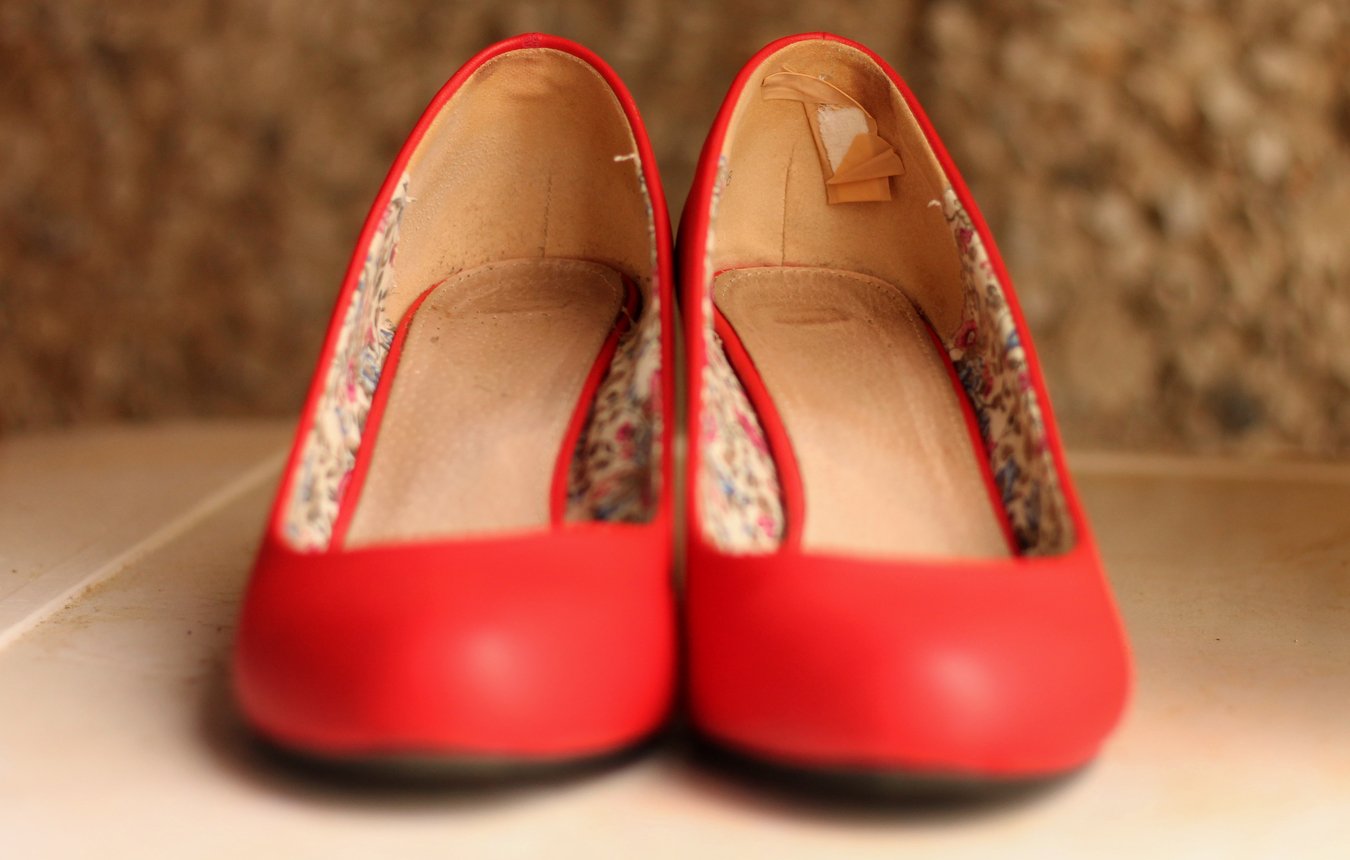
Image credit: Olga Bubich, from the photography series/photobook Bigger than I
We at Elsewhere are proud to publish “Love that Cures” as the first in a series of essays on memory and space by Belarusian essayist Olga Bubich.
I remember when my grandma
always talked us into clearing our plates
and we ate for mama, for tato, for baba, and for dido
for all the relatives from the photos in the family album
until our plates were completely clean
to this day we eat for those relatives
who a century ago
half a century ago
and even just this past year
suffered from hunger
From a poem by Lyuba Yakimchuk,
translated from Ukrainian by Oksana Maksymchuk
In my childhood, love tasted like thymus and marshmallow roots and sounded like the metal cling of a tablespoon against my teeth. It felt like the stethoscope’s cold circles on my bare back and chest. Love could be precisely measured, strictly following the prescribed doses, taken three times a day after meals, crushed into powder, rubbed in, mixed, swallowed, and digested. In other words, pharmaceutically controlled by the professional’s eye. In rare cases it lasted no longer than a fortnight.
My mother and two daughters of hers—my mother and her elder sister—were pharmacists, so being surrounded by both medical vocabulary and practices was a routine no-one questioned. On the phone with each other, how-are-you was frequently replaced by how-is-your-blood-pressure, and the success of a new recipe defined by the ease of bowel movement the morning after. It would not be an exaggeration to say that Pertussin [1], Festal, and gorchichniki [2] were among the first words my cousins and I learnt to navigate our family landscape. To fit our festive dinner moods and keep up with physiological jokes, one was to diagnose ailments in neighbours and acquaintances.
With our parents being the first postwar generation and us—first postwar grandchildren, we were subjected to their experimental love, we couldn’t but accept. Having no alternatives to choose from, we learnt the unobvious alphabet of a newly invented language where cure stood for care.
Diligent girls, role model daughters, assiduous students at the renown Medical School in Marc Chagall’s native Vitebsk, my mother and her sister were doomed to make good parents, and we had to master the role of their grateful patients. By early adolescence, I was skilled in measuring affection in drops and dosages, defining mood swings through thermometers, and believed in the secret healing potential of anything bitter—if not now, then at least in hindsight.
I remember my mother not hiding her agitation every time she learnt I was unwell and wanted to skip school. She felt most alive, most loving, when she could make herself indispensable to my recovery. She needed me to need her. It meant I couldn’t manage without her, that I was fragile and lacked my usual prickly “no”-energy, that I would relent. It meant she felt loved. And what did I feel? Well, I simply felt unhealthily feverish and either vomited non-stop, slept, or watched the Winter Olympics. In other words, inadvertently I was helping her normalise it.
Once, giving in to the popular irrational trend of—if not treating oneself, then at least getting diagnosed by self-proclaimed hypnotists, my mother even arranged for me to have an audience with one of them. Having paid an outrageous (for those times) sum of money, we got seated on a gargantuan sofa in the spacious, poorly lit but richly carpeted room where then I was made to drink a glass of “charged water” that was supposed to heal me of whatever symptoms I showed. What happened next, I no longer remember, but I am still alive.
Unable to receive much attention from her own parents—strong-willed ambitious grandma Maria who herself had to become a parent to her own elderly, rapidly losing sight mother Pelageya and cancer-stricken grandfather Stanislaw—my mother had her own emotional gaps to fill in. And, not knowing well of other means, she made love of what was available in the pharmacy she was running: gauze, suction сups [3], and smelly Vietnamese ointments with golden stars on metal covers. I wonder if it was Communism or shamanism that eventually worked. Probably neither—both were placebos.
Later in life, when I encountered the research of the neuroendocrinologist Rachel Yehuda [4], I could locate possible roots of my pharmaceutical family’s behaviour—only partly irrational. Their disproportional response manifested in avid attempts to cure anything that slightly digressed from their imaginary health norm could have to do with the intergenerational trauma inherited on their maternal lineage from my great grandmother who survived famine in Tambov in the early 1920s. Not being accountable for their excessively caring attitude, it was not us they were curing but those who never lived to experience the smell of Vietnamese ointments or a bitter taste of thymus syrups—my great grandmother’s family lost in the tumultuous Bolshevik 1920s.
The famine in Tambov province at the beginning of the 20th century was one of the most severe and large-scale crises in the history of Soviet Russia, preceding the Tambov Uprising. It was caused by a combination of forced grain requisitions (prodrazvyorstka [5]), civil war disruptions, drought, and a complete breakdown of local support systems. Entire villages were left without food, leading to widespread starvation, disease, and death, particularly among children and the elderly. This humanitarian catastrophe fueled the violent rebellion of the locals, who saw in food apportionment what it actually was - state-legalised looting. The revolt became known as one of the bloodiest peasant uprisings against the Bolsheviks and was met with extreme repressions, including mass arrests and the use of chemical weapons. For families who survived, such as my great grandmother’s, the trauma of loss, fear, and deprivation was profound. In the first years of Soviet’s rule, she was only 15.
Although I did have a chance to see my great grandmother alive, my recollections are scarce: I was too young, and she was too sick and weak to talk to me and my siblings about what she had to endure. Already half blind, her fragile, petite figure slowly followed the well-rehearsed route from bed to the toilet along the narrow hall of her daughter’s two-room apartment shared with six other family members. My cousin remembers her recognizing us by our bleak silhouettes against the light from the window and always keeping a cup with water and a slice of bread on the wooden stool at her bedside. Its edges were another thing she learnt well: she would collect all the crumbs from its surface and, with a familiar brisk gesture, put them into her mouth.
Since I had never met a blind person before, I was curious to check if her eyes actually looked different from any other’s. They did: pale blue, as if covered with a delicate hazy veil, instead of us, her great-grandchildren, the room lined with beds we slept in, the walls densely populated by colorful Orthodox icons–a parallel family my cousins and I grew up in side by side—they saw something else. Later a distant relative of ours would remember that my grandmother Maria, who was that very offspring of Pelageya’s to take her from the looted Russian province to a safer and back then more predictable Belarus, was actually not her eldest child. There were others whom she lost because of famine and diseases for which there was no cure. She became a mother at a rather young age, giving birth in her late teens, surrounded by deaths, mass executions, and food shortage. Was it by chance that her eyesight deteriorated so fast? How much could she probably not want to see any more? How hard did she try to forget? Did she really manage to?
But no unprocessed trauma disappears with time “by itself”, suggests Rachel Yehuda. Her research confirms [6] that succeeding generations are affected by adverse psychological and physiological experiences that can be passed down biologically through changes in the stress-response systems. In other words, trauma doesn’t simply live in memory—it embeds itself into the body, shaping how we feel, react, and even how we love and allow others to love us. But what also should be kept in mind: the effects manifested in the generations to come do not necessarily have to be negative. “Epigenetic response may serve as an adaptation that might help the children of traumatised parents cope with similar adversities,” writes Yehuda. Trauma survivors pass on not only their scars, but also their survival strategies.
The Bolsheviks and their senseless food requisitioning campaign left a literal mark in the genes of my young great grandmother and its consequences manifested themselves in her offspring. Two generations later, my mother and her sister chose both the job and the strategies of care-givers— equipped with the tools their ancestors lacked, they were striving to prevent what had already occurred: to feed, to care, to cure, but also to teach us to care about others. To break the loops of time. This time—to make it.
Berlin-Barcelona, 2025
1 Pertussin – a cheap thymus-based cough syrup prescribed for bronchitis, tracheitis, pneumonia, whooping cough, and other inflammatory diseases of the upper respiratory tract.
2 Gorchichnkini (from Russian горчичники, literally “made of mustard” – горчица) – a traditional remedy made of mustard powder spread on paper or cloth, placed on the chest to stimulate circulation and relieve congestion. Used to be popular in the USSR.
3 Cupping therapy is meant here - a traditional healing practice in which heated glass jars or special suction cups are placed on the skin to create suction. This method was historically used in various cultures, including Chinese, Middle Eastern, and Eastern European medicine. In the former Soviet Union, it was a common home remedy used to treat colds, bronchitis, and back pain. The suction was often created by briefly igniting a flame inside the glass jar before placing it on the skin. The treatment would typically leave round reddish marks that faded after a few days.
4 See, for example, Yehuda’s talk titled “Some Thoughts about Intergenerational Trauma, Epigenetics and Resilience” at UCSF Department of Psychiatry and Behavioral Sciences (12.02.2025) https://www.youtube.com/watch?v=7dCDIY5noCE&t=589s&ab_channel=UCSFDept.ofPsychiatryandBehavioralSciences
5 Prodrazvyorstka (short for prodovolstvennaya razvyorstka, or “food requisitioning”) was a Bolshevik policy and campaign of confiscation of grain and other agricultural products from peasants. It was introduced during the Russian Civil War (1918–1921) as part of war communism. Its aim was to forcibly extract grain and other foodstuffs from peasants to supply the Red Army and urban populations. The state demanded fixed quotas from rural producers, often far beyond what they could spare, leaving them with little or no food for themselves. This policy was especially harsh in grain-producing regions like Tambov, where it was met with deep resentment and growing resistance.
6 Yehuda, Rachel. How Parents’ Trauma Leaves Biological Traces in Children. July 1, 2022 https://www.scientificamerican.com/article/how-parents-rsquo-trauma-leaves-biological-traces-in-children/
Olga Bubich is a Belarusian essayist with a focus on collective memory research. memory manipulation, and misremembering, art/photocritic and photobooks reviewer, photographer, lecturer with more 15 years of teaching, curator promoting Belarusian photography internationally. Having left Belarus in 2021, in 2023-2024 she was an ICORN Fellow in Berlin - the city she is based at the moment. https://en.bubich.by/