Back down Ashley Vale

IMAGE: Matt Gilbert

IMAGE: Matt Gilbert

By Matt Gilbert

Sometimes when I go back it feels like nothing’s changed. The abrupt left turn from Ashley Hill, the sudden switch from concrete underfoot to earth, the choice of downward paths between high hedges.

The place I’m thinking of is Ashley Vale, St Werburghs, in the north east of Bristol. Here, hemmed in by roads and railway tracks, is a V shaped territory within which can be found allotments, woods, scrubland, grassland, a couple of streets, a pub, a city farm, some lock-up garages and a hill – Narroways Hill.

The name Ashley Vale – I later learnt – derives from the Anglo Saxon ‘aesc’ meaning ash tree and ‘leah’ – wood. There was once an estate here called Asselega. Not far away was my infant school, Ashley Down. For now Ash remains the predominant tree on the ground and in the local place names.

Entering from Ashley Hill, there’s an iron gatepost on the right a short way down the lane, which leads towards a track that runs through a small ash wood over and alongside a railway line, before sloping down gently through allotments until reaching Mina Road, where a left turn will take you through a graffiti covered tunnel – a reminder that you’re still in Bristol.

More often, I would go the other way, take the left hand path and drop on foot swiftly down to the floor of this urban valley, past a lone house in the middle, adrift in a sea of allotment gardens. These have always been subject to change, moving through the seasons and an ever-rotating cast of crops; tended and grown and pulled out and dug up.

On one side of the lane the plots rise steeply towards Ashley Down Road: stretching away uphill, a hundred small empires of beanstalks, cabbage, carrots and potatoes, bordered by narrow, leaning sheds and water butts; punctuated with crab apple trees and Hawthorn. The ground patrolled at night by cat and fox, carefully treading around each other.

On the opposite southern side, a smaller number of allotments on flatter ground filled the space between Gaunt lane and the steeply banked woody edge of the railway line.

*

As a teenager and into my early twenties I’d walk this way on route to my favourite pub – The Farm – which sat on the edge of the Ashley Vale allotments, next door to the St Werburgh’s City Farm.

Here we’d sit and chat in what we imagined were converted pig sheds in the garden, or try our hands at bar billiards in a little room at the back. With the 1990s rapidly approaching, this strange relative of billiards seemed something of an anachronism, yet the clanking element of playing against time and a dropping bar, as you tried to avoid sinking wooden mushrooms was deliciously compelling.

The pub’s position, at the bottom of two sloping hills, bordered by green lanes and allotments on two sides, faced only by a row of tightly terraced houses on Hopetoun Road, gave it the feel of a village inn, rather than the city pub it really was. As a result I indulged in private fantasies that The Farm was somewhere in the Shire; its lush surroundings, small green hills, gardens and stands of trees forming a tiny Hobbiton in Bristol.

On the way home from visits here, on still-light summer nights, I’d often stop on Hurlingham Road, on higher ground, a little beyond the bounds of Ashley Vale and look back over the scene. As I took in the view beyond the woods and allotments, my eyes would follow the blur of yellow street lamps as they merged into the whiter light of cars on the M32, and I’d find myself wishing that like them I was heading somewhere else.  

Now, far removed from those teenage years, my relationship with this place has been transformed. I remember once reading in David Lodge’s Small World about an essay, by an academic character, on T S Eliot’s influence on Shakespeare. In the book this is presented as the pretentious waffle of a postmodernist. However, I was struck hard by the notion that later readings and experience can change your perception of a writer, a person or a place.

Certainly in the case of Ashley Vale my view of it has altered over time. For a long while I even had the name wrong and referred to the whole area as the Narroways, when in fact, this is just the hill at one end.

*

When I first encountered the lanes that criss-cross the area, I appreciated the woods and greenery only as a kind of abstract, scenic backdrop for visits to the pub. I certainly had no idea that the place was under any kind of threat.

Firstly in 1997 in the face of efforts to sell off the land around Narroways hill by Railtrack, a mass protest was organized by the Narroways Action Group and the plans were eventually dropped. Then in 2000, thanks largely to the actions of local people, The Narroways was granted Millennium Green Status.

Today there looms a different kind of danger. The ash, like all ash in our diminished country, could be killed off by one or both of the Emerald Ash Borer or Hymenoscyphus fraxineus, the fungus behind ash dieback. This thought presents a nightmare vision of a denuded hollow, its woods stripped away, leaving open ground, ripe for levelling and development.

So now, more than ever, I appreciate the life that can be found within this small area of land. I look at the website of the Narroways Millenium Green trust and delight in reading a rollcall of the plants and creatures that can be found here.

Amongst old fruit trees, grasslands, sycamore and ash can be found waxwings and slow worms, common lizards, Small Copper and Marbled White butterflies and hedgehogs, not to mention robins, blackbirds, blue and great tits.

The names checked and logged in a recent ecological management statement from the Narroways Millenium Green Trust, sounds a little like a floral class-register: Upright Brome, Black Knapweed, Agrimony, Autumn Hawkbit, Lady’s Bedstraw, Field Scabious and Yellow Oat Grass, all present and correct.  

There is something reassuring about learning that these things are here, and while I can’t pretend that I am able to identify them all, knowing the names and knowing they are there makes me care about the place more deeply than before. I definitely take care now to try not to confuse Corky Fruited Water Dropwort for Cow Parsley.

*

Since those early days my sense of the history of the place has grown. Largely through a wonderfully resonant brief history by Harry McPhillimy of the Narroways Millenium Green Trust.

I have learnt the story behind the fantastically named Boiling Wells Lane, an atmospheric pathway entered at one end through a dark railway tunnel. This name comes from a spring that ran here, whose water was gaseous in nature and as it bubbled and frothed on its course gave out the appearance that it was boiling.

Nearby on the other side of the hill lies another path with a tale to tell: Cut Throat Lane. At 18 I knew the name but not the history. The story goes that In 1913, a woman named Ada James was murdered by her fiancé Ted Palmer, who cut her throat during a row; but Ada didn’t simply collapse and die, first she staggered back as far as Mina Road, where in front of witnesses, she managed to write her killer’s name on a piece of paper. Before she died she apparently declared that  ‘My fiancé did it’. Soon, Palmer was arrested and hanged within a couple of months. Poor Ada’s ghost is now said to haunt the scene.

Even the allotments, which always seemed so ephemeral, it seems have deeper roots than I once believed. In the same short history mentioned above, I learned that during the medieval period, strip lynchetts – short individual field terraces – once lined the slopes above Boiling Wells Valley. So those ever-changing small plots of land are also echoes of and heirs to a land use that stretches back for centuries.

I no longer live in Bristol, but often find Ashley Vale and the Narroways still with me. I see hints of it in other places as I’m passing through. On trains in south east London for instance, watching crowded tree and bramble covered banks flicker past, I’m taken back. Amongst these crow haunted verges, amidst rogue forsythia, ivy carpets, old paint pots and littered cartons, there is always a glimpse to be had of this somewhere from my youth. A place I once dreamt of leaving, but now no longer have any desire to escape.

Matt Gilbert grew up in Bristol and now lives in London. He blogs about place, books & other things at richlyevocative.net and tweets @richlyevocative

References:
Narroways Millennium Green Trust
Harry McPhillimy From Norway To Narroways
In the village there is a river

IMAGE: Martin A. Smith

IMAGE: Martin A. Smith

By Martin A. Smith:

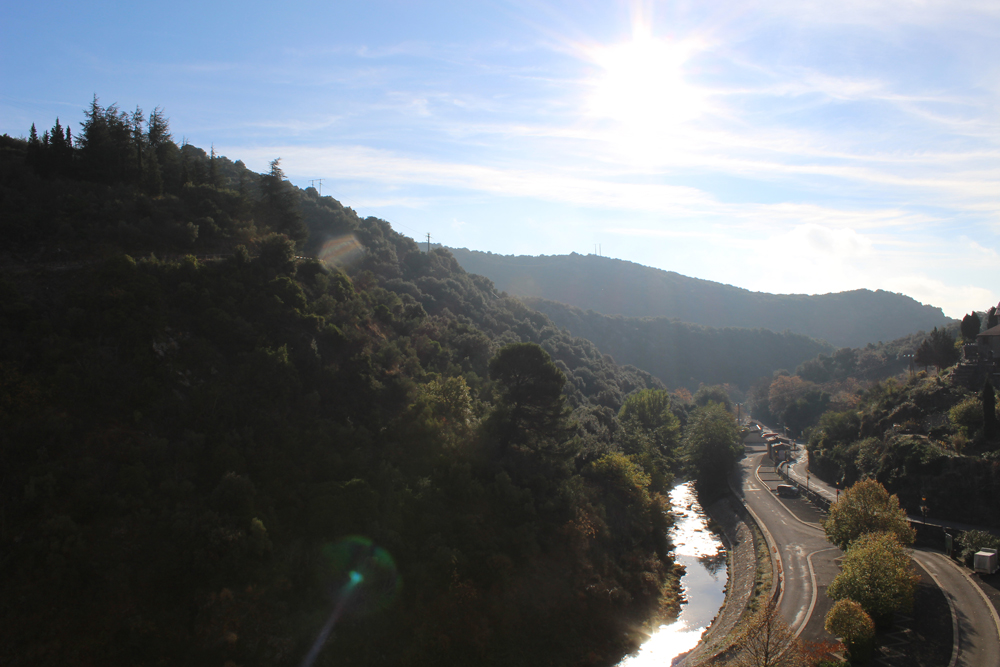
In the village there is a river.

Or perhaps it would be more accurate to say that along the edge of the river there is a village.

It is not a big river, or a grand river. It is a small river, alive with trout, which slowly, gently makes its way down from the hills and the mountains, skirts the four ruined castles that give this place its name and passes through to the world beyond.

As it approaches the village it first passes a couple of houses, both with chickens running around the garden, then a ruined factory full of broken windows and rusting machinery. This was a textile producing area and every town or village on a river had a mill. When the industry became too expensive the mills and factories were shut down and left to decay. Now all towns and villages with a river have a ruined factory.

A part of the factory in this village though has been turned into a visitor centre for the castles, another part into a restaurant that has a Michelin star, luxury out of decay.

The river continues past the restaurant, the town hall, the bakery (open every day except Tuesdays) and the post office (open Tuesday afternoons and usually runs out of stamps)

The post office used to be a night club and, rumour has it, a brothel.

The river runs past the car park and away.

It is a large car park for a small village. It is used by the tourists visiting the ruined chateaux on the top of the hill and is the site of the old station.

A village this size wouldn’t normally justify a station, let alone a nightclub, or indeed a brothel. But they were not for the village; they were for the goldmine further up the mountain.

But the mine didn’t last long, the station closed, the nightclub became a post office and the village returned to being a small quiet village with a large car park for the tourists.

Along the river’s edge running adjacent to the car park there are large sloping walls. Flood defences built with granite and concrete and cement. The gentle river seems trapped at this point, encased between the mountain on one side and these defences on the other. They seem incongruous, ugly, unnecessary.

I do not know if they were they built to protect and support the railway line, or built later as part of the car park. But I know that they are unforgiving and I wondered why they were built so.

Then it rained and we watched as the water rise.

And suddenly the walls looked small and insufficient. People ran to remove their cars and protect their homes from the onslaught.

It was only for two or three days but the rain was relentless, obliterating the view across the valley, shrinking the world to a few feet in front of the window.

Swept down from the mountains by the crying winds the rain and the river it fed brought whole trees past our doors, broke the banks upstream and some villages were evacuated.

But the walls were enough. The river was contained and the rain eventually stopped.

The water started to subside and the village could relax, this battle with the elements was over. The locals met and discussed the water, how many leaks their homes had, the after effects of the flooding, all thankful their homes remained intact. Because for a time it was not certain.

In the village there is a river, and there is still a river and there is still a village and the walls that seemed incongruous, ugly, unnecessary kept us safe.

Martin A. Smith is an artist and composer whose work is concerned with the emotional response to the nature of place, memory and environment.

This piece is part of a gently ongoing project to discover the story of a small village in France.

Postcard from... Bingley Five Rise Locks

IMAGE: Paul Scraton

IMAGE: Paul Scraton

By Paul Scraton:

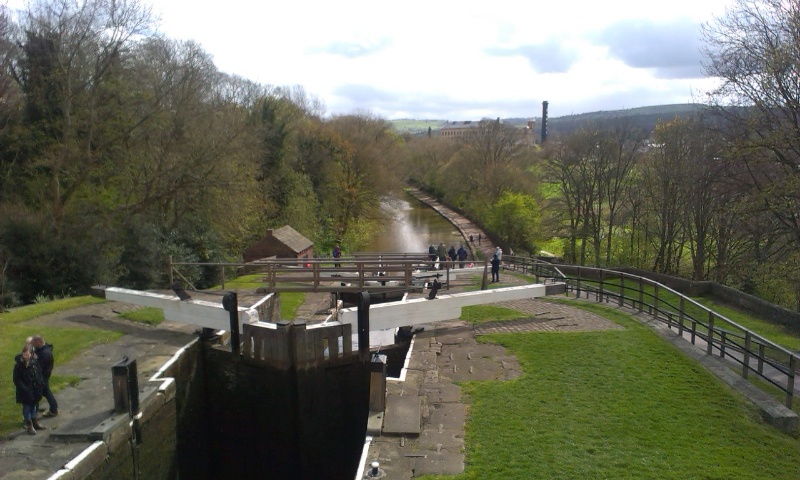
We walked up the Leeds and Liverpool Canal from Bingley town centre, past old factories and the quay where barges would once have been loaded and unloaded. The towpath was busy; Easter weekend and the walkers, runners and cyclists were out in full force. When the canal network was built, its function was transport and the aim was making money. What it is now is a reminder and a resource, a web crisscrossing the country that at once offers us a stroll through some of the country’s most beautiful scenery while charting the rise and fall of industry, and how water was replaced by rail and road.

I grew up a few hundred metres from the Leeds and Liverpool Canal, in West Lancashire on the other side of the great divide from Bingley. The canal was an ever-present in my childhood and teenage years, a place of walks and birthday bike-rides, the place where we snuck our first cans of beer and then – later – our first legal pints in a pub by the locks. There was a mill in our village. Now it has been turned into apartments. Where the bridge crossed the canal on my way to school there has been a new development since I left home, a cobbled courtyard surrounded by cafes and restaurants, galleries and other craft businesses. The 21st century industry on the banks of the Leeds and Liverpool Canal.

At Bingley Five Rise Locks we arrived as a barge had just entered the first of the locks. The lock keeper had come down from the office and was making the initial steps of opening and closing the various parts of the five-step system. In less than a hundred metres, the barge would rise nearly twenty – the steepest canal ‘staircase’ in the British canal network and a marvel of engineering. When the Bingley Five Rise locks opened in the 1770s, almost thirty thousand people came to celebrate. It was the 18th century shuttle launch, a technological wonder, and in all those years since there has been no real need to substantially alter the locks system. It just works.

We stayed to watch the barge make its progress, ever upwards, until it had reached the top of the locks. Later, I learned a word that seemed almost too good to be true. A gongoozler is someone who enjoys watching activity on the canals, born out of a derogatory term canal-workers used for those who stood idle while they worked up a sweat. The lock keeper at Bingley Five Rise did not look like he needed any help, so we let him get on with it. On either side of the canal, the gongoozlers stood and watched. We joined the club. 

Poetry: Zenith, by Shirley Jones-Luke

Image: Katrin Schönig

Image: Katrin Schönig

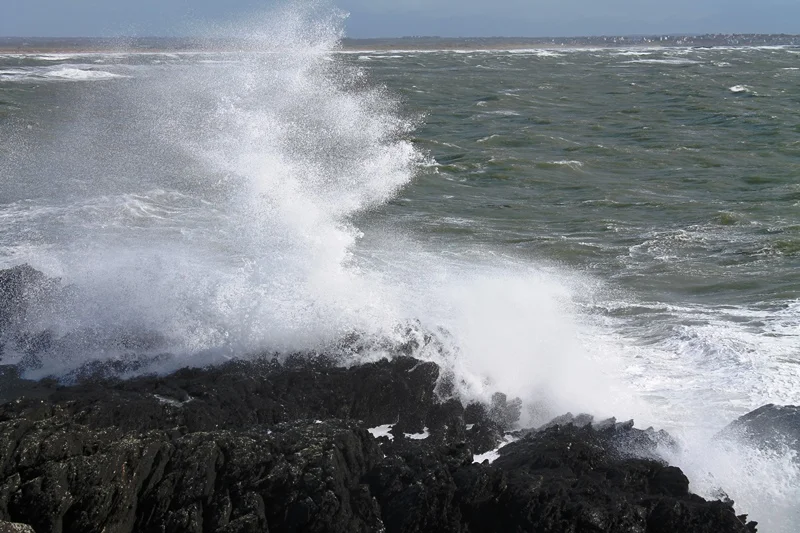
Ancient mariners were guided by a celestial sphere
they revered it like worshipers of a false idol
that's why many ships were swallowed by angry seas
sailors' cries of help silenced by waves of torment
wreckage of their lost lives scavenged by the villagers

A mast holds up the roof of my cottage on a neighboring beach
like a sundial its shadow moves with the passing sun
I use fabric from the sails of old ships to block the rays
splotchy patterns decorate the sundial's form
at night, silhouettes of palm trees are shadow puppets

Morning brings more storm-battered treasures
a ship's wheel entangled in seaweed, a broken
rudder wedged between two alabaster boulders,
a cannon torn in half floats in the water, 
I see the wealth in the sand

Hurricanes are common in the area, when
clouds turn black, destruction is on the horizon,
the villagers hunker down in caves on the
side of the mountain, I pack up my few
possessions - clothing, my journal and a picture of you

There are no ships at sea, the sailors
have learned the ocean's lesson, gulls glide
on electrified air, squawking their disapproval,
I make a note in my journal to collect feathers
once the storm has passed

The sky cracks open, rain comes down
like a butcher's knife, cutting into the island
the gulls are gone, nestled in their own
shelters, the villagers pray, casting wide eyes
at the sky, I think about you

In the morning, the sun brightens the damage
huts have lost their roofs, my cottage was knocked
off its foundation and leans to the side, the gulls
feast on dead crabs washed ashore, the villagers search
for what remains and I search for remnants of you

Shirley Jones-Luke is a poet and a writer.  Ms. Luke lives and works in Boston, Massachusetts. She has an MA in English and an MFA in Creative Writing.  Shirley was a 2016 Watering Hole Poetry Fellow. Her work has been published by Adelaide, Damfino, Deluge and ENUF.
 

Neon

IMAGE: Jeanette Farrell

IMAGE: Jeanette Farrell

By Jeanette Farrell:

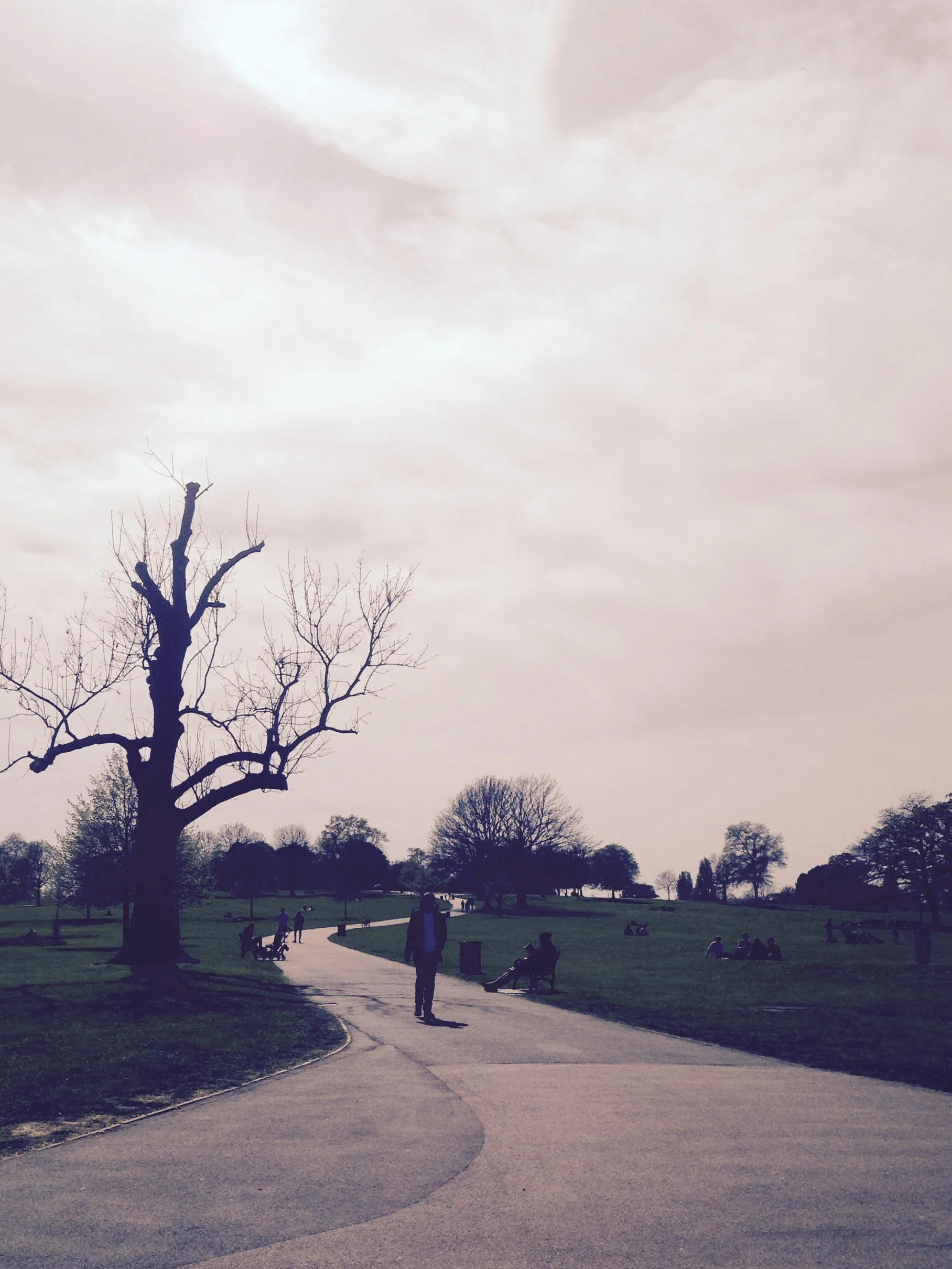
Come spring time everybody migrates towards the park; it’s as if the humble daffodil emits an ultrasonic soundwave and suddenly there we all are, an entire borough marching in unison towards our gated hill all filled with colour and squealing and light. We are boisterously reclaiming our place in a city whose tightly woven streets can deaden the clatter of our chat and so, the park, come Spring-time, this is our release. 

Brockwell Park reveals itself on a slope with its grand house perched on top. Surrounded on all sides by a densely compacted population in one of the biggest metropolises – everybody is there and there isn’t a continent unrepresented in multiplicity. Cities absorb people by portioning us off into offices and houses and pubs and buses and so out there in our urban meadow, that’s where we mingle. There’s the skate park and the lido, quaint markers of the athletic desires we presuppose is our reason for being there; that we’ll run and stretch and swim, dipping in and out of the ever confounding combination of Brixton’s noise. But most of us are content with the prospect of lying down on the grass. 

There is a comforting familiarity to Brockwell Park, an unsophisticated elegance of ritual through which we make it our own year after year once the grey recedes. Here, the idea of public space is at its most civic; we walk around as if it were an extension of our own home, knowing its pockets and its shade. 

While basking in this kind of outdoor domesticity we feel content that everything has its place and pace. The sky will change throughout the day and we will retreat beneath the trees in a pantomime of weather, watching the rain beneath sheltering branches. Nurseries will empty and the park will fill up. School children will linger/rabble-rouse eating chicken and chips, tumbling into each other from gate to gate and watchful locals will sit on drift wood taking it all in. There will be dogs and there will be roller bladers, there will be cans of lager and weed in the air.  And then all of a sudden this spell of the expected is broken with the shrill warble of the neon green parakeet and we look up to stare at this glamorous interloper. 

We’re not really meant to have these beautiful birds around here and yet they thrive, roosting in tall trees and causing ruckus with that noise they make. There are lots of theories to account for their presence; that a couple absconded from Ealing Studios and populated the landscape; that a gang of them escaped from an open container at Heathrow airport; that an aviary collapsed during a storm; that the original pair belonged to David Bowie, or to Jimi Hendrix. They are a mad dash of colour amongst the rich green of this cloistered pocket of south London. They’re not gentle and serene like this dream of spring time and routine, they are flying fluorescent chaos. Apparently there are thousands of them about, an anomaly in an otherwise textbook geography but the first time they’re encountered they’re like a mirage – ‘a parakeet, that couldn’t be!’

Now when they’re spotted, or heard, rather it’s like welcoming an eccentric old friend. Thank goodness for the parakeets, we think.  A gentle nudge to remind us that anything is possible, that this world, regimented and predictable though it is, is unbelievable too. 

Jeanette Farrell is a writer based in London. 

Postcard from... the Rakotzbrücke

IMAGE: Katrin Schönig

IMAGE: Katrin Schönig

By Paul Scraton:

The basalt columns reach out from the sandy soil to create perfect hiding places for the mystical creatures of the forest as they move down to the water’s edge. The stones tumble into the gloomy lake, as if to provide a landing stage for the creatures lurking in the depths. And the bridge curls in an arch from one bank to the other, its reflection in the lake creating a perfect circle. 

This is, surely, the devil’s work.

In this corner of Germany, close to the Polish border, the Rakotzbrücke has also been long known as the ‘Devil’s Bridge’, but in reality the structure, along with the basalt columns and the other rock formations that stand at the water are the work of very human hands. The bridge is at the heart of the Azalea and Rhododendron Park in Kromlau, Gablenz; a landscaped garden created in the 19th century by the local landowner along ‘English’ lines. With the end of the Second World War the park became property of the local community, and since 1948 it has been protected as a nature reserve.

But despite the fact that you know this structure was created by mortal hands, and despite the queue of photographers at the head of the lake, looking for the perfect angle to capture the perfect circle, it still has a strange impact when you approach it through the woods. It could be the stage set for some fantastical film or HBO series. It could be the nocturnal playground for all manner of beings. And it is not hard to imagine it as a playground for those mystical creatures of the forest, even if they themselves have no idea how it got there.
 

Train

IMAGE: Sam Eadington

IMAGE: Sam Eadington

By Sam Eadington:

England is best seen from the train. The rolling landscapes of the patchwork quilt; the sheep, the horses, the cows, the deer; the noble oaks, winding streams, drystone walls and disciplined hedges. They’re all a part of it. There are the sprawling suburbs of bad brick banter, saloon-skinned culs-de-sac snakes of mini-mansions less than a yard apart, but importantly detached. That sense of independence, of possession, it matters, and transcends the shuddering windows to the carpeted isle where it blooms into righteous indignation with every incident of seat reservation noncompliance. It’s from the train you see England’s character exposed, its emotions raw, its real metal. Metal fences, metal wire, metal buildings, metal thieves; responsible for your delays. You are apologised to for the inconvenience this may have caused to your journey. You are apologised to again and again. Sorry, I nearly touched you. Sorry, can I just squeeze past. Sorry, this is my stop. Hopefully not a ‘Parkway’ stop, though. The new boys in town. Or more accurately the new boys out of town, where you’re guaranteed either a massive car park or a power station. Although, on second thoughts, perhaps not so unfitting for the dystopia Turner foresaw; hissing water falls, cooled, onto a concrete floor from a concrete tower, that train doesn’t stop at this station, just forces you behind the yellow line, a contemporary rendition of what was once called sublime. 

You’re back on the train flying through paintings. All those hedges, how blurry; impressionist. Then a tree shoots into focus stretching its arms into the sky still half asleep. Then more hedges, not blurry anymore. Sharp and predatory, judging by the huddle of deflated footballs gathered at their feet. Yet more hedges, but these ones looking fresh after a perpendicular swivel and slide between the stretched out gardens. So many trampolines, but nobody bouncing. There are lovely big windows but all the curtains are closed as if I might see something of you I shouldn’t, then see you again in town and tell you what I saw. There are tiny little windows on brand new houses, half glass, half white plastic frame, not even big enough to poke your head out for a smoke. 

Another station, another WHSmith, another poster about something Jesus said. Must be true, I’ve seen the same thing in Cheltenham, Doncaster, Swindon and Crewe. Corroborated evidence; not worth a thing anymore. The trolley rattles closer with its nervous disposition and although I’m not at all hungry I want to eat. Was this not the point of crisps? A bag of prawn cocktail, I can’t get those abroad. With an hour to go I fill my ears with noise I can choose. Pulp. I turn the volume right up and damage my ears so I don’t have to hear the businessman and his vacuous words. I pity the person on the other end of the line. I close my eyes and let Jarvis take me back in time.

Sam Eadington is a freelance writer, architecture student, and co-founder of design studio Estudio ESSE. Twitter: @SamEArch. Website: estudioesse.com
 

From the hills above Frigiliana, Andalusia

IMAGE: Marcel Krueger

IMAGE: Marcel Krueger

By Marcel Krueger:

I guess it was worth it, schlepping my overweight, 39-year old body up the hill. I had set out early in the morning and walked through the valley of the Higueron river, with the white houses of Frigiliana disappearing to my left and the Chillar ridge rising up to my right. Then I huffed and puffed up the 400-meter hill, and now sit on a stone on top of the ridge, with the brown and green flanks of the Sierra de Enmedio rising into the blue sky, early bees are busy around me in the morning sunshine, and across the Mediterranean I can see Africa through the haze. But as this is the Anthropocene, there is also the surf of the nearby coastal motorway soundtracking it all.

Before I make my way down the hill and to breakfast again, I wonder what a Castilian foot soldier might have thought, when stomping through the same hills hunting for Moriscos, descendants of Muslims under Castilian rule who were in rebellion in the 16th century. Probably the same thing foot soldiers have thought from the Crusades to Auschwitz: 'The man paid me for it, so best get over with it'.