Sneak Preview... Illustrating Elsewhere

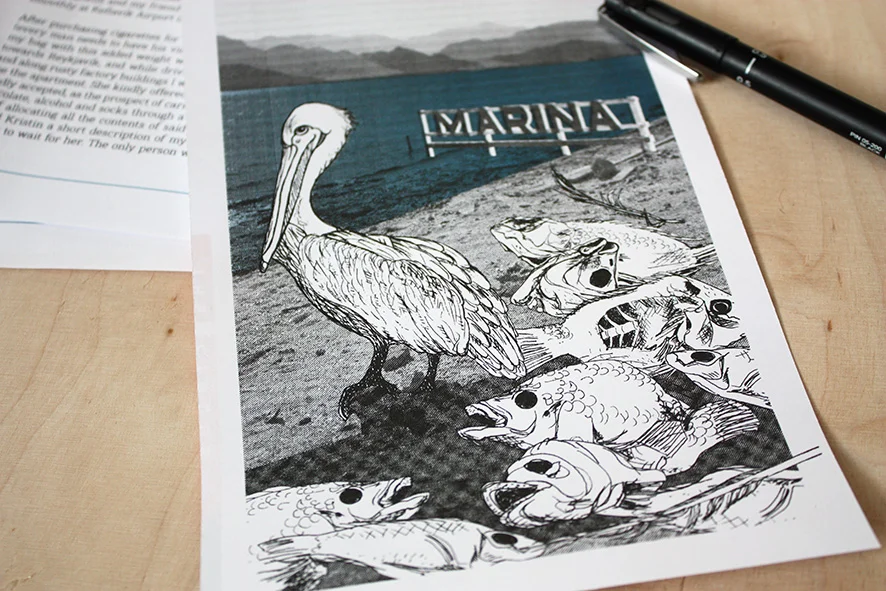
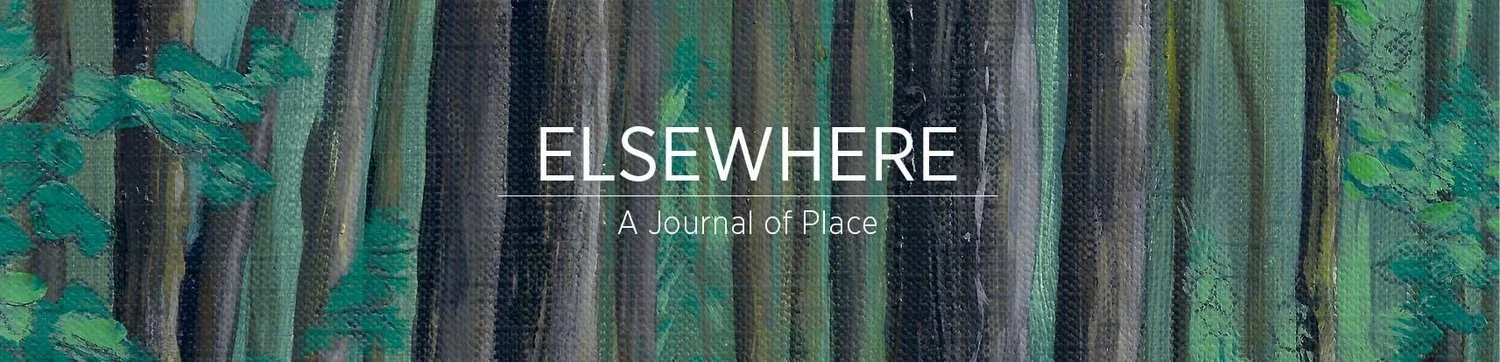
For each article that will appear in Elsewhere, Julia is creating an illustration inspired by the texts. Above you can see one she has been working on for the sample edition of the journal, which will be a free, digital-only release near the end of March to go alongside our crowdfunding campaign… there is more about the sample edition (none of the content of which will appear in the print journal) in the first edition of our newsletter here.

Postcard from... Kindla

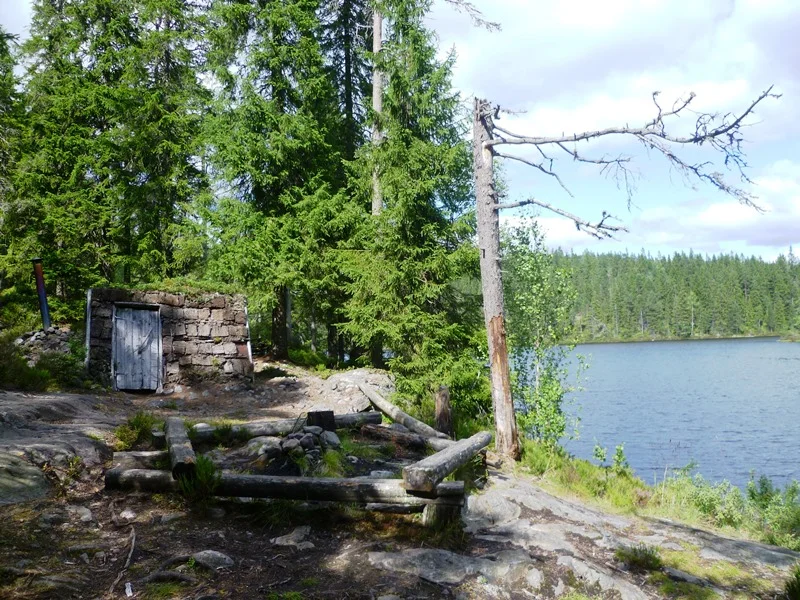
Inside the old charcoal burners’ hut, where walkers can bed down for the night (but only one night), a guestbook rests in a tin box on a wooden shelf. We have stopped by the lake in the centre of the Kindla Nature Reserve, about as far from the boundaries and the car parks as it is possible to be. It is a beautiful spot, former mining country left to be reclaimed by nature. The lake we are sitting at was once an open-cast mine. The rivers and streams we crossed to get here were once diverted, their power harnessed to work the pumps and the lifts. This place, where so many have been inspired to write about on the thick pages of the guestbook, was once a key site of Swedish industrialisation.

We open the book and read back through the entries. They are mostly in Swedish, some in English, but there is one young girl who writes in German. As we flick back through the pages we see her appear again and again, usually around the end of summer, as she makes an annual walk to the heart of the reserve with her grandfather near the end of her holiday. The most recent entry is her fourth. She is now thirteen years old. The first time she visited and took a pen to the book she was ten. Over the years her handwriting has improved, but her chatty enthusiasm for this place remains the same.

It is nice to think of her coming back time and again, to this place that was once the preserve of charcoal burners, miners and ironworkers, and that is now left to be discovered by only those willing to make the six kilometre walk to the heart of the reserve. It is not difficult to imagine that this will always remain an important place for the young woman from Duisburg, a long way from home in the heart of the Swedish forest.

Photo by Katrin Schönig

To get your hands on a copy of our print journal or subscribe, visit our online shop

Newsletter #1

On Friday we sent out the first ever Elsewhere newsletter to those who had subscribed for updates on the project over on the homepage of this website. Our plan is to send out a newsletter every six weeks or so, with information on the upcoming print editions, our crowdfunding campaign, and other things related directly to the journal.

We also noticed that a lot of people have signed up over the weekend, after the first newsletter was sent out. So if you missed it, or if you are not yet a subscriber, then you can read the newsletter online and sign up here.

Postcard from… Liuzhangli

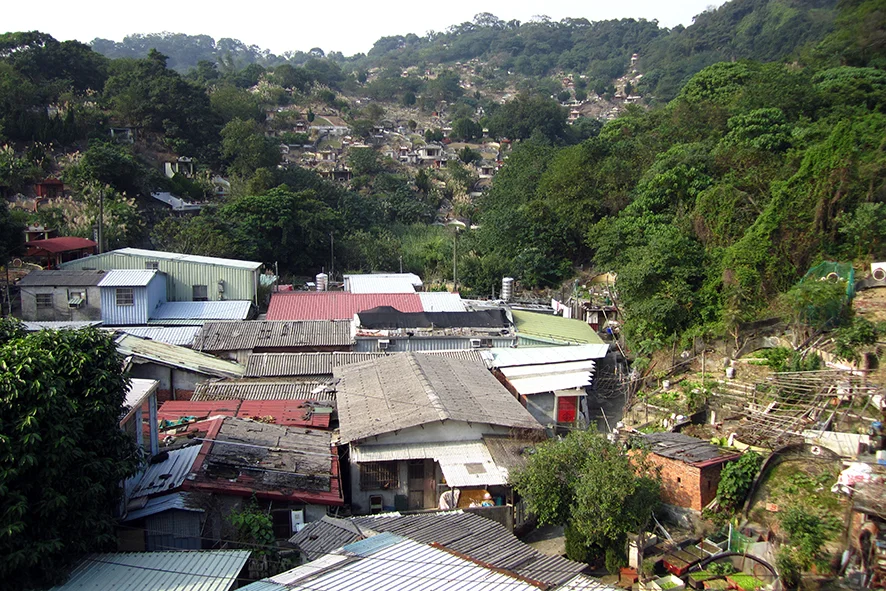
From the raised platform of the metro station in the Liuzhangli district of Taipei, the cemetery stretches out along the hillside and into the distance. This particular cemetery, built on the side of the hill along Chongde Street to take advantage of good feng sui, is ten kilometres long and one of six “Graveyards of Renowned People”, officially listed and recognised as historic sites.

Down there, amongst the many graves, is a simple three by three metre plot that is the final resting place of Chiang Wei-shui (蔣渭水), the founder of the Taiwanese People’s Party and a central figure in the 1920s opposition movement to Japanese rule. Imprisoned more than ten times, Chiang died in 1931 of typhoid in the same year that his political party was outlawed. Buried in Liuzhangli, his gravestone was inscribed with a quote from his will:

“All my comrades must fight on with diligence and determination, and old comrades must unite to become stronger.”

During the Martial Law era that lasted in Taiwan from 1949 until 1987, democracy activists would gather in the cemetery to hold memorials and rallies for supporters, whilst according to the Taipei Times, more recent years have seen the cemeteries as central meeting points for the development of human rights movements. It seems Chiang Wei-shui’s spirit lives on, in the place where he was laid to rest.  

Read: Place on the Web #2

Over the past couple of weeks we have been considering submissions from writers from all around the world, which has been an enjoyable but very difficult task. And it reminds us again of how much fantastic writing, photography and illustration on the subject of place that there is out there, leading us to the second in our semi-regular series of posts of our favourite online projects…

Unofficial Britain

Created by Gareth E. Rees (whose Marshland: Dreams and Nightmares on the Edge of London is much admired at Elsewhere towers), Unofficial Britain is dedicated to exploring and celebrating the forgotten or unchampioned corners of the British Isles, from the urban to the rural via the edgelands in between. Recent posts have featured the link between folk and punk, abandoned rollercoasters, and a search for Sooty and Sweep… (link)

Strange Maps

There are few better websites out there for the cartographically curious than Strange Maps, a curated collection that uses maps to explore a number of topics in many weird and wonderful ways. Historical curiosities help us understand how the world was perceived in times past, whilst more modern examples illustrate how cartography can be utilised to help us understand the world around us. (link)

East of Elveden

We first discovered the work of writer Laurence Mitchell in the pages of Hidden Europe magazine, where he is a regular contributor. He is also the author of Slow Travel guides to Norfolk and Suffolk as well as a range of guidebooks including Serbia and Kyrgyzstan. His blog features articles from such far flung places, as well as explorations of his more immediate surroundings and is one of our favourite “personal” blogs on place out there. (link)

Urban Sketchers

We became aware of the Urban Sketchers project through the Berlin chapter, and in particular the work of Rolf Schröter, whose sketches of our home city superbly capture the atmosphere of the streets and the parks, the U-Bahn carriages and the beer gardens. The manifesto of the Urban Sketching movement makes it clear what they are all about, as they aim “to raise the artistic, storytelling and educational value of location drawing, promoting its practice and connecting people around the world who draw on location where they live and travel. We aim to show the world, one drawing at a time.” (link)

CityLab

A spin-off project from The Atlantic, CityLab’s updates land on our twitter feed and on facebook throughout the day and are always worth a look. A quick glance at the home page is all you need to see what they are all about - an article on the burdens of hosting the Super Bowl, infographics exploring the massive urban growth of East Asia, and how African hip hop is bridging the cultural gap in China. (link)

We are always interested in discovering new projects on place, so if you have any suggestions please let us know either via email or through facebook / twitter.
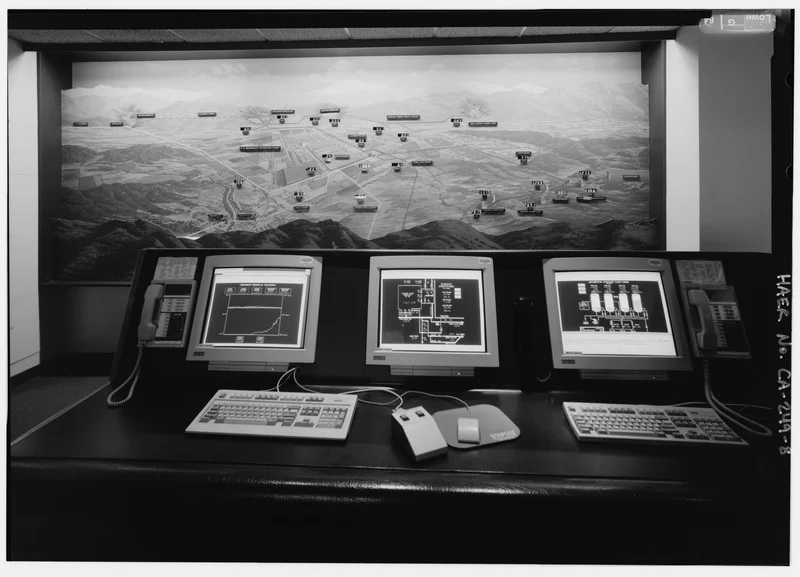
(Image credit: From National Park Service via Wikimedia, Public Domain)

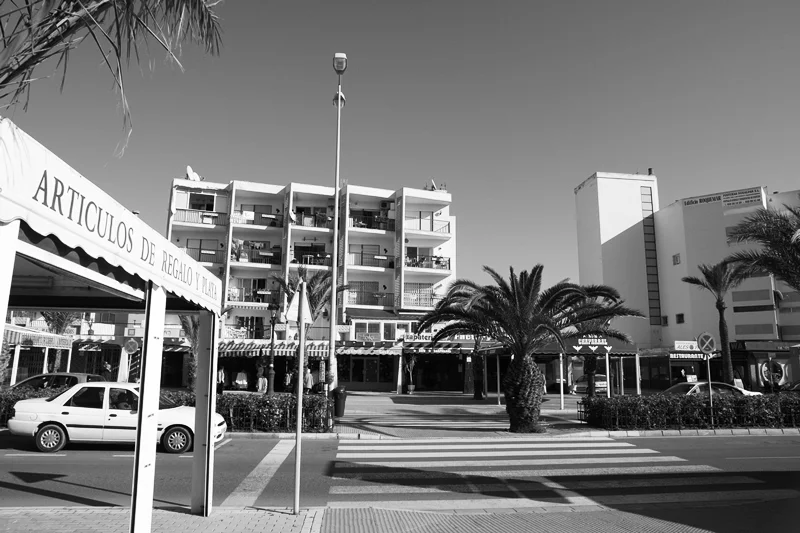
Postcard from... Rocquetas

When they came here it felt like their big chance. The house in that small town in the Midlands that they had called home for over two decades had increased in value, beyond anything they could have imagined. People urged them not to sell. “The house prices will keep going up,” they said, and for a while they were right. But that wasn’t the point. The point was to make the escape. And so they landed here, a town in Spain that is not quite Spain, with its branch of the British Legion, a German doctors office, and a Belgian driving school.

They found the shop in a small arcade, a block back from the beach. The real estate agent was Swedish, and had lived in the area for years. Good foot traffic, she promised. An international crowd. She showed the spreadsheets, with numbers of hotel rooms and average occupancy rates. Reassurance that when the tide of tourists retreated, the locals - both Spanish and northern European (mostly retired) - would pick up the slack. And so they signed the contract. They would sell environmentally-friendly, cruelty-free cosmetic products. The shop opened. It did okay. Not great, but okay. After a while they realised they were never made to be shopkeepers. They had to open seven days a week in the summer, but never earned enough to hire staff. In the winter, things were slower than they had been led to believe.

And so, after three years, they were heading home. Was it all a mistake? It was too soon to say.

See/Listen: Cities and Memory

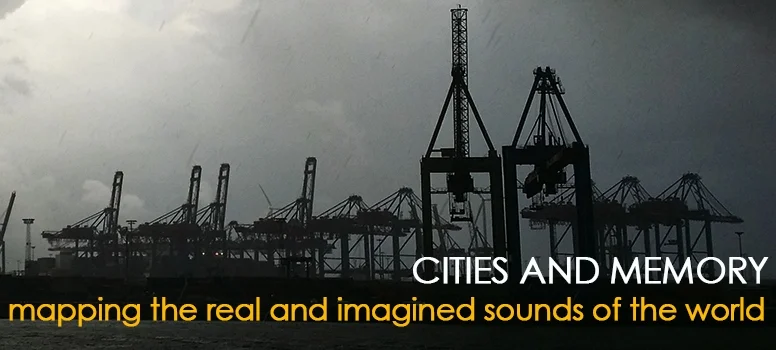
One of our recent discoveries of place-related projects is Cities and Memory, a global soundmap that presents both the reality of a location through field recordings, but also presents its “imagined, alternative counterpart”. Each recording that is uploaded to the sound map is accompanied by a reworking or interpretation that imagines the place somewhere else, somewhere new, and which incorporates the original recording in some form. Some reimaginings/remixes use only sounds from the original sample, others are musical/tonal compositions that contain the original sound in some form.

It is a fascinating project with over 400 sounds on the map located in 23 countries and uploaded by numerous contributors. For those of you within striking distance of Oxford, UK, in the next week you can also experience Cities and Memory as part of an exhibition Kymmata, taking place at the O3 Gallery. The exhibition as a whole brings together installation, artwork and live performances, for which the soundtrack and one of the exhibits will be a three-hour mix of Cities and Memory sounds:

“Taking a trip across the world from west to east, we’ll begin in San Francisco and end in South Korea, taking in 25 countries along the way, as each field recording blends into the reimagined version of itself, and then into the next location. The soundscape has been created specifically to fit the theme of the exhibition and to work within the space, and will form the sound element of this multidisciplinary five-day showcase.”

The exhibition runs from Wednesday 28 January to Friday 30 January (12 noon to 5pm each day). And if you want to get an idea of what the Cities and Memory project is all about, have a listen below:

Postcard from... Montague

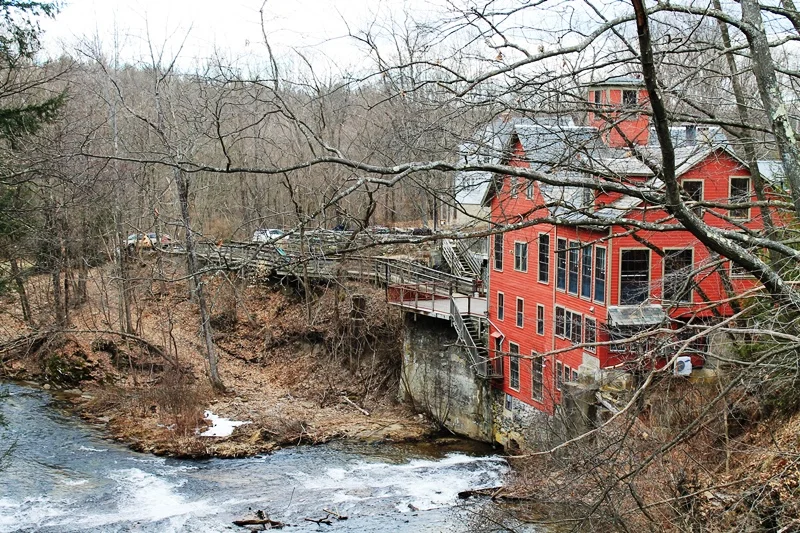
It was near the end of the first semester that he discovered the Book Mill. He cannot remember what drew him there, what force motivated him to climb into his grandfather’s old Ford, the one handed down “before I am gone” so that he would have a means to get around at college. It was cold that day, a light dusting of snow on the fields north of Amherst as the road heads towards the hills rising up from the Pioneer Valley. The roads were quiet that day, the sky overcast and sullen. Flags flew limp on the their front yard poles, gardens closed for the coming winter.

There were only a couple of cars lined up in the gravel lot next to the old wooden mill. He parked alongside them, the next in a neat row. Across a wooden footbridge he pushes at the door. On the other side a room, one of many, lined with books. A place of creaking floorboards and hidden corners, of people working on laptops and sympathetic smiles, a coffee or a beer and a view down to the rapids. Until he opened that door he did not realise how much he needed this place. The college and everything he had already experienced, a few miles down the road, was already becoming bearable. Because he knew he could always drive north in his grandfather’s car to this safe harbour, on the banks of the Saw Mill river.

Books you don’t need
In a place you can’t find

But he did. He found it.

Picture: Katrin Schönig