Postcard from... Güstebieser Loose

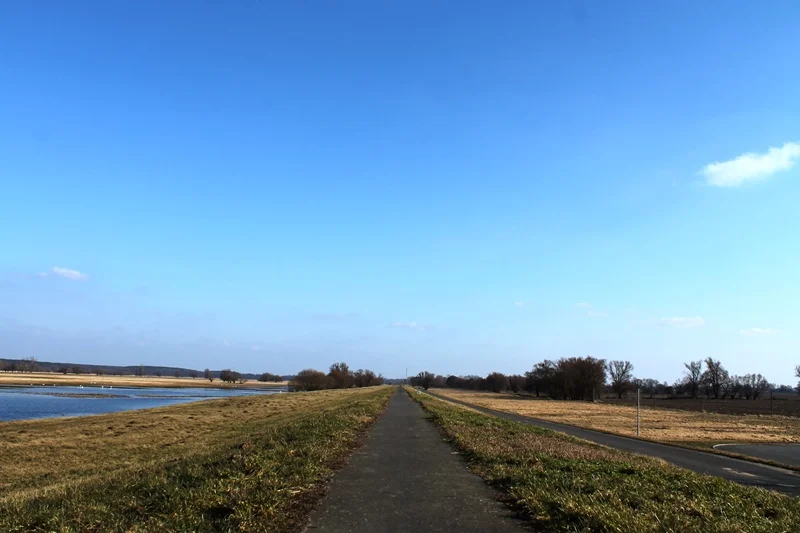
To get a glimpse of the past, we stand atop the dyke. To our left, the Oder river. To our right, the fields of the Oderbruch. This was once a marshy land where the river split and wandered, flooding every year. In the 18th century Frederick the Great ordered the drainage of the Oderbruch to create new agricultural land, and dykes such as this one were built to hold the water back. New villages sprung up and the colonists erected statues and named their inns for the King that had pulled this new land from the swamp: Alte Fritz.

Güstebieser Loose stands at the eastern edge of the Oderbruch. In the summer a ferry links the village with Poland on the opposite shore, but out of season we have the place to ourselves. The road breaches the dyke on its way to the banks of the river, passing through a hundred metres or so of marshland before it ends at the water’s edge, and it is this sliver of land that allows us to imagine the landscape as it was before the Oderbruch was tamed by Fritz’s plan.

Photo: Katrin Schönig

Five Questions for... Marcel Krueger

Mountjoy Sq MK.jpeg

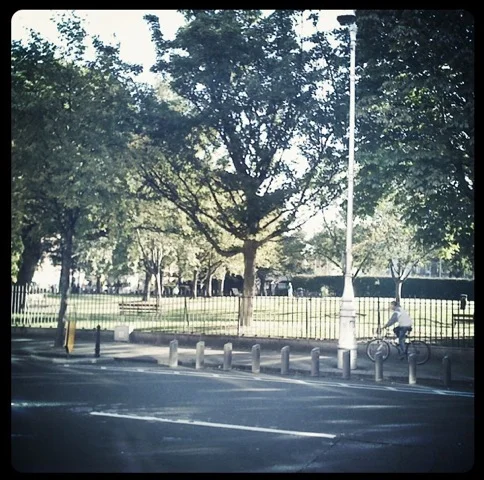
(above: Mountjoy Square, Dublin)

The next in our series of short interviews with the editors and contributors to Elsewhere: A Journal of Place is with Books Editor Marcel Krueger...

What does home mean to you?

I don't harbour strong feelings for home, as in the place I was born. Maybe I just don’t like the idea that a random place of origin has any determination over my life.  At the moment I am lucky insofar that I call three places “home”: one is Berlin, where I work and live, the other is Cologne where my wife lives and we share an apartment, and the third is Dublin where I used to live for seven years and that I visit every two to three months. Of the three, Dublin is the hometown of my own making, the place I decided that it fits me best in this world. I might become unfaithful to her the moment I discover another place that suits me better, even though I wonder if such a place exists.

In general, home to me always is more connected with other people and the places where I feel most accepted and happy, and that acceptance is not necessarily a human one - places can make you feel welcome as well.

Where is your favourite place?

Mountjoy Square on the Dublin Northside. I used to live just around the corner in a Georgian building from 1793, in the former servant quarters in an annexe in the backyard. It was a place surrounded by the rising grey and brown backsides of other Georgian houses, and some stray cats from the empty house down the lane were always playing in my small yard. The apartment was a tiny but nice place with wooden flooring and a low ceiling with roof-lights, and most days I could hear the rain and the footsteps of the cats on the roof when I was sitting at my desk.

I always took the bus from Mountjoy Square, and I still love standing there in the morning, preferably in autumn, and see the impressive yet worn-down buildings lining the square wake up as my neighbours walk their dogs and the drug addicts from the nearby estate huddle on one of the benches as Polish joggers make their rounds… and all and everyone are swathed in that beautiful Dublin autumn morning light.    

What is beyond your front door?

Right now: four lanes of Berlin traffic, behind that a large square with a football pitch, a playground and ghostly trees devoid of leaves. There is a large red-brick church from 1893 currently used by a group of non-denominational African believers. Opposite the church is another football pitch that the city of Berlin has rented out to a group of urban gardeners and which at the moment is filled with sad empty elevated flower beds. At the same spot once stood the Reichsmütterschule, the Imperial Mother’s School of Nazi Germany, where the Nazis trained young women in keeping a household while at the same time indoctrinating them with brown thoughts.

What place would you most like to visit?

The Faroe Islands and Greenland. I always prefer the north and the cold as opposed to sun and beach life, and as I’ve visited Iceland quite regularly in the past this would be the next step for me. While I am a city-dweller through and through, I sometimes feel the urge to flee and hide somewhere remote. Preferably where Vikings or Irish monks hid before me.  

What are you reading/watching/looking at right now?

A collection of essays and journalism by my favorite German author Jörg Fauser. Fauser was a prolific novelist, essayist and journalist born in 1944 who broke off his academic studies to work and travel, with longer stays in Istanbul and London, working as a casual labourer, airport baggage worker and night watchman. He also supported himself as a journalist, and was acquainted with Charles Bukowski (who wrote a poem about Jörg when he heard of his death). He developed a heroin habit which he was able to shed at the age of 30, and spent much of the rest of his working life dealing with an alcohol addiction. Fauser was heavily influenced by Beat literature and American crime stories, producing three successful novels, including 'Der Schneemann’ (The Snowman), and a plethora of short stories. He was always shunned by the German literary establishment, and like his contemporary Hunter S. Thompson he was also deeply disillusioned by the failure of the ideals of the 1960s, and his writing remained that of a driven man searching for something that is always just a few inches from his grasp. He died in 1987, run over by a truck after a night of whoring and drinking.

Marcel is a writer and translator who divides his time between Berlin, Dublin and Cologne. A contributing editor to Sonic Iceland and a Berlin Spotter for Spotted by Locals, Marcel's work has also appeared on the CNN Traveler website, in the Daily Telegraph and Slow Travel Berlin, and he is currently working on a Literary Guide to Berlin.

www.kingofpain.org

 

Postcard from... Darwin

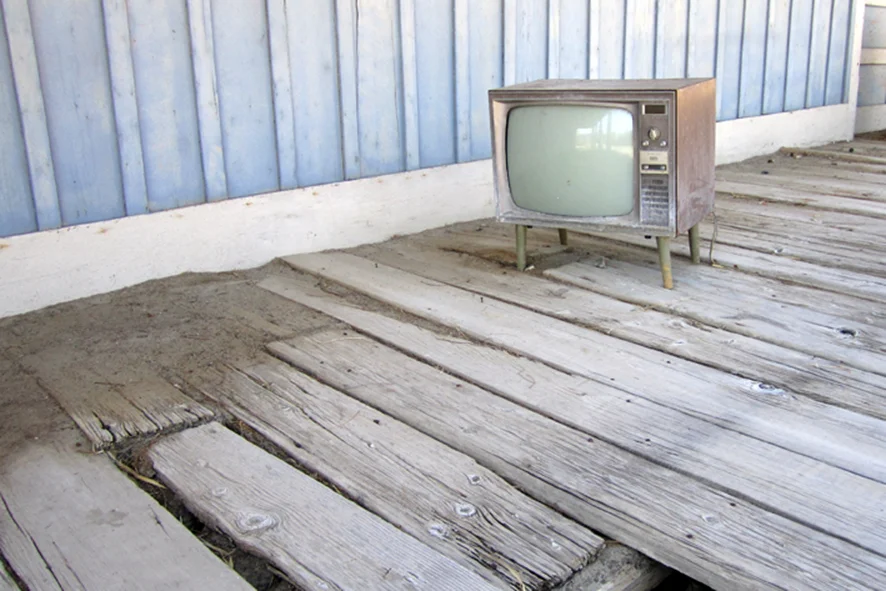
Only a handful of people live in the old mining town of Darwin, just beyond Death Valley. At first glance it appears that this is a true ghost town, where mobile phones have no reception and the nearest open supermarket is over a hundred kilometres away. But then we met Jay. Jay came to Darwin a few years ago… or was it that he moved into his current trailer then as his house had burned down… it was hard to follow the story, and Jay liked to talk a lot.

He showed us around his rock garden, an open air exhibition made up of stones collected from around about as well as the abandoned mines. Sometimes Jay spent days underground before resurfacing to make his rock carvings, as well as sculptures out of scrap metal and glass. After we had admired his work for a while we moved on, eventually meeting a friend and neighbour of Jay’s who also calls this ghost town home. She was on her way to bring gas to someone whose car had run dry in the desert. She told us that she organised the annual dance in the dancehall. Even in Darwin, there is still some life to be lived.

Five Questions for... Julia Stone

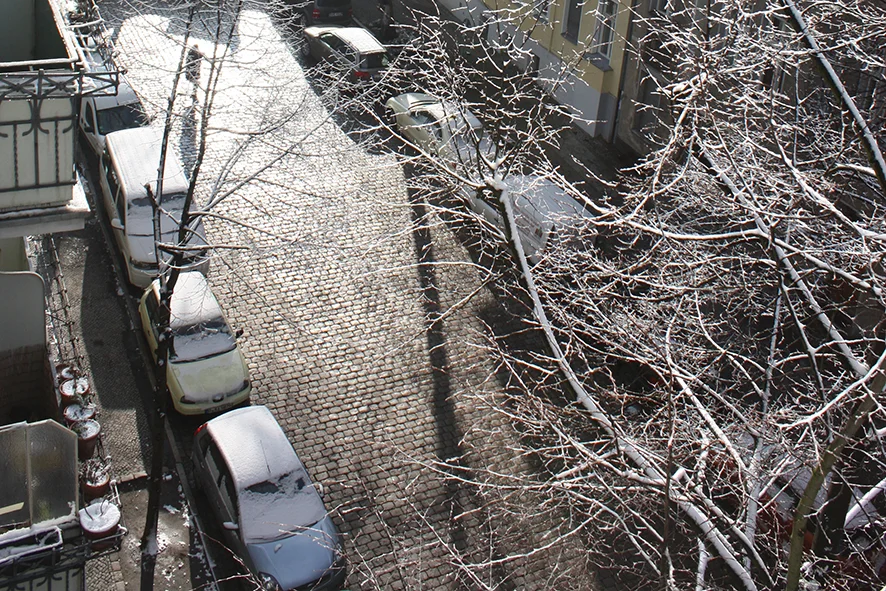
(above: the view from a window, Berlin-Neukölln)

The second in our series of short interviews with the people working on Elsewhere, from the editors and designers to the writers and photographers, is with Creative Director Julia Stone…

What does “home” mean to you?

Home to me is a place I feel connected to and belong, in some parts because of having spent longer periods of time there and in some cases by having belongings there. But mainly it is because of specific people that make me feel that way. My homes are in Bangkok, where I spent my childhood, and more specifically Pakkret, just north of the city, where my father lives - but although I love spending time there I still always feel foreign because I don't speak Thai well and language is such an important factor in fitting in. Then there is Hamburg, where my mom and grandma live and I also have many high school memories. And of course, for eight years now, there is Berlin.

Although I am not very sentimental about any of these places, the most important of the three is my grandma's house in Hamburg. I think this is because because my grandparents built it when they were young and my mom and uncles grew up there, so there are so many family stories connected to the place, not just mine. I can see myself finding new homes in new places in the future, as long as the people stay constant.

Where is your favourite place?

Same as above, and shared with my favorite people, but I don't think I have a specific favorite place. Narrowing it down to Berlin, I really love Tempelhofer Feld, the former airfield that is now a park where I like to rollerblade or just wander around and watch the sky over Berlin and the other people rolling around with every imaginable contraption/kite/sail, catch a few tunes from the bagpipers that practice there in summer, look at the community gardening projects, and if it is sunny and warm maybe flop down next to the areas with the tall grass that are nature conservation areas and listen to the sound of the birds.

What is beyond your front door?

A rather quiet cobblestone residential street in an otherwise very busy Neukölln neighborhood. Thirty steps to the left there is some sort of construction going on; it looks like a giant basement is being built behind the former Kindl Brewery. On the opposite side of the street a hip bar that is always packed and I can see the DJ from my living room window. Past the bar and 500 meters further you're on Tempelhofer Feld. Down the street right from my front door you're on Karl-Marx-Straße, Neukölln's main commercial street.

What place would you most like to visit?

There are so many, but I have this list at the back of my diary where I jot down some of the more spontaneously doable places I'd like to visit on short notice. So far the list for this year includes: Vogelsang Kaserne; paddle to the boat wreck in the Spree near Badeschiff; Szczecin by train; Oberaach to Bern seeing Swiss friends and what lies in between; Toulouse visiting some fantastic couchsurfers I hosted a while ago. And when I'm in Thailand next time I'd like to join my father's housekeeper visiting her hometown near Hpa-an in Myanmar.

What are you reading/watching/looking at right now?

Last weekend we binge-watched all episodes of the series Fargo. It is set in wintery Bemidji, Minnesota, where the average temperature is below 0°C five months of the year, and in the series people are "disappeared" in holes cut in one of the hundreds of ice covered lakes in the area. Bloody trails in the snow are followed through forests to cabins hidden away along deserted country roads. And of course in a small town like Bemidji, with only 13,000 inhabitants, the suspects, victims and police officers have known each other since childhood and have their personal histories with each other, further complicating the solving of the crimes...

Postcard from... Tokyo

We are in Roppongi, my new friend telling me stories of black marketeers turned into real estate moguls who made their first money from US soldiers stationed at a nearby barracks and have now built skyscrapers and shopping malls.

“Are you hungry?” he asks, and I nod. It feels like we have been walking these streets for hours.

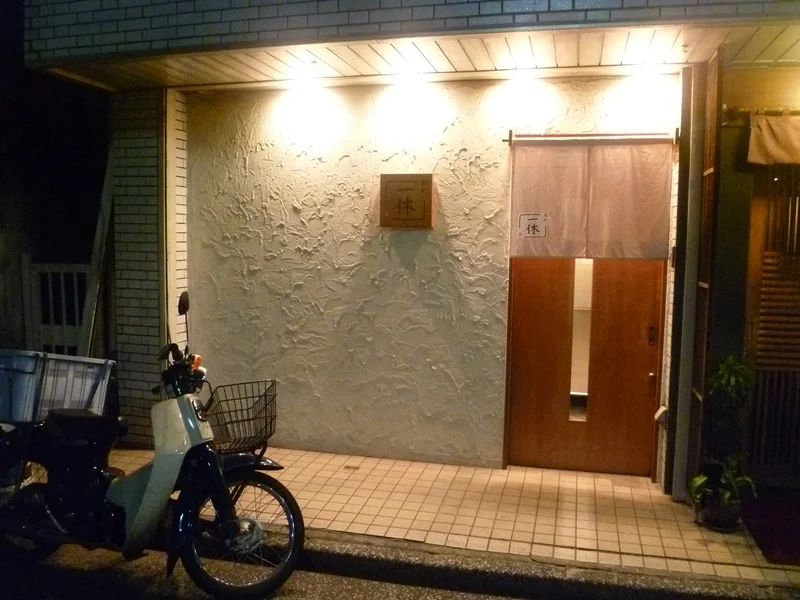
He takes me to Shibuya, where he used to live before he started his family and moved further out, closer to the hills and mountains he loves so much. We walk through residential streets where all is quiet on this January evening. He points out some places he knows, bars and restaurants where he is no longer as regular as he would like to be, now that that he has moved. We duck through a curtained door and into the restaurant. Inside there are five women, sitting at the counter, and a family at the single table. We sit down at the last two seats.

I have no influence on what follows. Between my friend and the cook they work out what we are going to eat. We drink beer and eat with our hands. It takes us two hours to finish our meal, and at quiet moments our neighbours ask questions about me. The questions are polite, the answers - once translated - received with reassuring smiles. In any case, I don’t mind. I feel safe here.

Postcard from... Maleme (The Dead Beach)

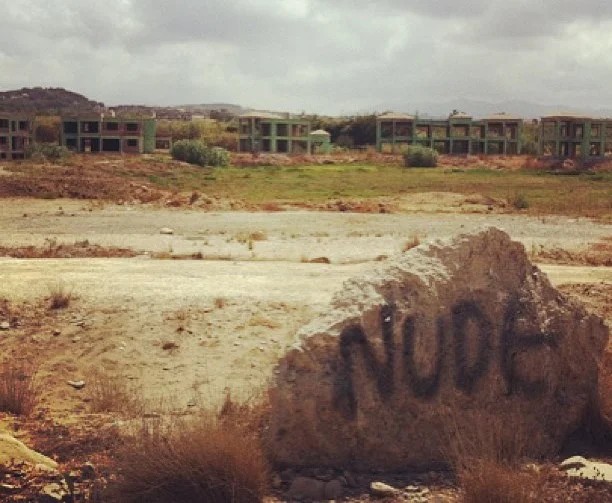
On the Dead Beach, it feels like there’s nothing. One middle-aged man sunbathing nude, and one other old man shuffles past, with wrinkled, deep-fried brown skin and a long scroungy grey beard and long grey hair, clad only in black speedos and sandals. He looks like the last remnant of Crete’s hippie past.

To either side the pebbly beach stretches for kilometres on end, disappearing in the distance in a haze of sunlight and spray from the surf. Behind the beach is an empty sea promenade, where confused tourist couples can be seen walking under the blind and shattered streetlights from time to time, trying to find a rainbow-coloured cocktail bar. The empty shells of the ghost estates stare back at them.

By Marcel Krueger

Five Questions for... Paul Scraton

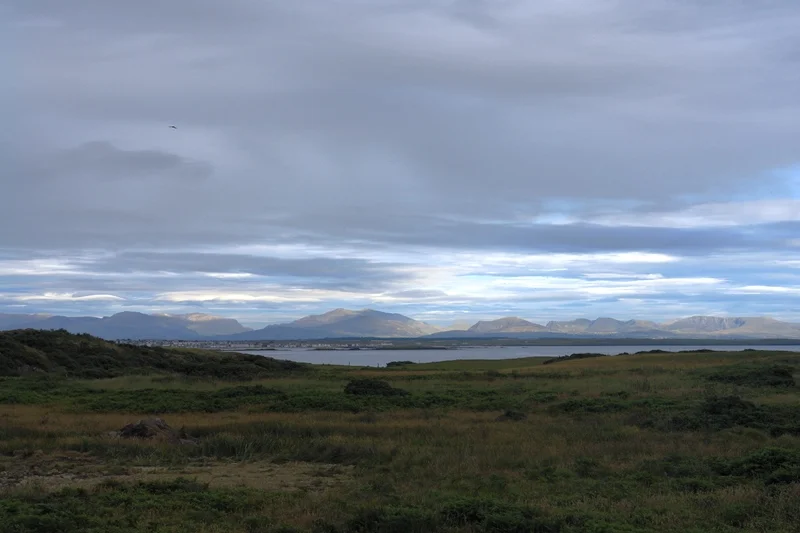
(above: the view from Rhoscolyn across Anglesey to the mountains of Snowdonia)

We wanted to use the Elsewhere blog to introduce you to some of the people working on the journal, from the editors and designers to photographers and writers. We start the series with Editor in Chief Paul Scraton...

What does “home” mean to you?

I grew up in the north west of England, in a small town divided by canals and railway tracks, both of which provided us - as we grew older - the chance to understand the place in our own way, whether as a means of hiding from the world around us or to escape to places new (and Southport). My parents no longer live there, and I have not been back in over ten years, although sometimes I pay a flying visit using Google Maps. For over a decade I have lived in Berlin, and it is certainly “home” for now… even if I sometimes feel stuck in that limbo of still not feeling like I belong in Germany, only to return to England where I also feel like an outsider, however much I read the Guardian, listen to the BBC or read books...

Where is your favourite place?

Rhoscolyn, at the bottom of Holy Island, off the west coast of Anglesey, in North Wales. I spent many childhood summers where my Aunty and Uncle built their outdoor centre and campsite. We would meet the same group of kids year in, year out, spending our time exploring the surrounding coastline, playing games on the field, and having fires down on the beach… as well, no doubt, as being bored, moaning about the rain, and wondering - as we got older - how we would get beer when the nearest off licence was about five miles away. The walk around the headland, with views across the island towards the peaks of my Snowdonia remains my favourite in all the world. We try to go back as much as we can, so that my daughter can start to build her own memories of a place that has touched so many.

What would we find outside your front door?

A busy street divided by a central reservation along which one of the few trams that operates in the former West Berlin rumbles. If you look at a tram-only transport map of Berlin it is almost entirely contained within the former East… a legacy of the years of division that continues over twenty-five years since the Wall came down. I have spent a lot of time in recent years exploring the traces of the division of this city, and it is fascinating how it continues to shape Berlin to this day.

What place would you most like to visit?

Alongside Elsewhere I am currently working on a project about the German Baltic coast… there is an island called Hiddensee, where no cars are allowed and which has an almost mythical place in my imagination. On the one hand I really want to finally make it there, taking the ferry from Rügen or Stralsund… but on the other I like the idea of a place that is always there waiting, and can be anything I imagine it to be. I would also love to continue my explorations one day along the Polish Baltic to Kaliningrad… the whole history of that part of the world fascinates me.

What are you reading right now?

Places that interest me often revolve around borders… whether natural, like the coastline or a river or the moment where the mountains rise up from the plains, or political – a line drawn on a map that has some consequence on the ground. I recently started reading Colm Toibin’s Bad Blood, about his walk along the border between the Republic of Ireland and Northern Ireland in the aftermath of the Anglo-Irish Agreement. My dad lives in Belfast and I know that things have changed even in the time since Toibin made his walk, which makes it all the more fascinating not only as a record of his experiences, but as a piece of history of a particular time and place.

Paul’s wanderings can be found on his website Under a Grey Sky, and his explorations of the Berlin Wall Trail on Traces of a Border. He is the co-author of a book Mauerweg: Stories from the Berlin Wall Trail and his latest book is The Idea of a River: Walking out of Berlin, published by Readux Books on March 2nd 2015.

Postcard from... Bangkok

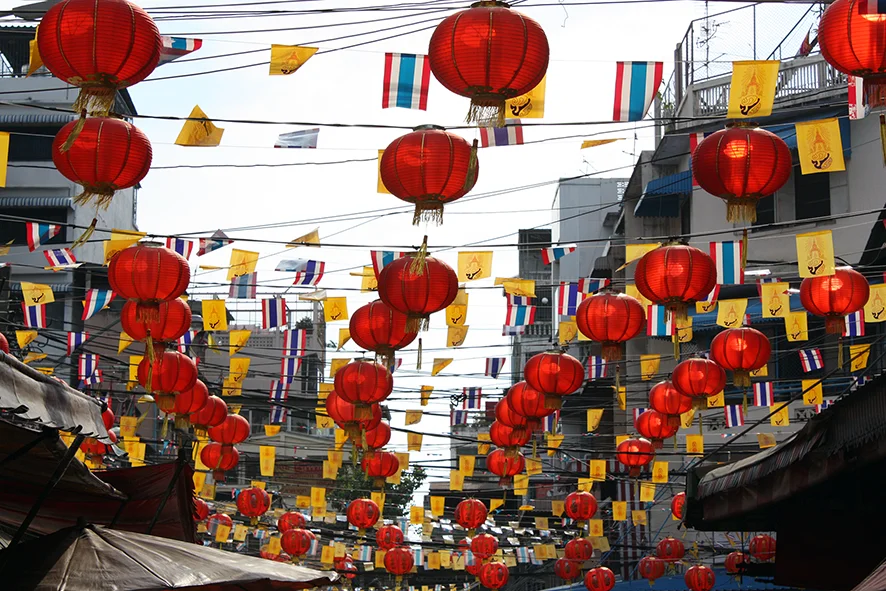
The Mangkorn Road is named for the Dragon, and here at the heart of Bangkok’s Chinatown the red lanterns hang across the street alongside the Thai and Royal flags. The lanterns have been hung for Chinese New Year, the flags for the King’s birthday two months ago. This is one of the longest established neighbourhoods in the city, a busy area of trade and commerce that manages to combine some of the worst air pollution with the highest real estate prices in Bangkok.

Not that any of this matters when the celebrations get under way. Almost ten million Thais are Chinese, and Thailand has the largest Chinese community in the world. Added to this, some forty percent of Thais - including the Royal family and many former prime ministers - have some Chinese ancestry, and over four centuries the Chinese community has been integrated into all levels of Thai society. So New Year is a big deal on the Mangkorn Road, where the dragons dance beneath the lanterns on the street that bears their name.