Postcard(s) from... Lime Street, Liverpool

By Chris Hughes:

Lime Street is one of the best known street names in Liverpool, as it gives its name to the city’s main railway station, and recent developments to both the station and its surroundings have brought great changes to the street. The huge station hotel, built in French chateau style, is now student accommodation and retains the grandeur it shares with the St George’s Hall across the Lime Street plateau, with its art deco war memorial and massive stone lions. This all suggests a Lime Street both grand and beautiful, and yet walk on and the street changes in nature.

On one corner the Crown pub stands with its decorated exterior hiding its ornate plaster ceiling inside. Opposite, the beautiful art deco cinema is closed and abandoned, its own fantastic interior shut away in the dark. At the far end of the street stands another of the city’s great pubs, complete with fabulous tower and the best etched and originally cut windows in Liverpool. The Vines dates back to 1907, and along with the Crown stands in contrast with the dour and struggling parade of shops that separates them.

So this is the scene. And then suddenly almost everything is closed and borders up. Builders signs erected and pavements closed. There is no information, but surely the old picture house is not to be demolished. Surely it’s listed? The next time I walk by, it is gone, part of a masterplan of redevelopment for this stretch of one of Liverpool’s main streets:

City’s change and some places have their time. I hope the plans work, and that the full length of Lime Street can stand as proud as the station that bears its name. In the meantime I’ll keep walking and watching, documenting the progress as it goes...

New Town Utopia, a film by Christopher Ian Smith

Sometimes a project comes along that really captures our attention, and the news of a kickstarter campaign for Christopher Ian Smith's documentary New Town Utopia is exactly one of those moments. The film explores the utopian dreams and concrete realities of Britain's new towns, with a focus on Basildon in Essex where Smith grew up, reflecting on its ambitious and aspirational beginnings and its subsequent fall from grace.

New Town Utopia is, therefore, a journey into art, architecture and memory, and the stories of those people who call Basildon home. The idea is to discuss the question of whether it is people who make a place, or if a place makes the people... have a watch of the film they have put together for the kickstarter campaign to learn more about it and it hear Smith talk about his motivations for making the film:

New Town Utopia has been four years in the making, but as Smith has said, there is a certain urgency to its message right at this moment: “It is more relevant than ever - as the housing crisis exposes the long term impact of ‘right to buy’, globalisation continues to decimate the traditional high streets, and the Brexit vote revealed the depth of dissatisfaction of the Basildon people with their lot. This film is a chance to explore the complexities of a place so often derided on local and national level. In doing so it reflects on the issues impacting all our towns and communities” 

You can follow New Town Utopia and find out more about the film on twitter, facebook or via their website. The kickstarter campaign which will run until September 26th can be found here.

Postcard from... the Concrete Footpath

It is like one of those riddles that begin something like this... There is a dead man, lying in the middle of the desert. Between his fingers is a broken match. What happened here?

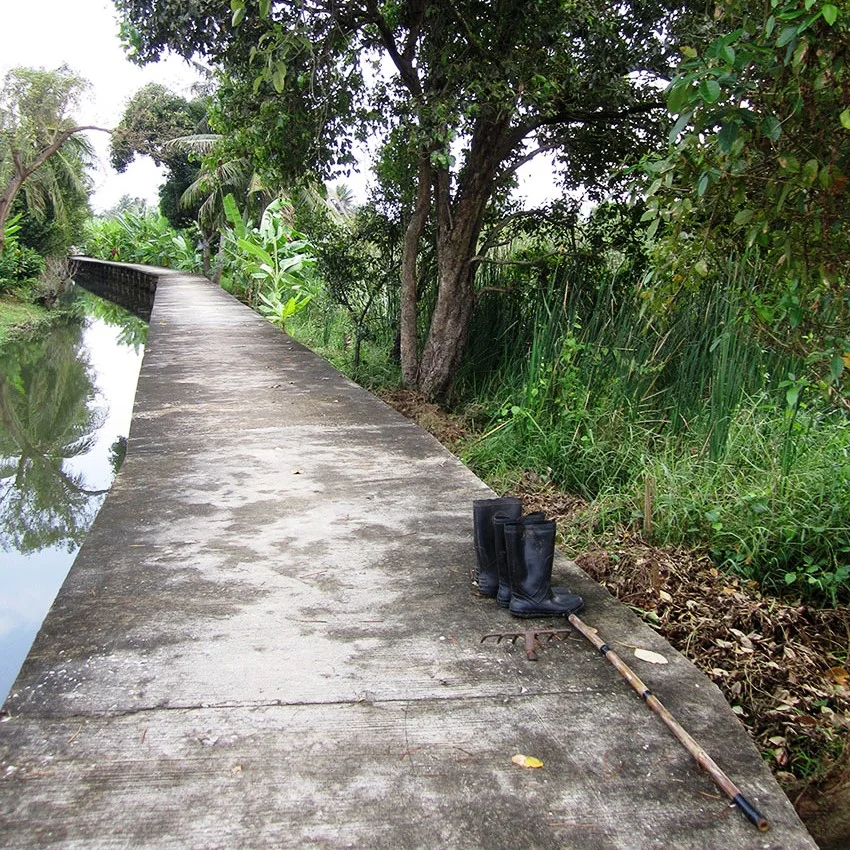
On the concrete path, in the marshy, semi-cultivated edgeland, I come across this scene. Two pairs of wellington boots and a disassembled rake. No sign of the boot wearers, or indeed the owner of the rake. It was a moment to stir the imagination as I paused on the path and the question to the riddle came quickly to mind. 

What happened here?

Lo Sound Desert

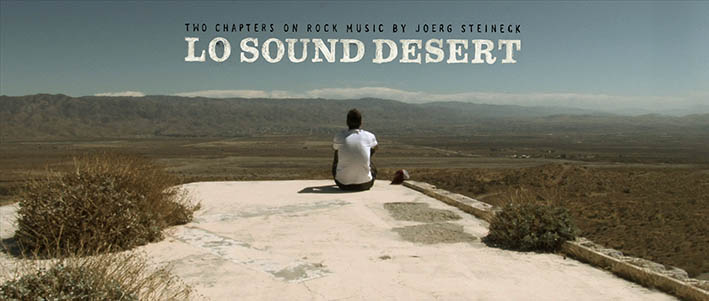
Watch LO SOUND DESERT here: www.losounddesert.com/order LO SOUND DESERT is a documentary by Jörg Steineck about the rock music scene in the Low Desert of California. What was started by revolting punk rock kids, hidden from narrow-minded authorities of sub-urban desert communities in the early 80s, gave birth to bands like Kyuss and Queens Of The Stone Age.

Long time followers of Elsewhere here on the blog will know that we flagged this project last year during the crowdfunding campaign to bring the documentary film ‘Lo Sound Desert’ to completion. We are extremely happy to announce that following successful festival screenings, premieres around the world and some great reviews, ‘Lo Sound Desert’ by Joerg Steineck was officially released last month and is available now to stream, download or for purchase as a DVD.

Beyond the music, ‘Lo Sound Desert’ appeals to us here at Elsewhere because it is a documentary about a specific scene at a specific time in a specific place. The Coachella Valley music scene in California began as revolting punk rock kids, escaping from the narrow-minded authorities of their suburban desert communities in the early 1980s, jamming all night in the middle of a surreal desert landscape. This scene gave birth to bands such as Kyuss and Queens Of The Stone Age, and the ‘desert rock’ would soon spread through the underground music scene until bands such as these were headlining European stages.

'Lo Sound Desert’ was inspired and created by the same sense of autonomy inherent to the scene it portrays, self-financed through a ten year production period that has resulted in an intimate insight into a unique music scene that, like the film, is framed and coloured by a very unusual environment. The film is narrated by Josh Homme, Mario Lalli, Brant Bjork, Alfredo Hernandez, Scott Reeder, Sean Wheeler and many more from bands such as Kyuss, Queens Of The Stone Age, Yawning Man, Fatso Jetson and Mondo Generator.

This is a story about music and place, and is one which has never before been told.

Lo Sound Desert website


Postcard from... Lake Mungo

By Nick Gadd:

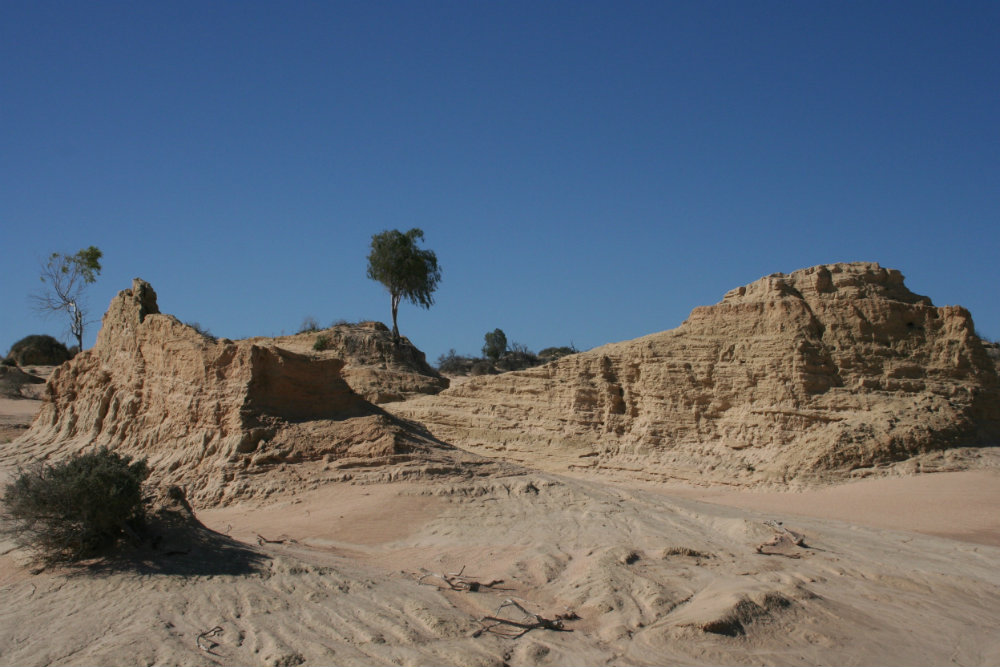
The most immediately striking aspect of Lake Mungo is the dunes. At the eastern edge, on a crescent-shaped fringe of sand and clay called a ‘lunette’, extraordinary natural sculptures appear, carved by the wind and weather. Once they were covered with vegetation, but after European settlement sheep and rabbits quickly disposed of much of it, and these days only a few trees and bushes remain, clinging photogenically to dunes that resemble scenes from a fantasy landscape. 

There’s no visible water.  Before the last Ice Age, 20,000 years ago, this was part of a huge network of fertile lakes and rivers in the south-west corner of what is now New South Wales. Today it is a vast dry bowl, vegetated mainly by saltbush and criss-crossed by kangaroos, though Aboriginal oral history tells us that the lake filled again within the last few thousand years.

If that was all there was to Lake Mungo, it would be remarkable enough. But the really astonishing discoveries are below the surface. The wind is blowing the dunes eastward at a rate of three metres a year. As they move, the sands are giving up their secrets, including human skeletons, tens of thousands of years old.  

It was here, in 1969, that archaeologist Jim Bowler discovered the bones of ‘Mungo Lady’, followed a few years later by ‘Mungo Man’, the oldest human remains found in Australia. Both these bodies showed signs of sophisticated burial and cremation practices, pointing to at least 40,000 years of unbroken human occupation and culture at Mungo. Since then there have been many more discoveries: bodies, fireplaces, axes, mussel shells, the skeletons of megafauna – even, poignantly, a set of footprints, 20,000 years old, baked into the soft clay by a group of running men, walking women, and a wandering child. 

Walking across the dunes today, we leave our own footprints, the indentations of our boots intersecting with the tracks of a kangaroo that passed through a few hours ago. It inevitably leads us to wonder how many more ancient ancestors lie beneath our feet, and what might remain of the destructive culture of the West in 40,000 years.

You can read more from Nick on his website Melbourne Circle: Stories from the Suburbs and follow him on TwitterNick was a contributor to Elsewhere No.02 where he wrote an essay on the ghost signs of Melbourne.

Exploring Place: Along the Outskirts – Marc Atkinson and Ken Worpole

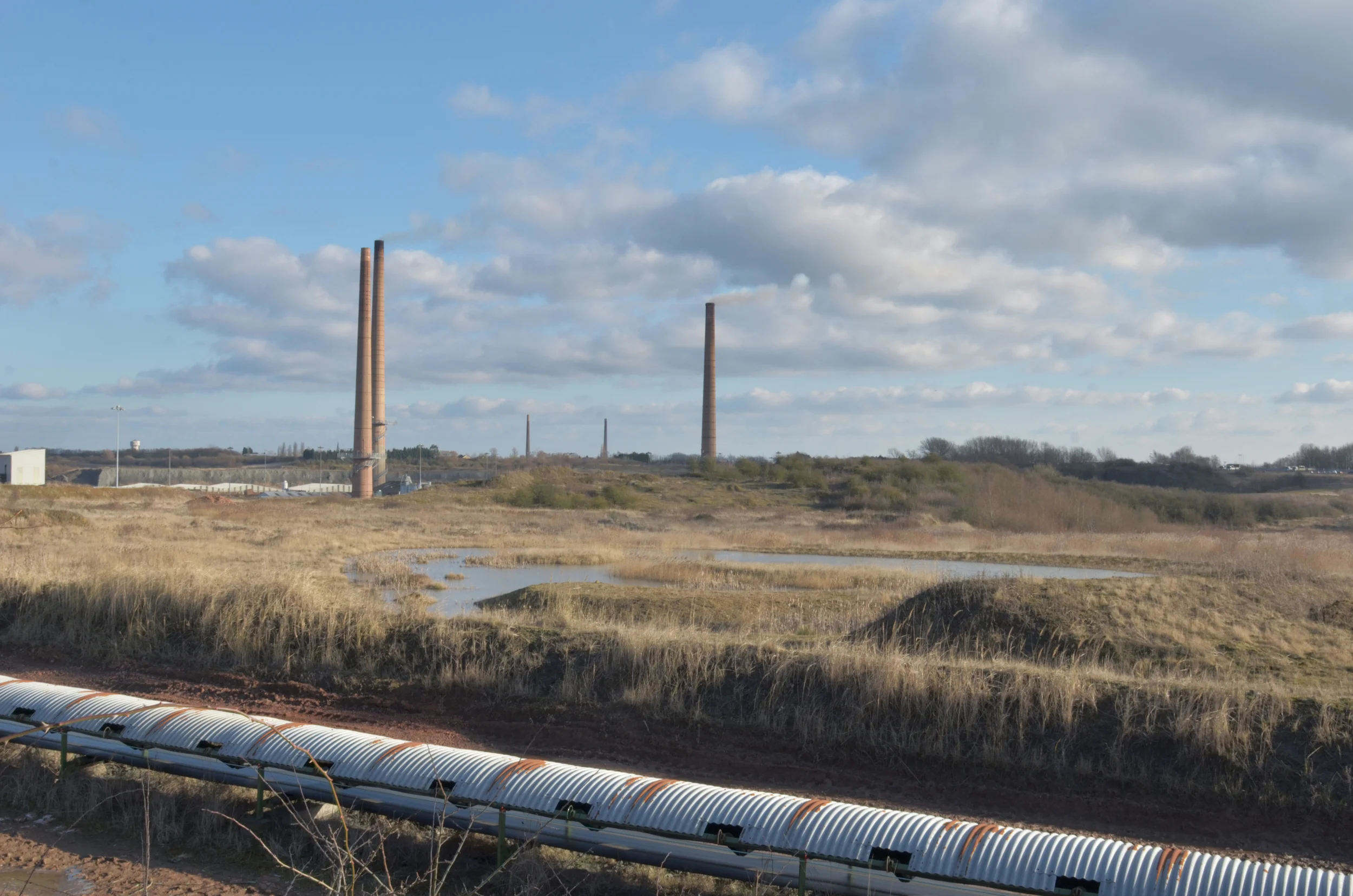
There are many ways to explore and document place, and we wanted to draw your attention to a project that captured ours from the United Kingdom. For a year the artist Marc Atkinson walked the surrounding edgeland of his home city of Peterborough. The result was a collection of photographs, films, catalogue and website that reveal the hybrid new landforms and erstwhile woodlands that can now be found encircling the rapidly expanded city. Along the Outskirts combines material that Marc gathered with interviews with local walkers, residents, itinerant travellers and edgeland workers.

From the project introduction:
 
“Peterborough like many English cities, has a complex relationship with its surrounding landscape. The project highlights the multiple uses and evolution of a terrain, that appears to be in constant transition. The outer edges reveal the alternative experiences and histories of our cities, whose identities are usually projected from touristic, fixed and centre based perspectives. Through reflection and recollection, our landscapes can still be easily read and reveal to us the traces of our past, the issues of the present and the possibilities of the future. 
 
It can be argued that there is an increased urgency in the current climate, to highlight these ‘uncharted’ areas, in order to consider the impact both positive and negative of town planning, housing developments, migration and increased geographic mobility on our landscape, heritage, wildlife and communities.”

A series of the photographs from the project are presented in the limited edition catalogue for Along the Outskirts alongside an essay from the celebrated writer Ken Worpole, who writes:

“Banishment, or self-withdrawal, to the margins of the city is a long-standing trope of English history, though it is found in many other cultures.  It is there in the fable of Robin Hood, in Shakespeare’s A Midsummer Night’s Dream, in a myriad of fairy stories, as well as in modern horror cinema. What may be different about the modern version of this trope is that where there was once a strict boundary between city and country – especially in the walled cities of medieval society – today that boundary is much more porous, giving rise to a deep anxiety or ambivalence over what can and can’t be allowed to happen in the urban edgelands, as they are now most commonly called.”
 
The catalogue is available from the project website, and a selection of the photographs and a 60 minute film are being shown as part of an exhibition being held at the City Gallery, Peterborough until the 28th August. To find out more about this fascinating project of place, head over to the project website here: Along the Outskirts.

Postcard from... A Rest Camp, 1918

By: JP Robinson

Feb 22 Friday
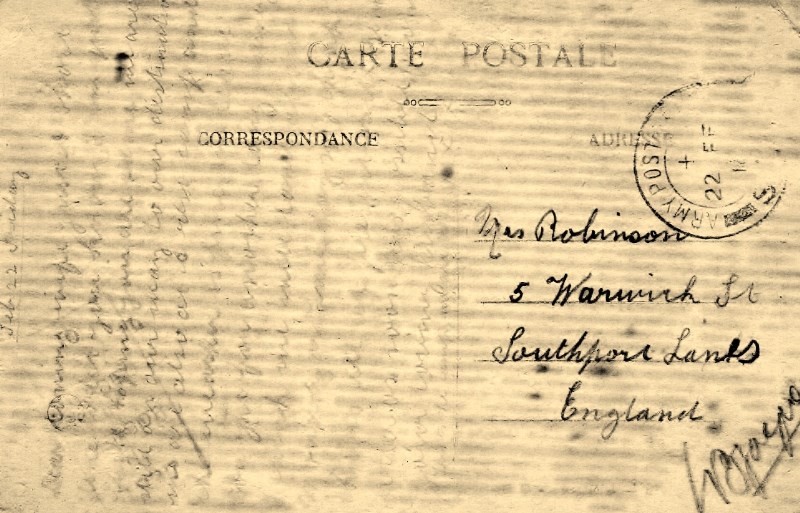
Dear loving wife just a short line to let you know… just… hoping you are… we are on our way to our destination. We are also at a rest camp and the weather is fine. … another long journey … we will … as soon as possible … your loving husband X X X This is the camp X X X

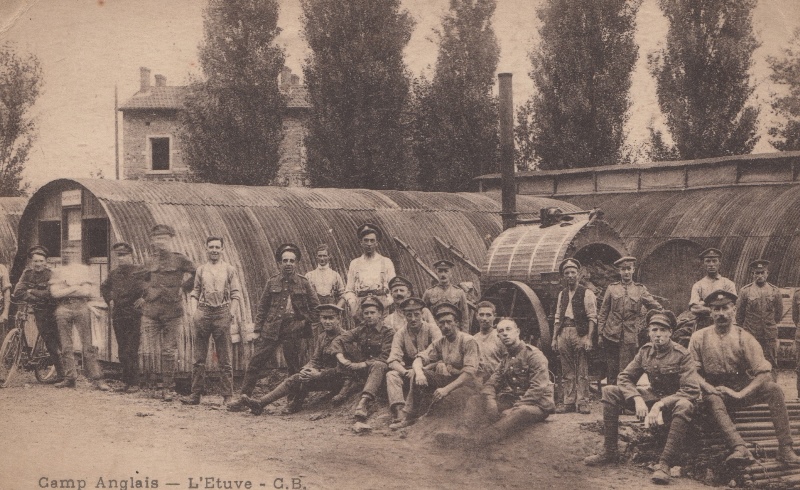
Most of the text on the postcard that James, my great-grandfather, sent to Lucy, my great-grandmother, is faded now, but the address and the censor’s counter-signature are still clear. Although he had no Scottish heritage, he was a private in the Liverpool Scottish, and he wore his battalion kilt as he wrote, from Le Preol, in northern France. There wasn’t much at Le Preol, aside from the well-established rest camp, with the corrugated iron buildings pictured on the postcard. Another Liverpool Scottish man remembered “a pretty little village set in low-lying wooded country close to the Aire-La Bassee Canal”, which “showed none of those jagged stumps of shell-riven trees that betoken counter-battery work”. The men didn’t stay for long. James wrote the card on a Friday, knowing they were leaving soon. On the Monday, they walked the two miles to the trenches, just as they had at the Somme and Ypres. 

There were vast craters at the front line, around the ruined villages of Givenchy and Festubert. One crater, known as Red Dragon, was one hundred yards long and fifty feet deep. A soldier who relieved the Liverpool Scottish recalled that, as he arrived, “dead men lay about”. There were “bloated trench rats”, he said, and scared soldiers in need of rum. The communication trench “was sickeningly yielding underfoot with the bodies of the buried men. Here and there a leg or an arm protruded from the trench side”. 

James’s life had been haunted by death. He was born in 1882, and was named after his six year old brother, who had died the year earlier. The family lived at 75 Cemetery Road, in Southport, Lancashire. Apart from his time in France, he lived all of his life within a hundred yards of the cemetery. There was a monument there, built when James was six, for the twenty seven men who’d died in the Great Lifeboat Disaster. Two of the dead were James’s cousins, who lived around the corner, on Boundary Street. 

Following the disaster, James’s grandfather took over as coxswain of the new lifeboat. There was a second, less famous, lifeboat disaster ten years later; James’s grandfather, his father and an uncle drowned when they were working on the lifeboat moorings off the pier. James’s mother died sixteen months later, when he was eighteen. They were living at 28 Warwick Street then, perpendicular to Cemetery Road. James became a market porter, and then drove a bread van, before going to war. He was the first man in his family not to make his living on the fishing boats.

When he married Lucy, after a short stay at Matlock Road, parallel to Cemetery Road, they moved back to Warwick Street, to a two-bedroom end terrace at number 5. They had two children: Eliza, named for James’ mother, and James, my grandfather, born the year before war was declared. They could see the tower of the cemetery chapel from their back bedroom window. Lucy would have first read the postcard from Le Preol in their dark front room. 

Lucy kept the postcard safe, of course. When she died, in 1979, thirty years after her husband, the children gathered the few pictures she’d had of him, the postcard, and James’ burial record. She’d been living in the nursing home that my grandmother ran, on the far side of the cemetery. One photograph had James in middle-age, standing proudly with his crown green bowling trophies in the back yard. Another had them both in front of their small bay window at Warwick Street. One, from the thirties, had them laughing as my grandfather acted up for the camera. There were two from a day out to Chester, with James in a smart suit. There were two others of him, from the war, in his Liverpool Scottish kilt. He posed formally in one, stiff-backed. In the other, he was with some friends beside a wooden hut, in the mud, smiling.

James had died in 1949, after his son had returned from fighting in Egypt in the Second World War. He was sixty seven, and had overdosed on barbiturates. Some in the family thought it was suicide. He was buried under a low headstone, in the cemetery behind his home, close to the lifeboat monument and the graves of the ninety seven men who had died in the Great War.

Kowloon Walled City: An extract from 'Fallen Glory', by James Crawford

Photo credit:  ‘Inside the Walled City’, 1998 , © Patrick Zachmann / Magnum Photos

Photo credit:  ‘Inside the Walled City’, 1998 , © Patrick Zachmann / Magnum Photos

We are extremely pleased and proud to publish on the Elsewhere blog an extract from the fascinating new book Fallen Glory by James Crawford. In it, he uncovers the biographies of some of the world’s most fascinating lost and ruined buildings in a unique guide to a world of vanished architecture. In this extract, James takes us to the Kowloon Walled City, Hong Kong – Born 1843, died 1994:

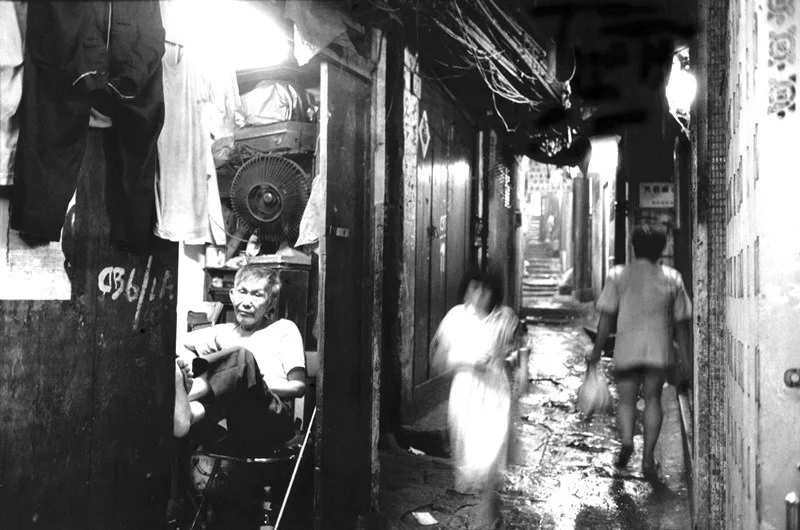
In the aftermath of the Second World War, refugees flooded south to the Kowloon Peninsula. The only trace of the old city was the derelict shell of the Mandarin’s house. Yet people gravitated almost instinctively to this rough rectangle of ground. Perhaps it was the feng shui. The Walled City had originally been laid out according to the ancient principles of Chinese philosophy: facing south and overlooking water, with hills and mountains to the north. This ideal alignment, it was said, brought harmony to a ll citizens. In their desperate plight some refugees may have believed that Kowloon would be a much-needed source of luck and prosperity. Others, however, recalled that this had once been a Chinese exclave in British colonial territory. The stone walls of the ‘Walled City’ had gone, but the refugees were convinced the diplomatic ones remained. 

By 1947 there were over 2,000 squatters camped in Kowloon, their ramshackle huts arranged in almost the exact footprint of the original city. No one wanted to find themselves outside the borders – those on the wrong side of the line risked losing the protection of the Chinese government. The people kept coming, and the camp grew ever more squalid and overcrowded. 

READ THE REST OF THE EXTRACT...