Beacon Bound, Part IV: Momentum

Stripes.jpg

In memory of his grandfather, Nicholas Herrmann walks the length of The Ridgeway: an ancient road stretching for eighty-seven miles across chalk downland, from Overton Hill to Ivinghoe Beacon. We will be following Nicholas’ journey here on the Elsewhere blog over the next couple of months.

As I round the corner a field comes to life, spiralling into the sky. I count twenty before they tornado away, another nine still hunched in the sun. The air is a solid wall of wings. This could be normal for all I know, but it feels like an omen: the universe flexing, a flurry of autumn heralding the end. I lift my camera too late, and through glass watch as the storm of kites blows silently over the hill.

But this is later. The day starts where we left off: by the walls of the neighbourly Church of the Holy Trinity, where we’re offered tea and biscuits before we’ve even begun. A kestrel splashes above the Ridgeway, treading water in the sky. Soon, the path is swallowed by a golf course, so we hunt for waymarks, following a trail of painted acorns. My skin prickles as I pass over dead patches on the manicured lawn – grass singed in the recent heatwave. Today, the conditions for walking are good: cool and overcast. We’ve finally made it to the other side of summer.

Berries.jpg

Like deer, we slip across a road and into the trees, passing through alternating woods and fields of flint. The forested strips are tangled and dim, but autumn’s psychedelia is already spreading. The flash of an arum lily blazes through the late-summer green. Branches droop with dark clumps of elderberries and the shadowy orbs of sloes. Ripening rose hips blush between the leaves. Hawthorns radiate red. At intervals, we pause to gorge ourselves on blackberries, quietly marvelling at their galaxies of flavour: rich, soft, syrupy, like wine. We have entered the treasure season, when countless precious things are offered up by the earth. Happily, I tongue at a seed in my molar as acorns and conkers rain down on the approach to Swyncombe – a village where sheep-eaten trees rise from the field like bearskin hats, the culprits patrolling the grounds around the steeple-less church of St Botolph.

Woods.jpg

The miles start to merge. West of the Thames, the path had defined sections, distinct chapters punctuated by landmarks and sudden topographical changes. There’s less drama in the Chilterns, the path meandering between field and forest, rolling from hamlet to farm. With a lack of milestones, we weave across the landscape in a daze, scattering pheasants as we sleepily kick through crabapples. At a certain point, the path drops and turns sharply northeast. This is where the storm of kites is waiting.

I freeze beneath the boiling sky.

More tree-lined avenues, more fields gilded by the intermittent sun. We pass a yew tree, its berries like bright little bells. All parts of the yew are toxic to humans: the needles, the branches, the bark. Only the fruit can be eaten – the fleshy aril – but not the seed inside, which can cause rapid heart failure due to the lethal amounts of cardiotoxic chemicals called taxine. I remember John worrying me at a young age with this strange fact, on a walk somewhere in the Chilterns. If he were here now, he might also explain that these same compounds can slow and kill cancer cells, and a number of chemotherapy drugs are developed from yew trees. This is a fact I learn later in my research, but I’m sure its one John would have known. This was his area of expertise – for years he worked as a biochemist at a major pharmaceutical company, helping to develop the antibiotic cephalosporin. I reach out. My hand hesitates by the branch. But without John here to reassure me of the biology, I lose my nerve, leaving the ripe berries uneaten.

An immense concrete structure rears out of the landscape, penetrating the hills ahead. We’ve arrived at the Stokenchurch Gap, a forty-seven-metre canyon gouged into the chalk by the M40. The motorway dominates the countryside, drowning out birdsong, polluting the fruit that lines the approach, and crowding the Aston Rowant National Nature Reserve – one of four initial sites chosen for the UK’s 1989 red kite reintroduction programme. Perhaps this explains my earlier encounter: we have found the kite’s heartland, the bird’s birthplace. The road might even serve as some kind of umbilical cord, nurturing them from the cradle with a steady stream of roadkill. I walk quickly through the underpass, aware of the weight thundering overhead. On the other side, a group of horses cowers by a hedge, sonically trapped in the shadow of the road. I wonder if they even notice it anymore, that white noise forever in their skulls.

The roar stalks us for a mile or more. Horse chestnuts lead the way towards Chinnor, already red and shedding to cover old horseshoes in the dry earth. The smell of autumn hits me here: damp and gloomy, brisk and cosy, bringing with it a hundred memories of fires, fireworks, fangs and fake blood. My parents and I sweep through the leaves in silence, the season returning us to our childhoods.

Road.jpg

Once more, clouds gather over the homestretch, mirroring the curves and contours of the downland below. We leave the Ridgeway at a crossroads, turning for the nearby village of Crowell, a leaden sky creeping from the west.  

We’re heading for the edge of the world.

Huge, flooded hollows appear on either side of the path. These are the remains of a former chalk quarry, now the Chinnor Chalk Pit Site of Special Scientific Interest. I catch glimpses behind the trees: white cliffs falling to ice-blue water and wading birds. My father remembers visiting the town as a child when the quarry was still in use, and noticing a layer of white dust over everything. Today, tall wire fences and warning signs stop anyone from entering. It seems like a waste – two perfect lakes cordoned off and hidden from the world. I learn later that before security increased at the site, people would sneak in regularly to enjoy the forbidden waters.

Despite the blockades, it’s a pleasant stretch, warmed by the last of the year’s sun. Dragonflies dart between unearthly plants: spidery teasels and plump, purple buddleia. Soon, we’re crossing over a road to a section of the path bustling with runners and dog walkers, shouts drifting from a nearby football match. The way opens up to the sudden sweep of the Aylesbury Vale, then continues on past tennis courts, hedges trained into unnatural shapes, and wooden fences smeared in creosote.

Lodge Hill.jpg

We’re taken through ash plantations and over storybook hills, where house martins swell above the stubble – one final flight test before heading south. We’ve been hugging the foot of the Chilterns until now, but finally the path rises steeply up Lodge Hill. We stop halfway to catch our breath, and my father tells us about the homemade topographical maps John used to build, reconstructing the Chilterns by cutting and layering sheets of polystyrene. For the rest of the climb, I imagine myself in miniature against a white background, stepping from sheet to sheet.

Finally, we’re in the sky, with vistas reminiscent of the North Wessex Downs, Princes Risborough glittering in the distance as it catches the late-afternoon sun. Small orange butterflies spiral along the ground like fallen leaves, leading us over a railway line to meet up with the Wycombe Road, which rushes towards the edge of town. Here, we veer off, skirting the perimeter through back alleys to another busy road, where vintage cars rumble past on their way to the Kop Hill Climb car show. We’ve made it into Buckinghamshire, our penultimate county.
Panorama.jpg

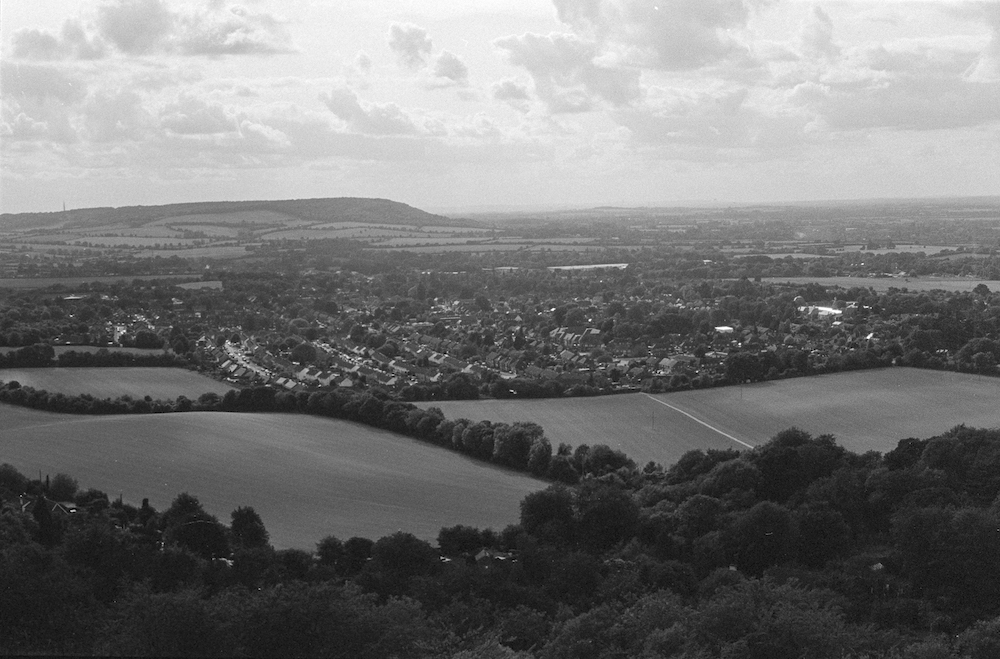
A giant white cross of unknown origin, carved into the side of Whiteleaf Hill, watches us climb to the bottom of Brush Hill and into the trees. At the top, I startle a drone hovering above the nature reserve like a mechanical kestrel. It lurches in the air, regards me for a moment, then quickly whines away. I turn to get a drone’s-eye view, and I’m struck by a panorama that stretches all the way to the familiar outline of Didcot Power Station squatting in the haze. The distant smudge of the Marlborough Downs lies beyond, where we were clambering half a year and half a world ago. We’re gathering momentum – by the end of the day we’ll only be left with a handful of miles, having travelled through ancient eras and extinct kingdoms, over thousands of years: sarsens, castles, barrows and bunkers, combes, downs, towns and fields, churches, power stations, waterways and motorways, heat, sleet, wind and rain.

Unusually, the path cuts through a pub, squirrelled at the bottom of the scarp. We stop at The Plough to raise an ale to John. Nearby lies the entrance to another nature reserve: the sheltered haven of Grangelands and The Rifle Range, where sheep balance on rippling grassland, and a photographer waits patiently for the golden hour. From here, we follow the bob and roll of the landscape to the Chequers estate. We give the house a wide berth, fearfully sticking to the path as I quietly describe the plot of Rogue Male by Geoffrey Household. In the grounds, a deer tiptoes past a black pole brimming with surveillance cameras.

In the dark of an evening beechwood, I trip over roots, unsteady and aching from tiredness. We finish just before Coombe Hill – a place my father and his siblings would be brought on walks when they were young. They called it The Edge of the World. The name feels appropriate: past this point the Beacon waits. We’ll step off the edge and drift the remaining distance, like ships sailing to the Undying Lands.

The temperature is falling, the light’s bruising blue. There’s something in the air, tightening and retreating. We’ve finished another journey but we haven’t quite arrived. Autumn’s just a border.

Nicholas Herrmann is a writer and photographer based in Bath. His work has appeared in journals and online, and his writing has been shortlisted for the Bath Novel Award and Janklow and Nesbit Prize. He is a graduate of the Creative Writing MA at Bath Spa University. He is currently working on his first novel. You can find him on Twitter: @NickPSH.

Bishop's Pool: A Poem

By Ciarán O'Rourke:

This poem has roots 
in the sea, and time: 

in Bishop's Pool, when 
we slipped the plunging sun...

and let the wrack-
blue waters 

haul and hold, com-
pletely plumb 

our bodies' bird-boned, 
drifting shiver

down to the merrow 
dark below, 

where breakers 
breathe

and the green foam 
drops 

a hundred ways
to shadow: yes, 

dropped and spilled 
our names afresh

as salt, and sand,
and a wind awash

with things we bring 
to the sea's flame,

which now (and 
every wanting season) 

lay claim 
to us again:

five shipwrecked 
mountains, dreaming mist, 

the cuckoo's eye, 
the brimming nest, 

the latch in the voice 
and lift of pain, 

the flit of a swallow
in a flense of rain, 

the wave in the blood 
and the swimming stone

that flows and falls 
by breath alone – 

like the ghosts we knew
on given nights,

soft as seals 
in the soundless light.

author pic.jpg

About the author: Ciarán O'Rourke was born in 1991 and is based in Dublin. He has won the Lena Maguire/Cúirt New Irish Writing Award and the Fish Poetry Prize. His first collection, The Buried Breath, is published by Irish Pages Press (November 2018).

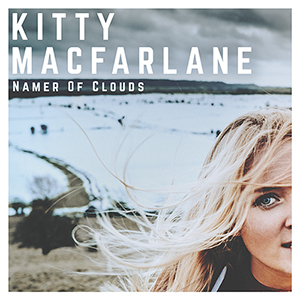
Music and place: Kitty Macfarlane's Namer of Clouds

kittyalbum.jpg

Review and Interview by Paul Scraton:

I first heard the music of Kitty Macfarlane on her EP ‘Tide & Time’ a couple of years ago and was immediately struck by both the beauty of her voice and the spirit of place to be found within the lyrics. ‘Wrecking Days’ was the standout song, with its stories of beachcombers stalking the shore, and it was great to hear it again in a new arrangement on Macfarlane’s debut album ‘Namer of Clouds’, which is released by Navigator Records this week.

All the tracks on ‘Namer of Clouds’ speak to our relationship with landscape, place and the environment, whether it is Macfarlane’s native Somerset on ‘Man, Friendship’ or the story of the last of the Sardinian sea silk seamstresses on ‘Sea Silk’. This is an album of haunting, lyrical music that asks the listener to consider her place in the world, the beauty to be found there and the consequences of our negligence or disinterest. On ‘Wrecking Days,’ Macfarlane describes what is left behind by the tide, and if there is poetry in the image of cuttlefish bones, there is certainly a warning in what else can be found on the beach, from the discarded fishing tackle to the plastic bottle tops, resting among the seaweed and stones.

This is thoughtful songwriting, whether in the original compositions or new arrangements of traditional folk ballads. The album closes with an artistic collaboration across the ages: on Inversnaid Macfarlane reworks a 150 year-old poem by Gerald Manley Hopkins about the importance of preserving the wilderness for future generations, a task that is as important now as it ever was.

You can hear ‘Man, Friendship’ and see the official music video below, and we are extremely grateful to Kitty Macfarlane for answering some of our questions about the album, her songwriting in general, and the importance of place in her work:

From the moment I heard Wrecking Days on the Tide & Time EP, it seemed clear to me that there is a distinct sense of place in your songwriting. What role do you feel place has in your work, and which places most influenced the songs on the new album?

'Place' isn't just a geographical location. It's bound up in the stories that span hundreds of years, the changing face of a landscape over time (and our part in that), the traditions that tie people to the land, and the inexplicable way certain corners of the world can make you feel. At school we are taught geography, history, art, chemistry... as if they are separate things. For me, songwriting pulls it all together. My album couldn't help but be a bit of a tribute to Somerset, where I am from – the scenery creeps into my songs almost by accident, along with the stories of the people and creatures that live there. That said, there is also a song set on a small Mediterranean island off Sardinia, and another which is a song-setting of a poem by Manley Hopkins about a Scottish stream. I wanted it to be an album of songs loosely bound by mankind's relationship with the land.

Of all the places you have written about or the landscapes that have otherwise inspired your work, which is your favourite?

Again and again my songs return to the beautiful and ancient Somerset Levels. They are a large low-lying wetland area of peat and clay with an eerie timeless quality - perhaps something to do with their yearly renewal by ruthless flooding. The Levels hold stories of ancient people preserved in the peat; of wandering Neolithic people on their wooden trackways; of Alfred the Great, King of Wessex, conquering the Danes against all odds from his hiding place on the isle of Athelney; of the disastrous floods of 1607 where thousands of people perished; of the basket-makers and thatchers, the elver fishermen and cider producers. Man, Friendship deals with our steadily changing climate, the cruel floods across Sedgemoor and what is left for humanity to cling to when all else is washed away.

In February this year I went down to Shapwick Heath nature reserve on the Levels to watch the starling murmurations at dusk. I was surprised to find hundreds of other people with the same idea, and there we all stood, wrapped up in coats and scarves, while a hundred thousand winged bodies swelled above us, bound by some magnetic tether, a pulsing leviathan in the sky. I wrote Starling Song about this uncanny phenomenon, but it was more than just a spectacle for me - it felt like a moment of immense connection with humanity.

Glass Eel is a on the surface a song about the eels that have historically filled Somerset's waterways. Their colossal, near 4000 mile migration from the Sargasso Sea to Europe is one of science's great mysteries, and there are many parts of their enigmatic life cycle that we still don't understand. The song is about the constant motion of the Earth and everything on it – how we are all compelled by the same centrifuge that drives the eel. But the European Eel is now critically endangered, due to a loss of intertidal and wetland habitats, overfishing, and man-made obstacles to their mammoth journey. I think the plight of the lowly eel is strangely metaphorical for the problems our own species faces – our fragmentation of the land with motorways, dams and weirs is like the international fissures wrought on a global scale, our gluttony and overfishing relates to our wider exploitation of the environment, and the eel's journey recalls our own questions of rights to land, migration, and belonging.

Do you find yourself most inspired by places you know well, or have travels - on tour for instance, or otherwise - given you new places to write about?

There's a definite appeal to writing about places that are familiar, as they become entwined with so many unaccountable emotions and memories. But there is inspiration everywhere and it's exciting to think of how open-ended songwriting can be. For one of the songs on the album, Sea Silk, I travelled to Sant'Antioco, a small island off Sardinia to meet and interview an elderly Italian lady who is one of the last remaining people to create 'sea silk' in the authentic and traditional way. Sea silk is a very fine thread spun from the filaments or 'byssus' of giant endangered clams that live in the Mediterranean. It has extraordinary qualities which turn it from a dull brown to a brilliant gold in sunlight. The art of spinning sea silk has been practised for centuries, and is passed down through generations of women in Sant'Antioco – traditionally, it cannot be sold for profit, but must only be given away. It crops up throughout history here and there – Nefertiti's bracelets, King Solomon's robes, even perhaps Jason's golden fleece... but is shrouded in mystery. Chiara Vigo is a remarkable woman who has devoted her life to this art form, and it was incredibly special to hear her talk about how she learnt it from her grandmother as a girl.

To me it spoke of the historical relationship between women and textiles and the land, and the important roles women throughout the world have quietly performed in the background that are rarely acknowledged by the history books. I love knitting, and part of that is the feeling of connection with generations of women before me. I don't actually speak Italian, and Chiara doesn't speak English, which made for an interesting interview (luckily I brought a friend who could translate!) but when we showed each other our own knitted creations, it felt like we shared a common tongue. A recording of Chiara's rich italian speaking voice opens the song, along with part of a soft chanting folk song that she sang to us, that coincidentally happened to be in the right key... it all felt spookily preordained!

In the album notes it says that "the album is augmented by all kinds of 'found' sound." Can you tell us a bit more about this, and how you think this helps route your songs in the places you are writing about?

I really wanted the album to feature little pieces of the places that inspired the songs. We borrowed a portable mic and took field recordings in various locations – the chaotic waterfowl recorded at dawn from a hide on the Avalon Marshes set behind Starling Song (I saw my first Bittern while recording this!)the babbling brook with its restful birdsong to accompany Inversnaid, the crash of Sardinian waves behind Sea SilkMorgan's Pantry is a traditional song about the malicious 'Morgans' that live in the Bristol Channel, that allegedly come to the shore at the foot of a hidden waterfall on the North Coast. We set out to track down this waterfall, only accessible at low tide, from an Ordnance Survey map, and recorded the rush of water falling onto the rocks, which then formed part of the song's soundscape. Using found sound seemed to pay tribute to the people and places in the songs, and made the process feel like a sort of collaboration between myself and the wild.

What are your upcoming plans? Tour dates you'd like to tell us about... oh, and when will you be coming to play in Berlin?

I'm just about to set off on a big UK tour! It starts on the 4th October in the Lake District, then I'm off all over the country for 23 gigs in all. The two biggies though are my album launch shows in Bristol (10th November) and London Kings Cross (13th) – these will be really special evenings where I'll be playing with a full band with lots of treats and surprises... Unfortunately no European gigs yet, but I'd love to come and play in Berlin one day!

The Namer of Clouds by Kitty Macfarlane is released on 21 September 2018 by Navigator Records.

College Students on Saturday Nights

ARTWORK: UNTITLED. JASE FALK

ARTWORK: UNTITLED. JASE FALK

By Kell Xavier:

Held in a burst of fluorescent lights that wear the cloth of pinprick stars, pink petals of luminous shops sell kebabs, korma, train-over-rail harmonious sounds. Yellow glows on faces turned down low. Empathy sits with me; self-enveloping. Restaurants pool with comfort, a warm bliss that I gather and fold under my armpits, over my unoiled spine. Through windows, my softened flesh, my stillness is retracted. A chew of gluttony is sawed off of this list: acceptable ways to carry love. A mother teaches Marilyn in cinched phrases for wide blond lashes. A portrait, a funeral. The blue iris young, their bellies are not fond of ice cream, so they sup orange cream sorbet. Disguised in the paint of stereotype, curly happy locks unfurl on the shoulders of these sprightly boys; their sureness is high winds, is palm trees timbered. Little voices chaperoned by temple bells and seaweed. I'm sorry for labels stuck to matted house cat fur. Scrape my waxed ears, I want to hear these young boy sounds: burgeoning, lively.

Today stutters over the neck with cold fingers. Language hangs on the air like plants wired from the ceiling of a stained glass garden. Cloudy greyness mixes in the murk of my mind with the Valentine red laid out for tomorrow. The body prepares to exhale, content with the current disharmony, its prophecies of coming pleasure. In the domed expanse of oncoming night, I wonder, Why feed tonight? Why not tomorrow’s now instead of today’s? Nanaimo sits in glitter

@ 9:10 on cutaway benches, on two-lane roads, on a rusted tuning fork statue, on a smoke dance caught midair. My bench is cool, my back warm, the clubbing music loud, and gnats are scarce so far. Nanaimo cups around lights; it looks through windows, listens under the pop tunes for a hint of a hint. We here are something, we have made a monument. In burgundy and pale green  and ink blue colour blocks, here: the could-be-ness of home.

About:
Kell makes meaning with words and movement. He is non-binary, likes film and dandelions, and resides on Treaty One territory. Kell is on Twitter: @icebox_clouds

The Library: Hard Border – Walking Through a Century of Irish Partition, by Darach MacDonald

Macdonald.jpg

Read by Marcel Krueger:

The Automobile Associaton of Ireland's 1962 handbook contains six pages of guidance for people planning to cross the border between the Republic of Ireland and Northern Ireland. There are 18 approved roads with customs posts, and the AA warns that vehicles were liable for customs duty and purchase tax upon entering Northern Ireland, requiring motorists to 'lodge large sums of money at the frontier' or avoid doing so by providing a so-called 'triptyque' passbook for stamping at frontier crossings. The border section closes with a warning: motorists crossing on unapproved roads are 'liable to very severe penalties, including confiscation of [their] car.' Customs post also only had limited opening hours and late-night crossings incurred an additional fee of 2 shillings, usually paid in advance.

The slow train wreck of Brexit and the connected question of the future of the only land border between the European Union and the UK has in recent years increased the interest in the history of Irish partition and the 499 km-long frontier between the Republic and Northern Ireland. Countless TV and print reports have investigated it, the border now has its own darkly funny Twitter account, and there has been a loose series of books about the border as well, first and foremost Garett Carr's 'The Rule of Land' (2017), which follows the author's trek from Carlingford Lough along the border to Lough Foyle. Darach MacDonald's 'Hard Border' is the latest addition to the loose canon of Irish border books, but this one zooms in a bit deeper than most. Despite the flashy cover which seems to indicate a more political look at the potential of a 'hard' border, instead this is a deeply personal look at the history of the border, and 'hard' here could also mean 'deadly'.

MacDonald is a veteran journalist hailing from Clones in County Monaghan, and has written extensively about his home country and the border, most recently in ' Blood & Thunder: Inside an Ulster Protestant Band' (2010). For this later border-book, he walked the 75-kilometer route of the now-defunct Ulster Canal, which was completed in 1842 to link Lough Neagh to the Erne system but proved unsuccessful, was outstripped by the railways and the subsequent partition of Ireland and finally closed in 1932. Even though there are plans to develop a greenway along its banks, to date most of it is neglected and overgrown, which forces MacDonald through dense undergrowth and on many detours – which is almost synonymous for the tangled history of the Irish border which he encounters. Following the canal from Castle Saunderson to the Moy, the author explores both the drumlin landscape and the history of the last 100 years in the border heartlands, where five counties meet: Cavan and Monaghan in the Republic and Fermanagh, Tyrone and Armagh in Northern Ireland. Here, the border shifts and snakes around villages and roads, forming loops that almost become enclaves and exclaves (and will cause many a Brexit headache): for example, there are eight roads in and out Clones in Monaghan – five of which run into Fermanagh.

Walking this convoluted border give MacDonald the chance to dive deep into the political reasons behind partition and also to chart the violence that spilled across the border from both sides: from the Irish Civil War over the so-called border campaign of the IRA in the 1950s to the horrors of the Northern Ireland conflict between 1969 and 1998. And it is the latter which results in the strongest parts of the book, when MacDonald talks about the horrendous tit-for-tat killings that he witnessed, often perpetrated by neighbours and members of the same community:

The terror persisted and lapped to and fro across the border, as with the abduction and murder of Ross Hearst of Middletown in 1980. The 52-year old father of five was taken at gunpoint outside a friend's house in Tullylush, back near where the Monaghan Mushrooms plant stands today. His corpse with four bullet wounds was dumped at Wards Cross, a short distance away on the border. [...] Seamus Soroghan of Monaghan town was later convicted of the murder. Yet no sentence could allay the trauma of the Hearst family, which at the time of the father's death was still mourning the 1977 killing of his daughter Margaret Ann Hearst, a 24-year-old-single mother of a 3-year-old child, and part-time soldier in the UDR [Ulster Defence Regiment].

As an outsider from Germany, the Irish border and its effect on the communities it historically divided and still divides often reminds me of the Berlin Wall, which had similar seemingly random nooks and crannies that meant division and death for their inhabitants. There is the 'Entenschnabel', the Duck's Bill in Glienicke/Nordbahn, where a GDR neighbourhood along one street was enclosed by West Berlin on three sides, or the Eiskeller, where three West Berlin farmer families could only get to the city along a small road four metres wide and 800 meters long. And while the Irish Border was not as tightly sealed as the Berlin one, it was at least as deadly and meant similar arrangements for those affected by it. At the height of the Troubles, the five roads out of Clones into the North were closed, and just a single main route across the border remained open in the area, and any traffic wishing to pass had to go through a full military checkpoint, often resulting in long delays - and at the height of the IRA’s campaign in the 1970s and 80s most smaller lanes leading from that main road across the border were spiked, blocked with concrete blocks or blown up by the British Army.

There's a lot of fighting and killing in this book, but this is no over-proportionate for the slice of Irish landscape and history it analyses – the terror, after all, was real. This is not a lighthearted romp, but also not a hopeless one. There's plenty of positive stories, like the history of the Leslie family of Glaslough and their (in)famous parties, or the stories of local entrepreneurship (like the aforementioned mushroom plant) that were made possible by the opening of the border after the Good Friday Agreement 1999. MacDonald is apprehensive about the potential impacts of Brexit, and rightly so, as his fine mix of memoir and history in 'Hard Border' properly put the border and its effect on the local communities into perspective. The only thing lacking is a detailed map, which would make it easy for those encountering the pitfalls of the Irish border for the first time to trace its weird loops – and a timeline would also have helped.

But otherwise, this is a fine journey through the history of the Irish border heartlands, filled with affrays, danger, hope, a soviet in the Monaghan Lunatic Asylum and Oscar Wilde's sisters, burning to death on Halloween. I can thoroughly recommend it to both newcomers to the Irish border as well as veteran border writers and walkers. And especially to Jacob Rees-Mogg.

Hard Border is published by New Island and is available through their website or from any independent bookshop.

The destroyed village: Fleury-devant-Douaumont

Fleury.jpg

By Paul Scraton:

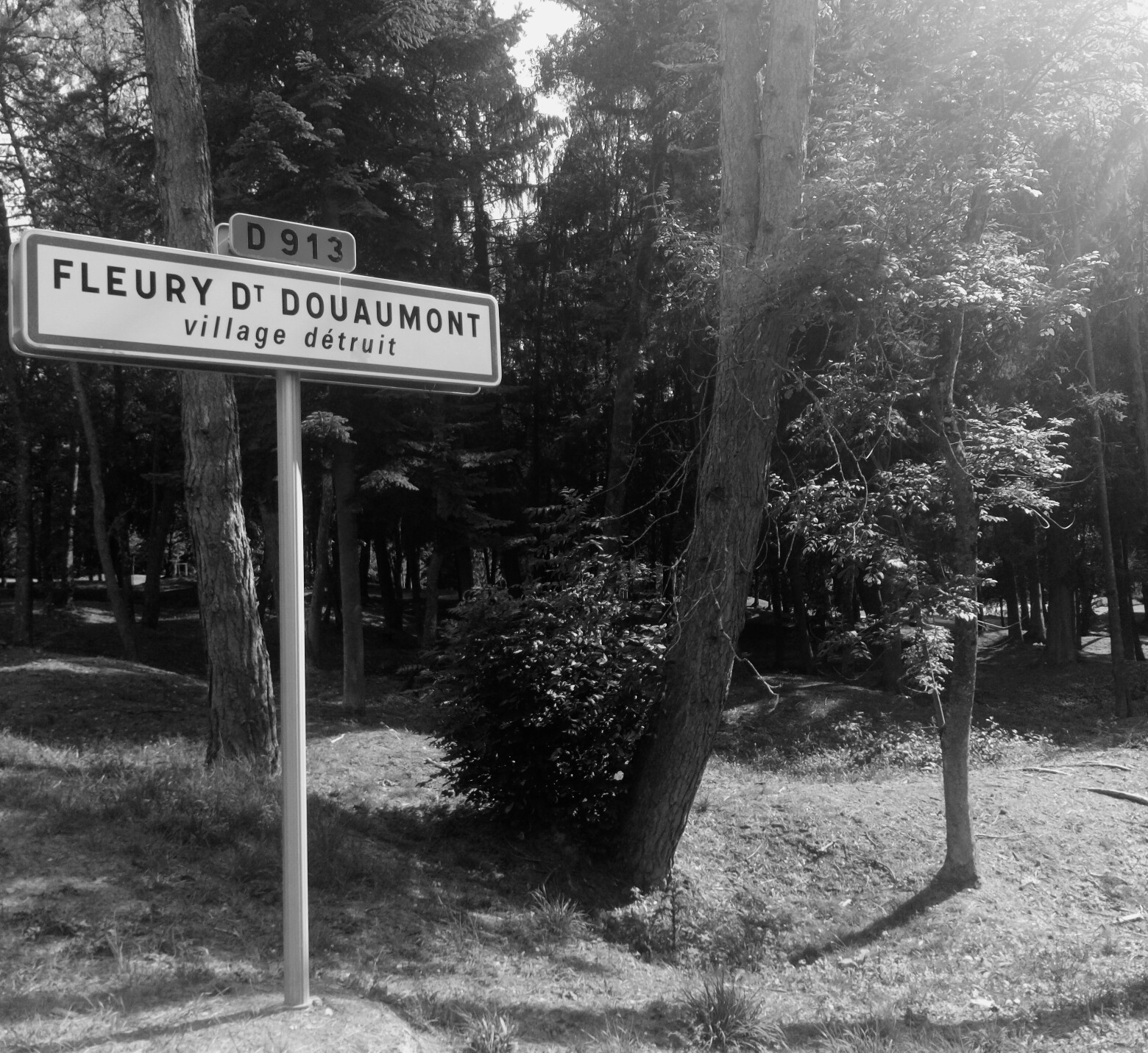
As the road approaches the village through the forest, a sign appears at the sign of the road. It is like all others at the entrance to villages and towns throughout France: a white rectangle, fringed in red. The name of the settlement in black letters.

FLEURY DT DOUAUMONT

But unlike most other towns or villages in France, there are more words underneath.

village détruit

These two words mark Fleury-devant-Douaumont out from the other villages in the surrounding region and across the country. These two words help tell a story. In the forests around the town of Verdun, in the northeast of France, there are eight other villages with this categorisation. They stand in the Zone Rouge, an area declared uninhabitable by the French government after the devastation of the First World War. The land was contaminated, as along with the remains of the dead, poison and other dangerous gases had soaked into the soil along with lead and mercury, with impossible to calculate amounts of unexploded ordinances littered across the former battlefields.

Before the First World War Fleury-devant-Douaumont was home to just over 400 inhabitants, who worked the land or in the village itself. There were farms and smithys, a bakery and a grocery-cafe. A church and a school, a town hall and a weaver's workshop. It was not easy farming land, although even this far north the villagers were able to harvest grapes and make money from the forest that surrounded them.

Village.jpg

On the 21 February 1916 the sound of artillery shells marked the beginning of the German advance, part of what would become known as the Battle of Verdun, one of the deadliest in all of military history. A few hundred metres from the entrance to the village, the cemetery at Douaumont is the resting place for thousands of French soldiers who died in a battle that lasted months. The ossuary, one of France’s most important national monuments, houses the remains of over 130,000 French and German soldiers who fell at Verdun. Altogether, the fighting in these now peaceful, wooded hills, took the lives of well over 300,000 mostly young men and although the forest now covers the landscape, the scars remain. Trenches, dug down into the soil. Shell craters, that give the land a strange, undulating shape. And crosses, so many crosses, in long neat lines. A reminder, a hundred years later, of what was lost.

As the Germans advanced, Fleury-devant-Douaumont was evacuated. Altogether, what remained of the village exchanged hands sixteen times over the course of the battle. When it finally ended, the village was no more. It was in the Zone Rouge, declared a village that had ‘died for France.’ Nothing was left, but in honour of its sacrifice, it kept its legal status. The red-framed white signs still stand at the entrance and exit of Fleury-devant-Douaumont. It still has a mayor.

Today, visitors park on the side of the road that links the Douaumont ossuary with the Verdun Memorial, and wander the three streets of the village, marked out as they are among the trees by white poles. Stone slabs inform visitors in three languages as to what building once occupied a particular plot of land. A farm. The church. A bakery. The wash house. The school. There are remnants of some structures – a few stones in the ground, foundations poking through the mossy forest floor – but otherwise there is nothing, except the war memorial and a rebuilt chapel, where Our Lady of Europe, draped in a blue flag with gold stars, offers a permanent reminder of what could emerge out of the devastation of not only this war, but the one that was soon to follow.

Our Lady.jpg

A small plaque offers the visitor a few words from Jean Guitton of the Académie française:

It is here, in the silence of Douaumont and the wiped out village of Fleury that I came to realise that you cannot pull down walls in Europe without first reconciling the peoples.

In the village and at the ossuary, there are cars parked with visitors from across Europe. The GB and the B. The CZ and the PL. The L and the NL. Mostly F and D, coming like Mitterand and Kohl did, and later Hollande and Merkel, to pay their respects together to the fallen of both countries. It is without question a sombre place. Signs at the entrance of the forest gently remind you that it is not a place for picnics or music, ball games or impromptu campsites. Other signs warn walkers and cyclists to stick to the paths, that the weapons of war can still kill, even a hundred years after the peace.

Why is important to visit such places? Why should we walk through Fleury-devant-Douaumont, where the streets and the memories of the houses and the people that once occupied this hillside have been reclaimed by the forest? Stefan Zweig knew. In 1920, the Austrian writer travelled to Ypres. The guns had only been silent for a couple of years. The landscape was still devastated and the wounded were still returning to their homes and already the first tourist groups were arriving, to the battlefields of Flanders and elsewhere along the Western Front.

For Zweig, the traces were important, whether two years after the events or a hundred. In Fleury-devant-Douaumont I thought of Zweig’s words, written after his return from Ypres. It made me hopeful that there were other people there with me in the woods, walking the village streets now held in the embrace of the forest. Zweig knew that despite the distasteful elements of places such as these becoming tourist destinations, there was still something good, and something very important, “when a hundred thousand people, comfortable and carefree, clatter through … annually, and whether they care for it or not, these countless graves, these poisoned woods, these devastated squares still serve as reminders… All that recalls the past in whatever form or intention leads the memory back towards those terrible years that must never be unlearned.”

About the author:
Paul Scraton is the editor in chief of Elsewhere: A Journal of Place. Paul’s book Ghosts on the Shore: Travels along Germany’s Baltic coast is out now, published by Influx Press.

In Olšany Cemetery

Olsany Cemetery photo.jpg

By Anna Evans:

On a weekend trip to Prague they decide to walk in the cemetery near where they are staying in Prague 3. They agree to set out early, visit the cemetery, and then to continue with their day. It is October, an early morning chill in the air, but already the sunlight is beginning to glance down with a nod, promising warmth, an unexpected dawning of late summer spells.

She reads aloud from her book, ‘See, the first line mentions the cemetery…  listen, it says…’ She hasn’t made it very far with the book yet, but is glad to be reading a Czech author. There is something about this place, she thinks. I would like to get to know this city and its complex history; this city of writers and of walking.

Leaving their apartment building, they can see the wall of the cemetery in front of them and trees behind. Crossing the road they find an entrance at the end of the street.

It is one of those rare times when both agree that this is the only place they really want to be, that given the chance they wouldn’t be anywhere else. They listen carefully to the other’s remarks and laugh together as two people who know and understand each other. They agree that it’s good to be away from home, that the best feeling of all is the day stretching out in front of them, the city to explore. The feeling of waking early in a new place, that sense of accomplishment. The promise of black coffee and the warming smell of baking bread. There is a route planned on a map, the streets of Prague, its art nouveau buildings a perfect tapestry through which to wander, to the sound of passing trams.

The trees are filters for the sunlight, and leaves are beginning to cover everything. Wandering along the paths, the gravestones draped in ivy but without the sense of neglect and desperate wildness some cemeteries have.

Those strange eruptions from the ground growing amongst the trees, marble and stone of different shapes and sizes with pathways running between. They are like city streets, laid out in blocks with signs, and all the leaves swept away. Sometimes the graves look like grand city houses. ‘How funny that money and status should continue to follow us into death,’ he says, and they pause, thinking of the years sliding past them.

Walking and reading the stones, thinking about what draws people to cemeteries, trying to describe the sense of peace and watchfulness it brings. There are those tending the graves of family, holding in their hands the span of remembrance; like the flowers they lay down, for as long as their transient bodies remain. The green force flowing through the stems cut off already from their source of life.

Looking at the names on the gravestones, reading the history of families, through the years engraved in stone. Of lost children, and married couples who died within months of one another.

Cemeteries are really places for the living.

Connected to our beginnings and ends, people wander through cemeteries to be close to those who are no longer here. Each city, each place, contains the imprints of all those who have walked its streets and all those yet to come, the ghosts of history who are with us even now. In some places we are more aware of them than others.

Confronting their mortality, but feeling life urging its way through their bodies, they walk around, knowing they will leave and continue the day, saying farewell to those in ivy-covered slumber.

Reaching the main entrance, the sun warmer and brighter, rising higher in the morning sky.  The sound of traffic from the road nearby and people walking past. Soon they will join the movement of the city streets and the day will glide by in all its colours.

For a moment though, they pause and look back. They both know how quickly and how easily the shadow beckons and can fall between them. Like feeling cold on a sunny day, like voices interrupting from the past, ghosts of time and distance.

About the author:
Anna Evans is a writer and researcher from Huddersfield in the north of England, currently living in Cambridge. Her interests are in migration and literature, cities and movement, and she completed an MA in ‘Writing the Modern World’ at the University of East Anglia in 2017. She is currently working on a project on the places in Jean Rhys’s fiction. 

Postcard from… Múli, Faroe Islands

TimFaroes.jpg

By Tim Woods:

There is a temptation to romanticise the lives of those in remote outposts. On the extremities of our lands, they are immersed in nature, in tune with their ecosystem; pursuing a simpler, less cluttered existence.

Yet it is not always a choice. Some inhabit these places through circumstance alone. And the other side of this coin is often hardship and poverty, loneliness and isolation. There is little romance in any of these.

Múli, near the northern tip of Borðoy, is one of several deserted hamlets scattered across the eighteen Faroe Islands. But its abandonment is more recent than most: the last inhabitants only left in 1998. There was no disaster, no seismic event that forced them away; they had simply had enough. The gravel road, built not long before then, was a noble attempt by the Faroese authorities to connect the hamlet to Norðdepil and Klaksvík; instead, it simply made it easier to get away.

I drove along that road one evening in June, the light not even close to fading during the endless days of a Nordic summer. It hugs the edge of a dramatic glacial landscape, all plunging cliffs and bowl-like valleys, plus many other features familiar to anyone with a GCSE geography textbook. After parking, I followed the path beyond the four houses of the hamlet, dodging the fractious kittiwakes leaving their cliffside nests to shoo me away. That romantic side briefly took over: what a place to live this would be.

But five minutes later, I’d reached the farthest point accessible before those fearful cliffs take hold once more. It’s not even three hundred metres from the houses; a remarkably small space from which to eke out a livelihood from farming.

Passing back past the houses, I noticed smoke from a chimney and voices inside. They are not completely abandoned, having taken on a new life as holiday lets that are regularly booked out during the summer. Landscapes such as this are, it seems, best enjoyed for a few days rather than a lifetime. Perhaps Múli has finally found its purpose.