A time of hopeful anticipation

By Ruth Bradshaw:

The park is deserted at this hour, the café closed and the playground empty. The dog walkers and joggers are still sleeping. It is that time after the coldest, darkest part of the night has passed but before the sun has risen. A faint glimmer appears on the horizon and my nervousness at being out alone in the unpeopled early morning is gradually replaced by a sense of anticipation. The darkness will soon be gone. Dawn is here and the sunrise I’ve come to see will not be far behind it.

The only sign of human life is the faint sound of distant traffic and even that recedes when I reach the top of the hill where there is more tree cover. Here it is tranquil but still far from silent. The birds make this space their own with a rush of notes that feels more of a competition than a chorus and, as the light slowly increases, they grow louder still. It is impossible for my inexpert ear to distinguish most of the individual voices, but I recognise blackbirds and robins and hear the occasional cawing of crows accompanied by the shaken cloth sound of their wings flapping. I can only guess at the rest, but I decide that today it matters not what all these birds are, only that there are so many of them singing. 

As it grows bright enough for me to make out traces of the hilly fields and meadows which the park replaced, it is not difficult to imagine that a line of taller trees could mark an ancient boundary. I walk over and lean back against the nearest of these with my eyes closed. It is a mature lime tree, its bark ridged and furrowed with age and experience. The sound of the wind in its leaves is so like gentle rainfall on dry ground that when I open my eyes, I expect to see a soft rain falling.

At this time of half-light, half-night, nothing is quite as it first appears, and the past feels closer. It is the time before this landscape was farmland that I can sense most strongly. In the twilight it is possible to replace the parkland limes and chestnuts with the woods of coppiced oak and hornbeam that covered this part of London for centuries. I think of the sights, sounds and smells of that woodland - the calls of turtle doves and cuckoos, the rich scent of wild garlic, the orchids and helleborines growing among a multitude of other plants - all long since lost to this place.

If I were a visitor in one of those earlier centuries, it would have to be necessity rather than curiosity that brought me here at this hour, something that made me desperate enough to risk the dangers of the woods at night. For even after the wolves, bears and lynx were gone, there was still the threat of robbery or worse. Perhaps I am here to search frantically for firewood to heat food for an ailing relative? Or maybe it’s to find the herbs I need to cure that relative using a knowledge of plants taught me by my mother just as she learnt it from hers. I’m sure I would know that when I find the right plants, I should take only as much as is needed so plenty are left to grow for future use. But would I stop for a moment to appreciate the wildflowers and birdsong on this fine Spring morning? Or would this experience be so commonplace and my fear so great that I would hurry home without paying them any attention? 

The high-pitched screech of a ring-necked parakeet returns me to the 21st century. I am thankful that my survival is no longer dependent on what I can gather from the woods. But I am sad too that I do not have the knowledge needed to do this anyway and sadder still that I will probably never experience a springtime woodland with quite such a variety of sound and beauty as that earlier visitor. My greatest sadness is that I live in a time and a society whose untamed desires have so changed the world, that the future of many species, including my own, is now uncertain. Even now we understand the damage we are doing to the world we don’t seem to be capable of taking only what we need. We must always have more. 

As the light grows, I think of what the future holds for this area. This is not as easy as picturing its past. Not because I cannot guess the impacts of the storms and droughts that already arrive with increasing frequency but because it is too painful to contemplate the uprooted trees and withered plants they will leave in their wake. I know I cannot ignore those threats but, as a new day starts, I focus instead on how green and vibrant the horse chestnut leaves look when backlit by the rising sun. 

***

Ruth Bradshaw works in environmental policy and has been a regular conservation volunteer for over a decade. She is currently writing a book about the value of urban wildlife which draws on both her professional expertise and her volunteering experiences. Her essay ‘Stories of Co-existence’ was recently shortlisted for the Future Places Prize and her creative non-fiction has also been published in a variety of websites and journals including Canary LitMag, The Clearing and The Selkie. When not writing or working, she can often be found in the woods near her home in South London and occasionally on twitter @ruthc_b

Under the Over

By Alex Rankin:

There is no right way to go at this end of the harbour. No signs, no barriers and no lattes. It’s as close to abandoned as you can get without being out of use.  

Activity is everywhere, though less conspicuous than upriver; control rooms squashed beneath the overpass, a maintenance yard and of course the relentless traffic. People leave their mark here too. The base of the swing bridge is splattered in a multi-coloured crime scene and evidence of guerilla gardening is everywhere in the form of troughs and plant pots. 

Under the overpass, pillars uphold the status quo. They’re painted in bright colours, another human intervention and the sunlight adds its own touch, carving up the shadows with long arcs.  

I follow the snake of concrete to a point where two roads merge. There are life-size Lego blocks here that look like they’ve been airlifted straight from a fabrication plant. I wonder what they might be used for, BMX or parkour or maybe builders like to come and sit on them on their day off. A ramp made from broken slabs tells me there must be wheels involved.

Back across the lock is a land of mud and rust. Old landing stations quietly decay and thick tufts of grass hang down over primordial mudslides. It’s easy to lose track of time here, because time doesn’t exist. For the time being, at least. Somewhere else in the city, councillors huddle over prized plans for this area, passing them along the conveyor belt of authorisation.

On my way back, I find a bench encrusted with lichen. It’s surrounded by ancient lines of moss and scrub and I wonder if you were to sit there long enough, would it transport you back to a time when nature ruled and things were a little simpler?  

***

Alex Rankin is a writer from Bristol, UK. He has always had a passion for writing fiction, but ended up studying journalism. He now writes a mix of fiction and nonfiction (with a sprinkling of poetry). Previous work has appeared in The Drabble, A Thin Slice of Anxiety and The Hyacinth Review.

Book extract: For the Safety of All – A Story of Scotland's Lighthouses

Butt of Lewis Lighthouse, Na h-Eileanan Siar 

The view from the Butt – the gleam from the lighthouse once cast its glow on the crofthouses and croftland, moorland and machair, sand and shore from its stance on Rubha Robhanais, illuminating the waves of lazy beds as well as those found on the surface of the sea.

We are extremely pleased to be publishing this extract from For the Safety of All: A Story of Scotland’s Lighthouses. In this new book, Donald S Murray explores Scotland’s lighthouses through history, storytelling and the voices of the lighthouse keepers.

By Donald S Murray

Frequently, during my childhood and teenage years in Ness, on the northern tip of the Isle of Lewis, there were reminders of the depth of darkness that existed for centuries around the coastline of this country. 

At night or early evening, a storm might rattle windows, a gust of wind puff above chimney tops. The lights across the house would falter and flicker before disappearing. After that, there would be a scramble for matches and candles, a torch if there was one to be found. A Tilley lamp would be lit, taking a moment or two to ignite and burn before its warm glow added intricacies of light and shade to a room which seconds earlier had been illuminated only by the flame of a peat fire. It was as if we had stepped back in history, into the period before electricity had come to our homes, the ages swirling into reverse for a moment or two. 

And that change was most apparent when we peered out of the window at the rest of the village and the broad stretch of the moor. Apart from the spin and eddy of the Butt of Lewis lighthouse, the stillness of the red light above the Decca Station and the rare sweep of a set of car headlights, all was in darkness. We could imagine the householders performing the same rituals we did – scuttling through the kitchen cabinet or chest of drawers for matches, looking in the understairs cupboard among sheets and blankets for the lamp – before they restored muted light to their homes. This was what might have been seen in these houses if a passer-by had peeked in. The faint glimmer of firelight. The subdued flame of a Tilley lamp. Or perhaps even more dim and pale than any of these lanterns – a wick dipped in the oil of a seabird, seal or whale. An unsteady flicker casting more shade than light into the room. 

The scale of this darkness was one of the factors that made travel around the British Isles difficult for centuries. Difficult enough on land, this was especially the case when boats were the main mode of transport. Until the expansion of road and rail, after all, the seas and waterways were Scotland’s main highways. The seasons intensified travel problems, especially during late autumn and winter. In many ways, the sailors and travellers of these early times lived the opposite kind of lives to the modern city dweller. The latter’s constant use of electric light, whether found in the streets they walk and drive through or within their homes, prevents them seeing the moon and stars above their heads. For those who made journeys either on shore or at sea in the past, there were sometimes contrary issues. The need to observe and navigate by the stars made them focus overhead, leading – occasionally – to failure to see the rocks and skerries that loomed out of the ocean, the unpredictable nature of both depths and shoreline. 

And then there was the unreliable character of light before the arrival of the lighthouse to these shores, a process that began in earnest around the commencement of the nineteenth century. Sometimes, when a storm buffeted their boat, the glow of fire on the coastline meant safety and security for sailors, a harbour where a vessel could be tied up and fastened until that night’s tempest passed. However, there were occasions when their need for shelter and protection made mariners too easily deceived. Allegedly wreckers on the coastline of these islands took advantage of their desperation, ushering them to a shore where the consignment of goods aboard would be plundered, their lives lost. Fires would be lit, and signals flashed, but their boats were ushered only in the direction of danger. Over the course of the nineteenth century and later, the Stevenson family and the Northern Lighthouse Board put an end to these practices. Their lighthouses were charted and mapped. If anything flickered elsewhere, as it sometimes had in the past, it would most likely be a trick or a ruse, a deadly trap. 

There were other hazards in the northern edge of the world in summer. During this season, those of us who live in places like the north of Scotland have the sun as an almost constant companion. Its presence, in some shape or form, rarely leaves the sky, creating a continual twilight, blurring at most to a shade of ochre in the sky. The persistent lack of rhythm of light and dark has its effect on people, making some edgy and ill-at-ease. Insomnia abounds: attention wanders. Storm-clouds and dangers on the horizon can fail to be seen. Mist, particularly on Scotland’s east coast, prone to haar, can obscure and conceal the risks ahead. 

It was this – their awareness of the constant threat of terrors posed by both human actions and seaborne life – that made men begin to build lighthouses, a way of making the existence of both ship and crew more secure and safe. 

***

Donald S Murray grew up under the gleam of Butt of Lewis lighthouse, and lighthouses have remained a continual presence in his life. He is the author of non-fiction, fiction and poetry, with a particular focus on Scotland’s islands.  His books include the acclaimed As the Women Lay Dreaming, In a Veil of Mist, The Dark Stuff: Stories from the Peatlands and The Guga Hunters.

For the Safety of All is out now, published by Historic Environment Scotland.

Portraits of War: Emmanuelle

Illustration by Emily Sweetman

This is the fifth in a series of portraits from our home city, of Berliners affected by the war in Ukraine. You can see all the portraits as we publish them here.

By Jacob Sweetman:

Emmanuelle Chaze says she'll never forget the night of the 24th of February when she got the call from French national radio.

'Be ready,' they said. 'It has happened'. 

She'd been at the Munich security conference the week before, she'd heard both the platitudes and the pleas for help. Chaze already knew the invasion of Ukraine was a fait accompli, but still.

“My immediate thought,” she tells me, “was about the people that would be displaced.”

People say to her all the time that because of her years of study into the lives of the Huguenots - persecuted and driven out of Catholic France to scatter themselves across Europe, putting down roots that persist to this day – it makes sense that Chaze spends her professional career reporting on migration, on refugees, on the human stories of degradation and fear that take place at international borders during all too unexceptional times. 

Chaze catalogues those spaces where war spreads out its wings, the hinterlands of our most invidious, inhuman actions. Though she says any link to her academic past is coincidental.

She grew up in France, but close to Germany. She speaks several languages and is learning more. They come easily to her, as if disregarding the lines drawn on maps supposed to keep us all apart. And maybe it is just another coincidence, but she does go on to say that, actually, 

“I don't really think anything happens just by chance.”

She says all this in the cafe in the swollen, gilded belly of Dussmann's Kulturhaus, as officious waiters fuss around inadequately sized tables and the goldfish swim placidly in the blue tiled pond behind us. We are at the heart of the Friedrichstadt, part of Berlin founded by the Huguenots. 

We are also only a stone's throw from the Tränenpalast, the former crossing point between what were once called East and West Berlin.

Coincidence or not, there is at least a certain synchronicity here. 

Last year, Emmanuelle Chaze stepped on board a boat for the first time in her life to set sail into the Mediterranean for seven weeks to report on the crew's desperate efforts at rescuing refugees cast out to sea. She faced tragedy on that boat, as she also saw occasional moments of the best of humanity. She got to know kids, eight, nine year olds, pulled from the sea; they played with her camera, they smiled into its lens.

So she was ready, mentally, to go to the Polish / Ukrainian border when the call came on the 24th.

But she took a few days to prepare before heading for Hrebenne. She needed time to find out what was really going on. She needed to make sure she had security, sorting out the practicalities, like a hotel far enough away so she didn't use up nearer rooms necessary for refugees or volunteers. But she was still one of the first there, early enough to witness everything falling into place, seeing the evolution of the border town as the crisis developed

The first report she made was before she'd even reached the checkpoint. Her fixer (though she says she hates the term) thought she was mad.

She had five minutes until she was live, the feed already running in her ears. She simply put up her tripod and started narrating the scene; a usually busy motorway almost empty; a few parked buses in the distance at the Ukrainian border; the bitter cold, it was minus 15; the people who had made it this far with bowed backs, sunken faces and lowered heads, looking, as she said on live TV, completely exhausted.

She says that she's not seen anything like it before, it was like a film. It was eerie, frightening.

“People were coming one after the other, and they were looking at their phones for directions, like you would in a city when you're a tourist. But they all looked like they hadn't slept for days. And I know those people, because I've been on other borders...”

She's told the stories of people in Calais and Lesbos, too, places at the very edges of other conflicts.

“...And seeing them there in that otherwise fairytale like scenery is strange. Western Poland is really pretty,” she says, trying her best to describe images so discordant that they only really made sense as she slowly talked us through them.

She didn't do any interviews with refugees to camera at all that day. She couldn't do it to the people coming across. There's a time and a place, she says, even if it would have made better news. So she worked, she tried to keep warm. She tried to keep her equipment functioning. 

Talking about the seven weeks on the boat - an experience that she says changed her life forever - she mentions the camaraderie of the crew. They were professionals, honest and blunt, as they have to be, because they have to trust each other, their lives depend on it, even if they can't always get along. And she talks similarly of bonds between fellow journalists whose silent understanding is forged through a common experience most of us could never comprehend.

That of a border during wartime.

After coming back from Hrebenne she spent a few days back at home in Berlin, before heading back, this time to Medyca. She wasn't alone. All sorts of people are drawn to these weird, tragic places.

There are, at first, local, then national then international TV channels, elbows out, vying for position. Different newsrooms wanting different stories for different audiences. There are volunteers, well wishers, fixers, locals too. 

There are thrill seekers and amateurs trying to make their names with footage who the serious journalists won't mix with because they are unprofessional and take risks that no-one should, and who the serious newsrooms won't touch any more, not with a bargepole. 

Then there are the profusion of well-meaning incompetents, bogged down in the mires of their own bureaucracy. NGOs like the UNHCR who had to apologise for being late to Medyca, but whose gazebos sprung up like mushrooms after the last frost, that will stay there for months now, years maybe, as the border situation becomes normalised like so many others around the world.

Then there are the refugees themselves, different movements of different people, arriving in stages, sometimes according to status, sometimes to chance, and at others to the realities of the war itself. 

She talks about the first groups often to arrive. In some ways they are the lucky ones. 

“So at first there is the relief, 'we are safe'. But then as soon as they get some rest and a shower, proper clothes, they realise that now with that comes the deep humiliation that you depend on someone else... Nobody wants to be a refugee.” 

This is why, she says, people are already returning to Ukraine in ever greater numbers.

She also met young men in their early 20's who'd been living in Poland, on their way back into Ukraine to fight the Russians, noting that this was one of the toughest, most moving encounters she had out there. They were at least well prepared, which cheered her slightly, but not entirely.

For they also knew they were probably going back to die.

She says the people who are drawn towards the borders are also not always altruistic. Some will always see opportunities to exploit other people's misery, like the human traffickers, vultures, circling. She fails to hide her disgust. 

Chaze works all the time, and it’s only afterwards, when she goes home, that she can begin to try and sort out things in her head. She says she'll have to 'try to tie herself down', only half jokingly, because the clashing of images, of feelings, of emotions, and of helplessness come up against her impossible drive to work, work, work. 

After she got off the boat, people thought that she'd go mad during the two week quarantine in Sicily, but they'd missed the point that this was necessary, just as her conversations with other journalists on her return from the Ukrainian / Polish border with other journalists were. She needed to decompress, to process everything she had seen, to put things in some kind of an order. 

The first thing I asked when I got in touch originally, was how she deals with what she's seen, how it doesn't make her tear her hair out, how she doesn't end up punching the walls or crying in the streets.

She answered that she was actually asking herself the same question at the time, but she still didn't know, really. 

“I just do what I do,” she says as if it's the easiest thing in the world. 

“You know everybody was so shocked by the pictures [of Mariupol] over the weekend - and they are absolutely shocking - but if people are surprised, I wonder what they imagine happens during wars. Because the sufferings of the Ukrainians are the sufferings of the Syrians that we could see happening for years if we opened our eyes. So now, just because it happens on the continent more people are touched and are receptive. 

“But a war is a war,” she continues. “It's atrocious. Innocents die. A few days ago there was a bombing in Idlib in Syria, and the father could only recognise his child from the shoes he was wearing. This is happening right now, and its always happened and unfortunately always will because we aren't changing.”

I say that this is where she comes in. This is where she makes a difference, where she is important, because no-one else is telling these stories. She disagrees, though.

“None of us is irreplaceable,” she says.

***

Jacob Sweetman is a writer and sports journalist, at home in Berlin. His work has appeared in 11Freunde, The Guardian, The Berliner Zeitung, Wisden amongst others. His writing about 1.FC Union Berlin can be mostly found here and he has a website here

Emily Sweetman is an illustrator, at home in Berlin. She is a genius, and her work can be seen here

Printed Matters: Kyklàda

Photo © kyklàda.press.

By Sara Bellini

At the core of Kyklàda's publishing project is an “archeology of moods and emotions”, a research that starts with topography and architecture and moves through history, art, public health, social norms, and cultural heritage. The small Athens-based press was born in 2020 and its catalogue has six active titles at the time of writing, with two more coming this autumn. Their multidisciplinary, collective approach focuses on the production of mini collections of texts and visual essays inspired by the Cycladic islands - hence the name - and in their specificity, their themes have universal appeal. 

The homepage of their website reads: “the Cycladic Landscape is both rural and urban: the Aegean Archipelago, south-east of Athens, extends into the city hills.” This interconnectedness between countryside and city, island and continent, natural and human-made, individual and collective, drives each publication and echoes across the six volumes: from the healing value of touch in Architectures of Healing, to the violence of uprooting in (Forced) Movement, the origin of the practice of the quarantine in Public Health in Crisis, the sexual freedom in Mykonos in Free Love Paid Love.

Kyklàda’s essays exist in the space between a question and an answer, and center on relationality and social dynamics rather than isolating phenomena and people. The relationship between humans (as individuals or groups) and the place(s) they inhabit is complex and diverse: What is the difference or similarity between refugee and migrant, pilgrimage and tourism, imposed confinement and forced movement? This is what Kyklàda asks, questions and explores, leaving the answers as open and multi-faceted as the sea.

Photo © kyklàda.press.

Here is our interview with team members David Bergé, Phevos Kallitsis and Juan Duque:

You define your book series as a catalogue of “liquid forms of modernity”. Can you tell us a bit more about what you mean with this phrase?

David: We don't see modernity as a celebration of a singular thing. In conceiving our books, we suggest parallel modernities. We see the world today as a complex and layered place where concepts and ideas are less solid and autonomous. An environment in which things are harder to grasp into one entity, where initially fixed objects may become liquid, can leak or spill into something else. I imagine this project, part of my artistic practice, as something as fluid as a human body, a living organism able to adapt to different climates, conditions, environments and contexts. A body can move around, travel, isolate, focus, loosen up, take different shapes, get sick, recover, relate to other bodies, eat and rest. 

How did you make the decision to distill your work into books rather than journals or a completely different format?

David: There are several motivations: I believe in the momentum of publishing on paper. The decision to make small books was made during the first lockdown, where we had the feeling we wanted something more tangible yet light enough to distribute and travel with.  Besides making the kyklàda.press series in the form of books, we produce formats for reading, writing and mediating tactile perception in gardens and large indoor spaces. 'The Conscious Effort Fort' is an environment conceived for reading and writing in the proximity of others, which then feeds back our research for future books. 

How is your creative process structured: What inspires you and how do you manage collaborative projects?

David: Our approach is not author or disciplinary-centered. Through dialogue and shared research, the team makes books often contaminated and strengthened by already ongoing research of involved team members. Four to five people work on each book. We research together, which gradually leads to taking positions and forms in writing, finally leading up to the book in question. As a team, we can read and research in about nine languages, are familiar with discourses in different fields and have access to a lot of practical skills that come at hand when self-publishing: from ideas to proofreading, from designing to printing to figuring out a webshop, understand how to parasite (or share?) already existing networks of logistics and distribution. 

Let’s talk about islands. You want to challenge the cliché that sees islands as separate worlds we can project our expectations on. What is your relationship with the Cyclades?

Phevos: The archipelago is a mesmerising experience, a place where you can easily navigate between islands, get lost and end up spending way more time than you initially wanted to. I always return.

Juan: Through navigation, our Westernized sense of perspective has established a common horizon, simplifying islands as visual spots at the surface of the sea. At kyklàda.press we believe that islands are not exotic entities alone in the sea waters. Islands remain interconnected with the mainland and each other, from the top of the mountains to the hidden topographies of the sea bed: a myriad of creatures and non-organic matter which lives in constant symbiosis with water; tectonic plates, fossil fuel pipes, and data cables.

David: To me the Cycladic landscape is both rural and urban and continues into the city hills of Athens. This is where the idea was born: a writing experiment disseminating knowledge on the Aegean archipelago, a project starting from this tight geography.

Interconnectedness, care and emotions are recurrent themes in your writing. What is the value of connection and in which space can these connections exist?

Phevos: Connection is an intrinsic element to existence, and we live in a time that the connection is multi-scalar and multidirectional. Physical or virtual space can be the medium that facilitates connection, but space can be what we connect to, and then it becomes a place. In the same way, we connect with people, the flora, and the fauna or objects. We live at a time when care, emotions, and interconnectednesses are foci and concerns, even when using a different lexicon to describe them.

***

Kyklàda’s books can be purchased online as well as in selected bookshops and museum shops in Europe and the UK, as listed on their website.
Website
Instagram

Portraits of War: Tahir

Illustration by Emily Sweetman

This is the fourth in a series of portraits from our home city, of Berliners affected by the war in Ukraine. You can see all the portraits as we publish them here.

By Jacob Sweetman:

When we speak, a few days after Filippo Grandi, the head of the UNHCR, released a statement,  confirming that “the ugly reality, that some Black and Brown people fleeing Ukraine – and other wars and conflicts around the world – have not received the same treatment as Ukrainian refugees”, Tahir Della is just off the phone to the Polish / Ukrainian border. 

And though he is in good spirits, and flashes a brilliant, American toothed smile, his frustration still shines through. 

Della says from his office in Kreuzberg that people on the ground are just “sick and tired of it now”. He says that there's no support, nor the political will to help people of colour in their time of need, as they try to flee from the Russian invasion. Or for the sleepless volunteers trying to help them. 

They are sick and tired of still having to fight for something so basic, so fundamental. Sick and tired that a moment of solidarity across Europe in support of a people enduring the most terrifying and barbaric of situations, is still mired in the same old bullshit of different classifications being made for different people of different skin colours. 

Such as the free train tickets offered to refugees. As long as they are European.

He knows all too well that, with grim inevitability, racism will always rear its malignant head in the worst of times, too. 

Della and I talk about the Humboldt Forum, the grotesque reimagining of the Prussian Stadtschloss, filled with the fruits of colonialism. In there is a new exhibition, dedicated to Berlin, patting itself on the back for being modern and cool, daubed with “urban art”, which greets its visitors with a statement about how change in the world could be brought about 'holistically', when it ignores the fact that the system itself is at fault. 

The system that put the exhibition together, that rebuilt the palace, the system that put a tiny piece in the corner about the German genocide in Namibia. 

Though we can't call it that at all. 

“It was horrible, everybody accepts that. It was wrong, against humanity...” he says. “But it wasn't a genocide. Because if it's a genocide you have to take care, responsibility. At least, you apologise for it, and you say, okay, what do the people or the country who have been impacted want from us?”

It's like he's in Catch 22.

“We have accepted for a long time that this happened, but we don't want to be responsible for it. We can do things, make announcements, we can sign petitions, just so we don't have to look at ourselves.”

But we come back to Ukraine again and again. It's an extension of the same fight he's been fighting for years. 

Della says that he understands the closer proximity of Ukraine to Germany is a factor. He is German, he was born in Munich, of course he understands. So he's sick and tired, too, that the capacity of Europe to help refugees can be so malleable all of a sudden, when it was previously too stretched to help pluck children out of the Mediterranean to save them from drowning. 

It goes on and on. He doesn't want less help for Ukrainians, it's not a game, he knows how many have died, how many are terrified for their lives there. He just wants the same amount of help for everyone. He's just had two Senegalese staying in his small flat, having come to Berlin before they can to France. Della speaks no French, and they no German, but it worked out okay, he says. They understood each other pretty well.

When Tahir Della was young his American Grandfather told him a story about his own uncle in Louisiana. 

“He was a carpenter for a white company and he was waiting for almost two months to get paid. And when the money still didn't come he went to Baton Rouge to find out what was happening... and he never came back.”

He repeats himself, for even now the story is so tragic, its conclusion so callous, it doesn't make sense.

“He never came back.”

“Nobody knows still today what happened to him...  and the thing that was really moving... or...” He pauses again, for there are really no words fitting to the feelings this brought up in the young Della, in either the English or German languages that he flits between with such a lightness of tongue.

“...there was no structure back then where black people could go and say 'we are missing somebody from our family'. There was no legal body who could go and investigate when somebody is just gone. And that's not even a  hundred years ago, that was in the 40's of the last century.”

It wasn't the only story like that his Grandfather had. But that's why the older man was so proud when Della took his somehow inevitable place - with a spit-bucket and a gumshield and a towel in his hand, and a courageous streak a mile wide within him - in the corner of all the people of colour in his country. 

Now, in his 60's, Della is still there in that corner. 

He was on the board of the Initiative for Black People in Germany (ISD) til 2019 and is their spokesman. He's fought against the continuing riches reaped from colonialism, against double standards and hypocrisy, and against the racism inherent within the system itself, for more than half his life. 

He joined the ISD in the eighties, a group of advocates and activists founded by the likes of the poet, writer and academic, May Ayim, of whose 'daily deflowahin a di spirit,' and
'evryday erowshan a di soul' the great dub poet Linton Kwesi Johnson wrote in his paean, 'Reggae Fi May Ayim'.

And now if you walk along the southern bank of the Spree - once the industrial heart of Berlin, crammed with warehouses and factories until it was bombed to the ground, which would then become transformed as clubs like Dimitri Hegemann's UFO sprung up just around the corner, playing techno, black music from Detroit - Underground Resistance, lest we forget! – you will now see Ayim's name, having replaced that of the original Gröbenufer. 

Della says he knew Ayim for years. They were about the same age, they fought the same battles, but drifted apart as she withdrew into herself before her tragic death in 1996. But her role in the organisation was  never forgotten, her soul never completely eroded even if her spirit grew deflowered. Della played a large role in the renaming of the river bank in her honour and he remembers fondly the day they could finally celebrate her immortalisation. 

There were speeches and there was music and the sun was bright in the sky.

“It was a beautiful event,” he says, his sentence dripping with understatement.

He's not one to talk himself or his own efforts up. But the following lines from 'Reggae Fi May Ayim' - 'Tru all di learnin, Di teachin, Rizistin, An assistin, Di lovin, Di givin, Organizin, An difyin' - could have been written about him, too.

He's been doing all of these things since this war began, too. In the face of what he sees as mainstream apathy at best, of ignorance and intentional silence at worst. It's pretty simple, really. 

Ever since his Grandfather told him that story about his murdered uncle, he felt he had little other choice.

Della has worked in theatres, he's driven a cab. Anything, really, he says, to pay the  bills while he concentrates on the bigger things. But mostly he worked as a photographer. It was commercial stuff, he'd shoot for adverts, and he's quick to say  that he has never considered himself an artist, that his view of the world is that of a political activist. But the two  things almost certainly inform each other. He has to be able to view things with a certain detachment. 

He has to be able to let neither his righteous anger nor his natural romanticism get in the way of his vision. He has to be able to explain soberly what he sees, so we can understand it better.

“We have a very small, narrowed narrow view on what racism is,” he says. “For many, racism is skinheads, Nazis, you know...” 

He says that we think it is only about intent, but that this is an act of self-delusion. 

“This is the same for the institutions. The police, they say they cant be racist because they are working according to the Grundgesetz. As many people say 'okay, you know, I have black friends though, how can I be racist?' Or, 'I  live in Neukölln, you know...'

“This is really a problem, because as long as you can't identify or accept that there is a problem with racism, you are not coming to a point where you can deal with it. We have to listen to those who complain, who say they are afflicted by it on a daily basis.”

And now he is facing this new fight, a continuation of all the others that came before, certainly, but complicated by the fact that, though there are organisations similar to ISD in Poland and Ukraine, they are far less established, less significant, less well funded.

And let's be frank; Tahir Della is far from optimistic when it comes to the chances of Olaf Scholz's new government addressing the institutional racism that is affecting tens of thousands of people of colour fleeing the horrors of the war in Ukraine.

He laughs when I ask, spontaneous, loud and true. He makes it seem like such a stupid question. 

It won't stop him trying to do what he can though.

“From the first day on after the beginning of the war it became clear that there was a big problem. I never had thought - honestly, I really didn't expect this. Because we didn't know. We are speaking of 70,000 people. 70,000 people of colour who don't dare to think 'what will happen with us?' 

But even now, knowing everything he knows, everything he's learned in the face of this brutality and of the innocent people caught up in it, he still seems shocked.

“That,” he says, “I didn't expect that on such a scale.”

***
Jacob Sweetman is a writer and sports journalist, at home in Berlin. His work has appeared in 11Freunde, The Guardian, The Berliner Zeitung, Wisden amongst others. His writing about 1.FC Union Berlin can be mostly found here and he has a website here

Emily Sweetman is an illustrator, at home in Berlin. She is a genius, and her work can be seen here

Eh-ALL-ing: Finding Poland in London

Photo by Nina Vlotides

By Emma Bielecki:

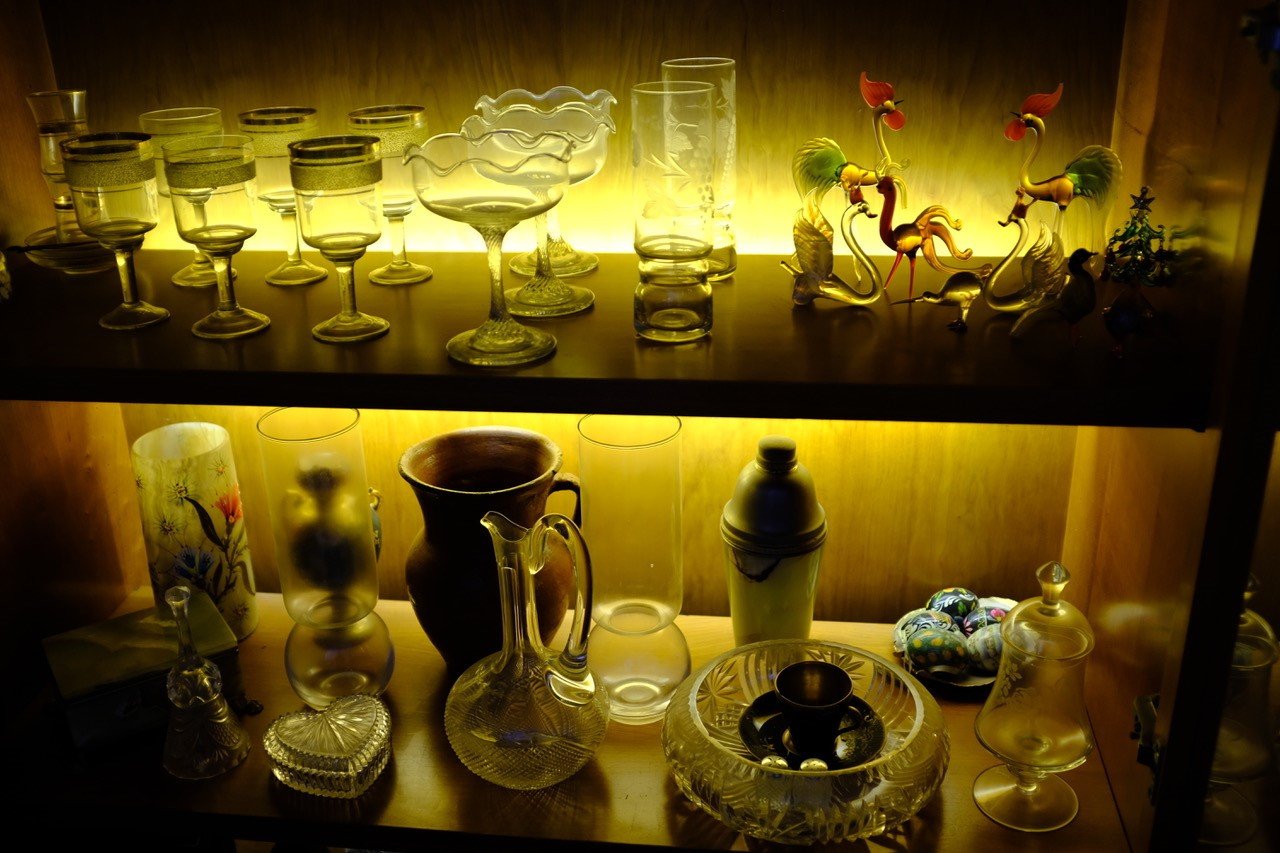
Let me take you to a part of London you probably don’t know, and won’t find on any map. It has a physical infrastructure, located in West London, but mainly it exists in people’s minds, and more specifically these days in their memories. It exists in my memory because it’s where I spent slivers of my childhood, taken there by my father, who inhabited it psychologically if not physically, and who would now and then announce on a Saturday morning: ‘Let’s go to Eh-ALL-ing.’

Going to Eh-ALL-ing — or Ealing, as people without Polish accents persisted in pronouncing it — most often meant going in search of foodstuffs then unknown to English supermarkets, with strange, sonorant names: kabanos, myśliwska, krakowska, chleb. Kabanos: a long, thin, leathery sausage hung in horse-shoe shapes behind the counter of the Polish delicatessen; myśliwska: a short, thick, leathery sausage displayed in bunches like bananas; krakowska: a fat cylinder of pork, paler pink on the inside than the others and with bigger white splodges, which comes in a synthetic casing you need to remove.

I remember how my dad would peel the sausage as he ate it, leaning against the kitchen counter with the sausage in one hand and a sharp knife in the other. I would try to imitate the gesture, the confident twist of the wrist, but I always made a mess of it, hacking off big bits of meat along with the casing. There was, though, something thrilling about the process. When I was a child, meals were often a formal and fussy affair: one ate sitting down, at the table, never standing up and never, never, in the street; one minded one’s manners, which meant worrying neurotically about one’s elbows and the correct way to hold the utensils. How liberating to be able to stand at the counter, to peel the casing from a sausage in a gesture that could never be described as either well-mannered or ill mannered, but was simply, perfectly, adequate to the task in hand. To see my father peeling smoked sausage was to see a man completely at ease in the world.  

Most often we ate the sausage withchleb and Kremska. A dictionary will tell you that chleb is bread. The dictionary is wrong — or was wrong in the 1980s, when bread was white and spongy when untoasted, but hardly ever untoasted or unbuttered; chleb was darker and harder, with a little aniseed kick from the carraway seeds. Kremska is a Polish mustard, and was a source of endless frustration and disappointment for my father. No jar of Kremska bought in London ever tasted right, which is to say no jar of Kremska ever tasted like it had back home. 

My father chalked this up to geographical displacement: in Poland, surely, Kremska still tasted like Kremska? He was wrong, of course, because it wasn’t physical distance that had wrought this change, but time. Kremska in Poland no longer tasted like Kremska either, that is to say no longer tasted like it had when my father was a boy.

Nowadays, all these products are widely available. You can get Polish sausage and Polish bread and Polish mustard in pretty much any supermarket in England. Along with Polish foodstuffs, the Polish language has become ubiquitous. I’m writing this in a café and I can hear Polish in stereo — a conversation between two young men in one corner, between two young women in another.  I think of pierogi, those little dumplings stuffed with all sorts of things. I like mine z kapustą i grzybami, with cabbage and mushrooms. When I hear Polish in the background, wherever I am, on the bus or the tube or in a supermarket queue, phantom pierogi always haunts my palate, the bassline rumble of affricate consonants like the deep umami taste of mushroom, the nasal vowels like the sharp acid burst of sauerkraut.

Sometimes, when we went to Eh-ALL-ing it was not to buy food but to visit friends of my father. In general, this was not an experience I enjoyed. My father’s friends seemed much older than him (they weren’t, but in his 60s he had married a much younger woman and had kids for the first time, creating an illusion of relative youthfulness) and much more old-fashioned. They lived in tudorette semis furnished with tasselled lamps and Roman Catholic wall art, smelling of herring and talc. 

As a small child I slightly dreaded venturing into such houses; as an adolescent, I sneered at their decor. It was only as an adult, at funerals, that I learnt about what had brought their inhabitants to Ealing in the first place. About Zula Stankiewicz, who spent her childhood in Dachau; about Andrzej Plichta, who had five older brothers, all killed at Katyń; about Halina Kwiatkowska, who lived for six years in the sewers under Warsaw; about Olga Rymaszewska, who joined the resistance at 17, was captured and tortured and sentenced to death, but who survived because, for some unknown reason — maybe she reminded him of his sweetheart back home? maybe it was his mother’s birthday? — the German officer supposed to shoot her let her escape. Now I regret every time I wriggled away from a bosomy hug, or rolled an eye at a tasselled lamp, or imitated an accent for a cheap laugh. Now I marvel at the how the heroic made a home in the most humdrum of English suburbs.

What I learnt from my father and his friends is that nothing is fixed: you can always rebuild a life, even on a heap of rubble and ash. The reverse is also true though — a life can collapse into a heap of rubble with very little warning, can go up in flames in the blink of an eye. The town my father was born in was in the east of Poland. When the Soviets invaded in 1939, he was sent with his mother and grandmother to a labour camp in Siberia. Now the town he is from is in Ukraine, and women and children are being deported once more. 

***

Emma Bielecki lives and works in London, where she teaches and researches nineteenth-century French literature. In addition to authoring articles on Balzac, Belle Époque detective serials, and radioactivity in the popular novel, she sporadically enjoys writing about other things that interest her, such as Bob Dylan, pet cemeteries and the history of Poles in London.

Portraits of War: Yuriy Gurzhy

Illustration by Emily Sweetman

This is the third in a series of portraits from our home city, of Berliners affected by the war in Ukraine. You can see all the portraits as we publish them here.

By Jacob Sweetman:

You can tell Yuriy Gurzhy's a singer. It's there in the way his voice rises when he's excited; talking about the success of his seminal Berlin parties, Russendisko, that spawned a phenomenon he'd never expected; or about hearing Lou Reed's 'New York' album for the first time as a teenager in Kharkiv. That was on a tape, recorded itself off another tape, taped in turn off a tape belonging to a guy who'd brought a bagful of these black plastic gemstones back from a trip to the States. 

“17 is an exciting age, anyway,” he says, noting that he is now getting to experience it again vicariously through the eyes of his son. But his late teens were spent watching the fall of the Soviet Union from within, and he was compiling his own soundtrack to it.

There was rarely much decent information about the music he listened to. Sometimes the name would be written on the sticker or on the case. Sometimes a year, but often not. He heard the Velvet Underground's 'White Light White Heat' a while later, realising slowly it was the same guy singing.

It was like he was collecting together all the pieces of a jigsaw, and only years later did they start fitting together to form a bigger picture. He was listening to bands like Dead Can Dance, to Throbbing Gristle, but also Grazhdanskaya Oborona, Egor Letov's seminal band from the Omsk underground.

“I don't know if these guys ever intended to sound like punk rock, but they had no chance. They couldn't play, the instruments were shit, the recording machines were shit, too. Probably just a tape recorder. But they were big, and they were banned in the late Soviet years so they really gained popularity in the early 90s as martyrs, suddenly able to play huge venues.”

This was a logical process, the natural emerging of a post-Soviet culture, but one that had begun a long time before, even from the Ukrainian folk songs his father knew, collected by people passing through villages, listening to whatever they could and learning it to preserve them, like Alan Lomax did in the Tennessee mountains a world away but at a similar time.

Gurzhy's dad would sing at family parties, playing on a seven string gypsy guitar, or on an old piano with his right hand much stronger than his left. They'd all join in.

His Dad was not very good on guitar, he says, but they didn't have an accordion at home, at which he was much better. 

But it was his dad's secrets that comprised his greatest loves. He was married to a Jewish woman, had banned, home-printed samizdat texts at home, and spoke fluent Ukrainian, none of which were fully apparent to the young Yuriy. He wanted to protect his family, he didn't want to attract attention to them. Yuriy's maternal grandfather and grandmother were dentists who also saw patients at home, illegally.

Yuriy's father liked the Russian songwriters of the sixties, but while far from pop, he wasn't into the “heavier stuff” Yuriy would discover later, with cryptic meanings hidden behind obscure metaphors.

“I remember hearing bands from Lviv in the early 90s and... 'woah'. You understand the language perfectly, you understand every word, but sometimes it's like, '...who's this partisan fighting again?' There weren't too many possibilities to find out more. So you have a song, and you listen to the song, and then one day maybe you get to meet the guy who sings it.”

It was the passing on of musical traditions. He calls it a folkloric process, and is also what he has spent the last couple of decades contributing to with his band, Rotfront; making pan-European music, rooted in ska and klezmer, with in-jokes about Berlin and Barcelona, dotted with hip-hop flourishes and proto-dancehall toasts, and horns that brighten corners otherwise occupied by rumbling bass lines. 

He jokes that they are thought of as German when abroad, but as a migrant band in Germany, though he later says that he wasn't really joking.

It's because he ties together all these loose ends. It's the way he is wired, curating the contents of what he calls his “internal hard drive.”

So his efforts to help his home city in its time of terrible need is centred around these connections, his ability to string together the different parts of his world into a cohesive whole, organising, communicating. 

And it's largely the same thing, anyway.

Yuriy is good company, we drink strong coffee, we talk about music, mostly. Even though he's exhausted.

But the city he and his forebears called home looms over the conversation.  

“Kharkiv was home to the new Ukrainian literature, until most of these writers and poets were killed in the '30s. So I remember wondering, when studying, where is all the good stuff? But there wasn't anything else, because they were all fucking killed.”

Kharkiv is as far from the Russian border as Potsdam is from Berlin. It's only 20 miles or so, nothing. Kharkiv is under attack as we speak, as we talk of old bands and mutual interests. Rockets rain down upon the city every day. A third of its residents are thought to have fled including most of his family, but he's still got many friends there.  

He's been writing a diary for the Tagesspiegel since February. The latest post when we meet is about a trove of old photographs taken by his father, comparing them with ones from today, with holes in buildings that were once whole, with dust and rubble lying like a shroud across previously clean, friendly looking streets, all shot in sharp, Kodachrome colours. 

It is, he says, an attempt to give some context to German readers. He says all we really need is some empathy.

Then he echoes what so many people have said to me recently. 

“I know how it works sometimes, you just turn numb. At some point you just can't react to these images any more, the numbers are just so abstract.”

It's then his voice drops half an octave into a rich baritone; like when he talks of his cousin's nine month pregnant wife sheltering 24 hours a day, seven days a week, in a cellar with 200 others, hiding from the Russian bombardment. And the tone continues, though he speaks more wryly of gigs that will likely never happen, but that were already being planned, in Mariupol and Kyiv and in Donbas for this Spring.

You can tell Yuriy Gurzhy's a guitarist, though he's better than his dad ever was. It's there in the times he doesn't know what to do with his hands; he rubs the drying skin on his forehead; he fusses around his neat Prenzlauerberg kitchen; he plays with the pastry sat in front of him. 

He gets up and sits down, he gets up and sits down. He's being pulled in a lot of directions at once.

Yuriy grew up speaking Russian. He's spoken more and more Ukrainian for years now, but remembers when it was still an alien concept.

“One of my classmates switched to Ukrainian in the fourth year, I think. It was really weird, until I realised that he actually comes from a Ukrainian speaking village... so in a way he closed the circle. But I remember what a shock it was, because it was after the holidays he'd spent back in the village of his grandmother and he came back and spoke Ukrainian to all of us. And people were like 'are you fucking kidding?' But we learned to respect that pretty soon. He was the first one.”

He says he sometimes feels ashamed for having Russian as his native tongue. That's another thing. But he also says he feels guilty all the time anyway, even though he's been living through a whirlwind for the last fifty days.

“I've not done that much. I still feel like it's not enough. I hate myself...” It's not self-pity, though, just a rumination. “But also on good days I feel like I'm doing more than ever. So there's strength, and there's an energy coming from out of... I don't know where, but probably just of necessity. And as long as it keeps me going and going.”

He bristles when I ask him about hearing the news of February 24th. 

“The war has been going on for eight years”, he says.

“I played Donbas a couple of times, I saw the places affected by the war, the people affected by the war. It's not 'coming', it was already there, we are just in the escalation phase.”

I try to say I meant this, but I too still think of this war as being a sudden development. He cuts me off. It's something he has to say in every interview he does, and he's doing a lot of interviews now we are all suddenly interested in Eastern Europe again.

We talk of the importance of music to all this, of how in the modern world it can cause tangible change in terms of instant distribution, of exchanging information, and the fundraising capabilities unheard of a decade ago. 

We always come back to music. 

“I think the real music freak was my grandpa, my mothers dad,” he says. “He hated all this songwriter shit, he was into pop. And when I was growing up we lived in the same apartment, six of us, grandparents, parents, my sister and me. I was sick a lot as a kid and I'd stay home and my grandparents stayed at home too.”

Yuriy still has his grandfather's tape deck at home in Berlin.

He then tells me of a friend who arrived in Leipzig with her son, a 14 year old, who'd had to leave his guitar behind. Yuriy managed to sort one out for him in four minutes. 

“It was a personal best” he says, allowing himself the small consolation that he's helped, because he knows of an instrument's inherent importance. 

His grandfather wanted to pursue a career in music as a young man, but then after the 2nd World War he became a dentist. His violin had been stolen, and he probably thought he needed to do focus on survival, to do something less fun, more solid instead.

So I ask Yuriy if he thought his path to becoming a musician was, in a way, making up for the dreams he missed out on.

“Absolutely,” he says. “Both him and my dad, I had it from both sides. I had no choice.”

His inheritance is in the knowledge passed down that those strings, however loosely strung and amateurishly struck, that that neck, however wide or well attached to that body, however battered and chipped - and that the voices, singing in whatever language is at hand, holding a simple melody for a fleeting moment - are as important, sometimes, as anything else.

***

Jacob Sweetman is a writer and sports journalist, at home in Berlin. His work has appeared in 11Freunde, The Guardian, The Berliner Zeitung, Wisden amongst others. His writing about 1.FC Union Berlin can be mostly found here and he has a website here

Emily Sweetman is an illustrator, at home in Berlin. She is a genius, and her work can be seen here