
The Strength of the Light
/
By Jenna Sciuto
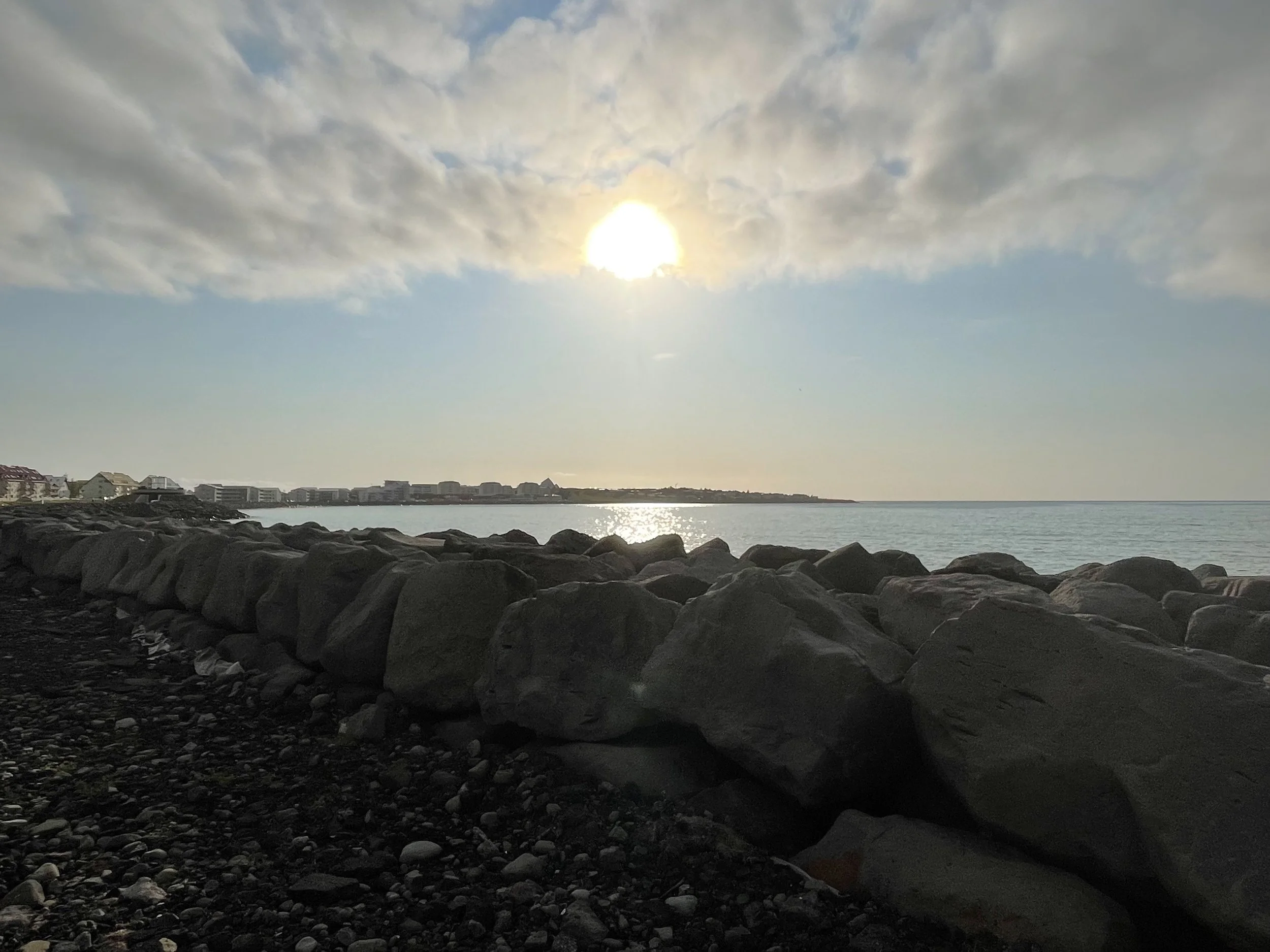
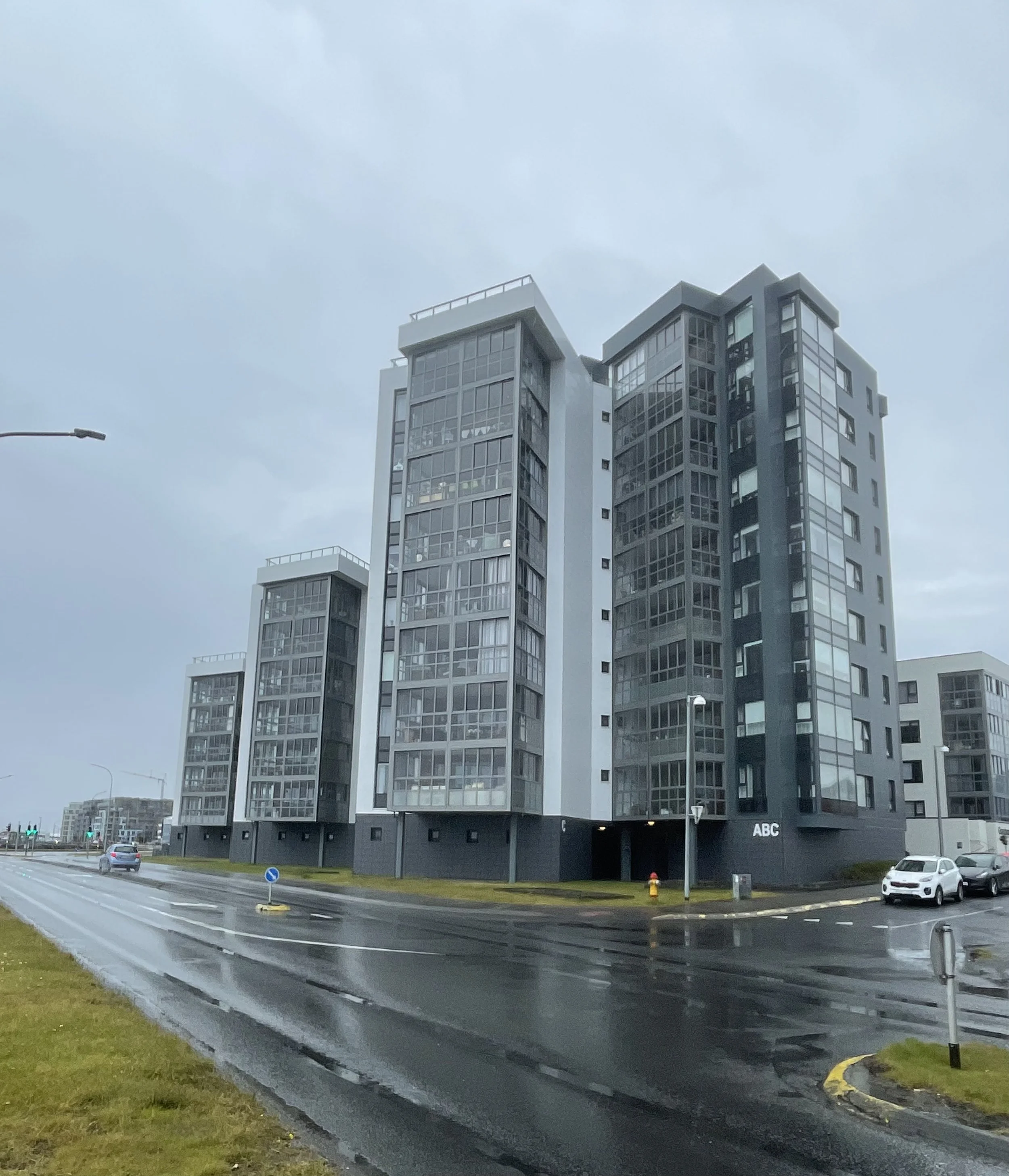
There are no ghosts in Grandi—in this modern apartment building, with its lovely glass balcony facing the sea. Whatever ghosts are here I brought them with me. I can feel myself tense up around thoughts of last summer, as if it makes me weak to remember. As if missing something that no longer exists should be equated with failure. I miss it sometimes, but I like how things are now too. I’m in Iceland again. I’m writing. I love it here. The sea today is more grey than blue, and I can’t see the lighthouse out at Grótta well for the clouds.
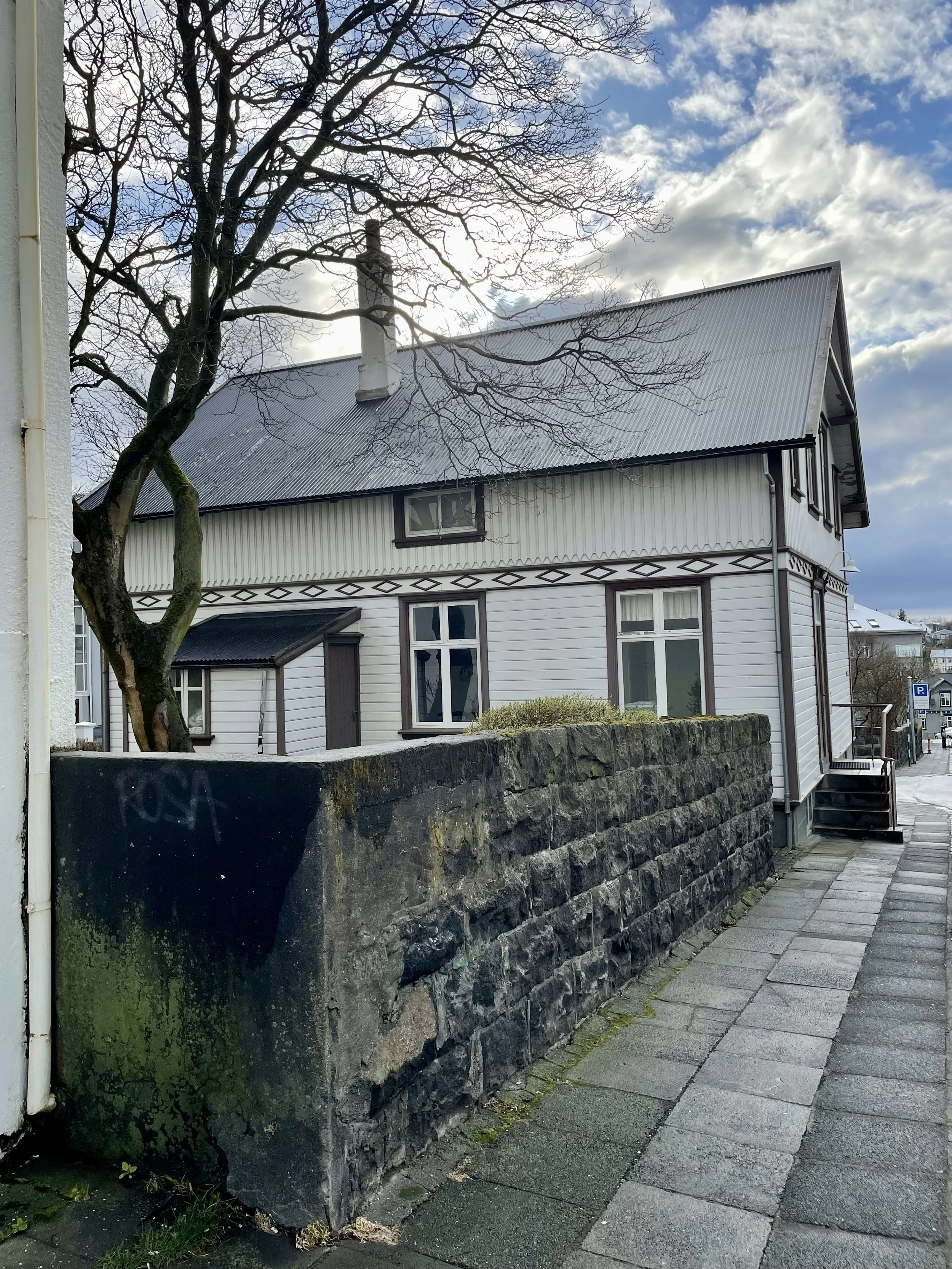
We were here together last summer. There are traces of us on that sidewalk by the sea, looking up at this apartment, and the cats I watch sometimes in the summers. Not last summer though. Last summer I had a full three months spread out before me, of archives and research support. I lived in a small, old house owned by my research institute in miðborgin, the city center. It was one of the first homes in existence when Reykjavík, which translates to Smoky Bay, was coming into its own as a town. The house was built with wood imported from Norway, and stood alongside a few others, as depicted in photographs lining its walls. The ghosts of the previous owners lingered there until the miðnætursól, or midnight sun, of late June expelled them to darker locales—unless the late night bumps and bangs should be attributed to strong winds and weak windows. I found my feet early last summer, sinking into a rhythm with my city wanders, set to the soundtrack of moody alt rock or sagas on audiobook.
I found him early too, a geologist here for the glaciers. A casual date morphed into fifteen hours of adventure over the course of two days, spanning from the shore in Grandi and the small, twisted trees of Holavallagarður Cemetery, to scrambling behind Reykjadalur Valleys hot springs and losing ourselves in the woods of Heiðmörk National Forest. We found the trees in a country known for being without them. Before he left my temporary home for the airport around 4am, not wanting to waste a minute together by sleeping, I told him I didn’t want to not see him again. He knew what I meant, and would repeat it back to me the last time I saw him. Although this work trip to Reykjavík was the first time he had flown in five years, within a few days he had booked a flight back.
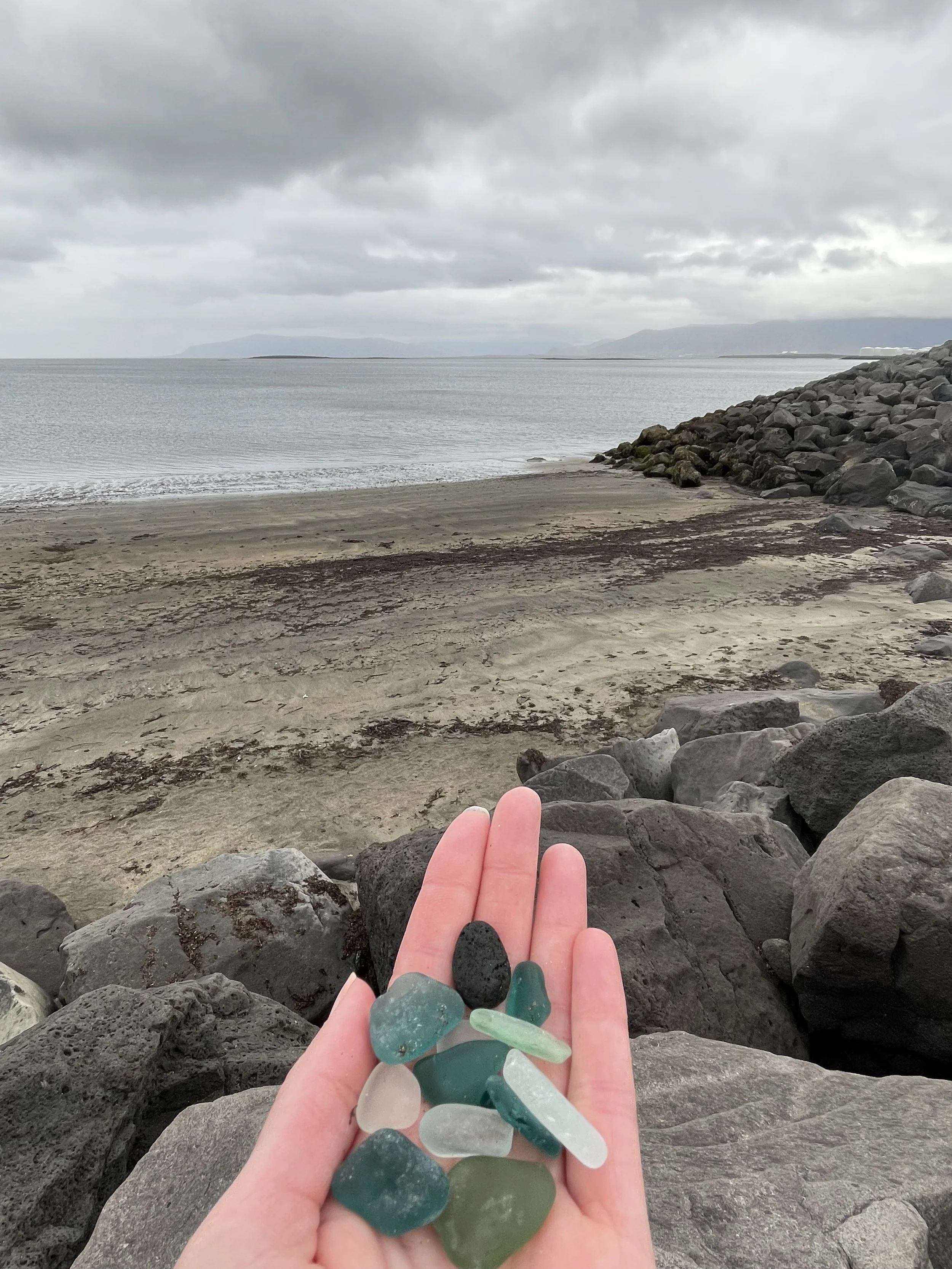
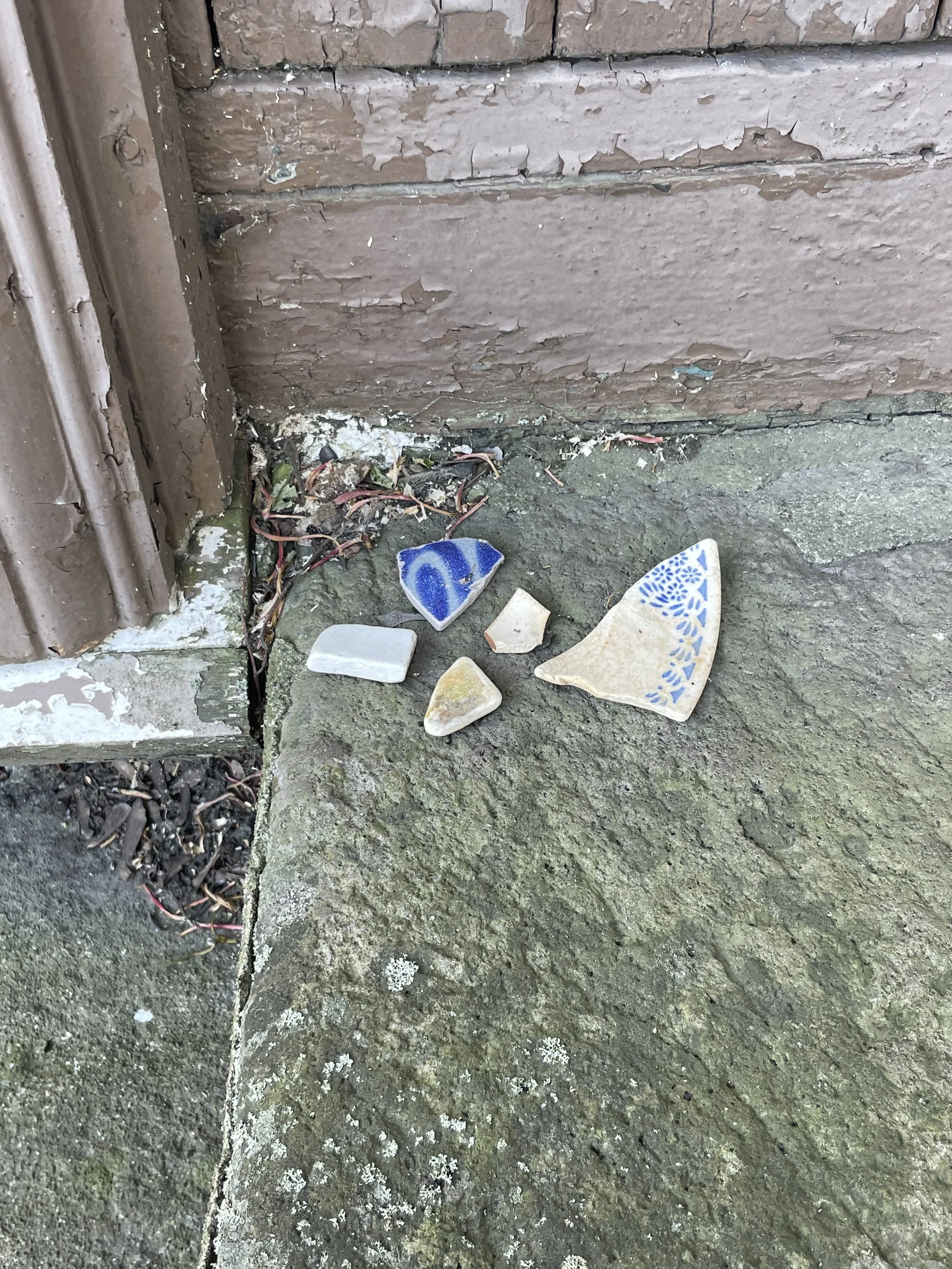
We had another week of adventures, nestled safely among my everyday routine of writing, work, and city wanders, taking up little space that wasn’t given freely. He had an openness and earnestness—a presence, joining me in the moment, as it was. We didn’t have to dress ourselves up as anything other than what we were. My life opened to him in a way it hadn’t to anyone in years. I like my rhythms, my habits having solidified with years of independence, but they softened to him, molding like clay to make room for someone other than me. The week together was easy and natural: finding the trees again in Öskjuhlíð, or the small forests clustered around the literal pearl of Perlan; leaving the city wanders behind for shore wanders among sheep, seabirds, and seals on the Snæfellsness Peninsula; long talks into the night scraping softly at the inner chambers of selves not long unlocked. When he left this time, he left a hole, as places that had been mine were now shared. I collected sea glass and pottery on the small, dark beach at Grandi: gifts from the sea, the same sea I look out over now. I brought the sea glass to Scotland, to him, and left the pottery on the stoop of my old house.
But it fell apart on that next visit, as what was open in him closed tight. I visited him in his northern Scottish home, a small apartment cast against a backdrop of trees with sharp green leaves. Unlike our meeting in my borrowed house, on neutral ground, he didn’t know how to open up to me. In this safe space that usually cocooned around him, he shut down with me on the outside. We talked a bit over the year, touching base sometimes, but the openness didn’t return, until eventually I stopped hearing back. My softening lines ossified, back into their own shapes and patterns, and I continued.
I walked by the old house yesterday, where I was, where we were. My sea pottery is still there on the stoop, having weathered a winter in Smoky Bay. Some traces remain. I’ve not gone from there entirely, I’ve left a mark; changed my environment, for a time, at least. We were there. And now I am here. Instead of tensing up around whisps of memories, I reach for the calm, to let them be. Friends ask if I’ve found more “attractive Europeans” to spend my time with, not understanding that my own company is enough; finding the ground still firm beneath me. I am still me, still here, in my favorite place; feeling the edges to myself against the strength of the light. I need to feel where I end and the world begins. The sun warms more deeply here when it appears, which this summer is not often. I read and I listen to the narratives of women, living sometimes alone, with and in, the landscapes of remote places considered to be the edges of things: Shetland, Orkney, the Faroes, Iceland. Women at the edges, finding our edges. Why is the edge of the world so often an island?
We were there. And now I am here—still whole, open, and in love with this place—and I want to envision another type of happy ending. I sit here in Grandi, watching the ripples on the sea. For such a large, solid body, it amazes me that it is constantly in motion.
- June 21, 2025; Reykjavík, Iceland; summer solstice.
Jenna Grace Sciuto is a professor of Global Anglophone Literature at the Massachusetts College of Liberal Arts. She has published extensively on Icelandic, US Southern, and Caribbean literatures, including her most recent book, Intersecting Worlds: Colonial Liminality in US Southern and Icelandic Literatures (University Press of Mississippi, 2025). In addition to her scholarly publications, she had a series in the Reykjavik Grapevine, introducing a general reader to Icelandic literature in English translation. This is her first creative nonfiction publication.