
WILL WE NOTICE THE DAWN WHEN IT COMES?
/
By Joe Pearson
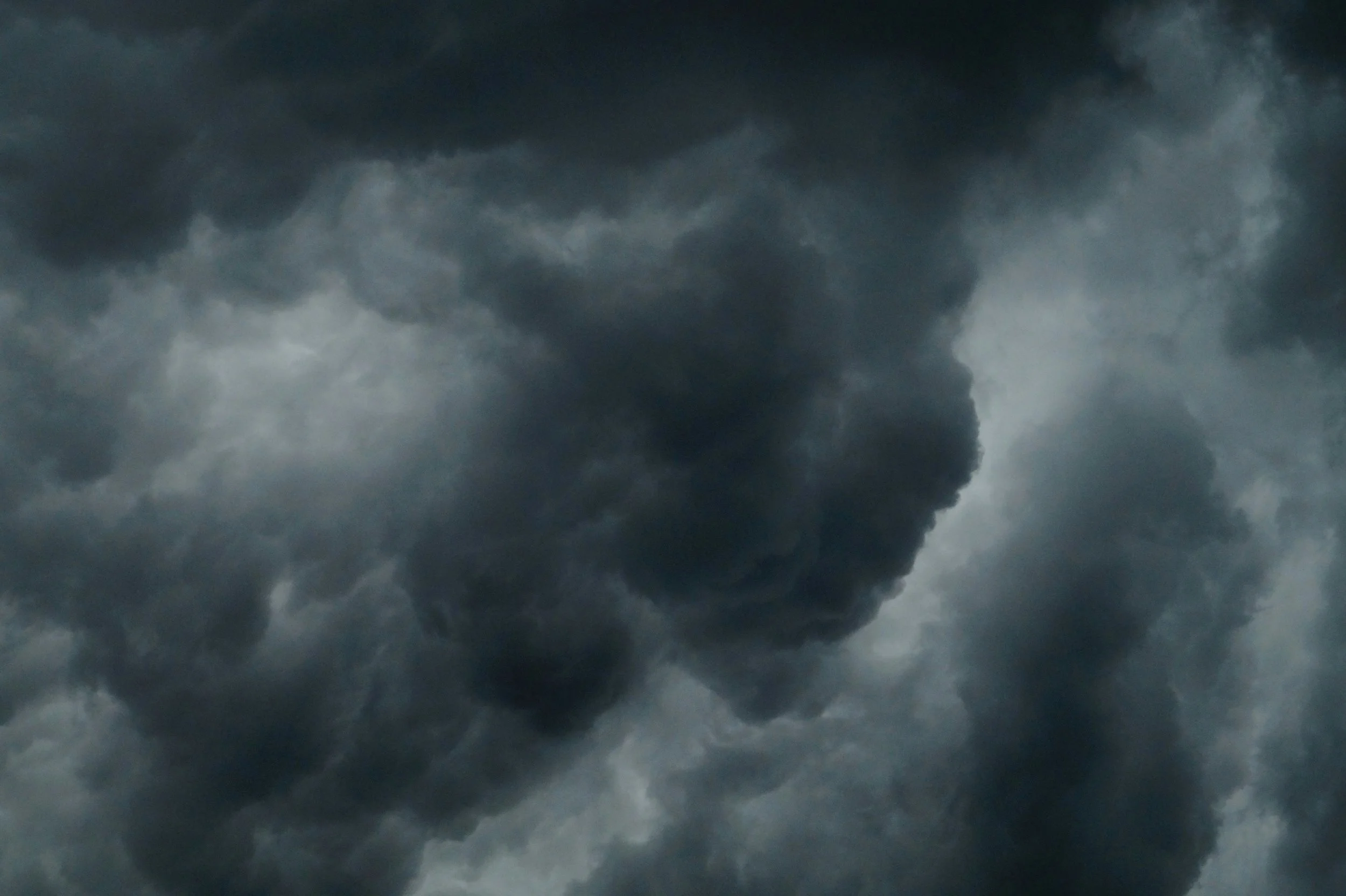
At the exact moment the world is saved, Anya lights a candle; her mother lies dead on the table before her, storm rain still dripping from the body’s pale face. Daniel closes the shutters, and the raging wind quiets. He puts an arm around Anya’s shoulders, but she takes little comfort from it: just one more burden weighing down her tired body.
“She’s at rest now,” says Daniel. “No more storms inside her.”
Her mother’s eyes are closed, but she remembers how wild and alive they’d been when she saw the old woman kneeling in the rain, arms raised, offering her failing body to nature. They were all in need of release after waiting for months for a gap in the weather, but what use is release if it costs you your life? Anya resents how peaceful the dead woman looks now, having left her to make decisions alone.
“We should do something,” she says. She wants to mark the moment but is growing tired of grief.
“We could sit shiva?” says Daniel. “I did it for my brother once.”
Before they got separated from the other nomads, they were part of a big group heading south, hoping to make it to one of the homesteading silos under the ruins of Boston. Can she really face staying here for seven more days? An abandoned office block in some nowhere New England coastal town is no place for funeral rites. Part of her wants to lie down beside her mother and let Daniel sit for both of them.
“What if there’s a gap in the storm?” she says. “Besides – she hated the religious thing.”
There won’t be a gap in the storm; Anya knows Earth’s patterns by now – things won’t calm down before the end of summer. Daniel also knows this, but she’s glad he humours her:
“We bury her then – in the courtyard between the two buildings. She’ll be sheltered from the worst of the rain.”
Her mother might like that; she often spoke of bodies decomposing, of returning to the soil to feed new shoots. Anya finds little comfort in the thought. What use are new seedlings on a doomed planet? Nowadays, death only begets more death. Earth is busy permanently disassembling its constituent atoms; no one alive today will be around to witness any restructuring.
“I should probably go check on the hydroponics,” says Daniel, his eyes reflecting candlelight. “Make sure the wind shield’s holding.” Anya wishes he would stop speaking. He tries endlessly to make her feel better; doesn’t he realise despair is the only sane response to the human plight? Ignorance is the only thing making his brave face possible.
Her mother would have hated her thinking like this; the woman had always had so much hope. She even preached hope’s gospel as she stood in the storm, choosing pain and lightning, screaming about how Earth would be reborn. Anya looks for herself in her mother’s face, sees no resemblance; she has long suspected the maternal link to be fabricated.By the time she is born, parenting has already become more about proximity than biology. But her mother always did prefer to keep up old-world appearances.
“I’m going then,” says Daniel. She’s been unresponsive.
“Okay,” she says.
He puts a hand back on her shoulder, and she allows herself to lean her head on it for a second, feeling his warmth. When he leaves, she sits next to her mother and tries to run her fingers through the body’s knotted hair.
Eventually, the candle sputters out.
*
The world has been saved for twenty-four hours, and Anya is standing on the top floor of her office block, looking out through the only window where it’s safe to raise the shutters, where the glass is not yet broken. Half a world away, in a laboratory in Kyoto, scientists are celebrating. Clouds are being seeded; carbon emissions are being pulled from the air and stored in synthetic tanks. Anya watches rivulets of storm-water course down the road outside, wonders whether the flow would be enough to carry her mother’s body out to sea.
The remains of their previous meal – tinned tomatoes, straight from the can – lie discarded on a nearby desk. She thinks the meal was breakfast, but it’s hard to tell time these days; night and day are too similar. Yesterday, one of the store cupboards sprung a leak. Daniel is still busy moving boxes of cans up to the top floor. He appears now, lugging a new crate, which he puts down next to the hydroponic troughs. She can see sweat on his forehead in the light of the rechargeable solar lamps. They might run out of energy soon; little sunlight has pierced through the endless cloud cover, and she and Daniel have very few backup batteries.
“Do you need help?” asks Anya, watching him struggle with the box.
“It’s okay,” he says. “Let me. I know you need to be alone right now.”
He has never liked being alone though; she suspects the space she has asked for is hurting him. She beckons him over, lets him put his arms around her waist and kiss the top of her head. “When do you think it happened?” she says, eyeing turbulent skies. “What were we doing when the tipping point passed?”
Daniel nuzzles her neck. He smells of rain – he must have been outside. “I don’t believe in tipping points. Earth has always changed. Always will.”
She tenses a little; she doesn’t mean to, but it causes Daniel to pull back anyway. He sits in a broken office chair. “There must have been a moment when everything went too far,” she continues. “One CO 2 molecule in the atmosphere too many and – that’s it. Earth is dunzo.”
Daniel frowns. “I don’t think that’s how it works.” Is he pitying her? He probably thinks she’s in denial. He often acts this way when she insists on discussing the past or future; he likes to exist only in the present. Sometimes, this is a comfort – when her body is tired but her mind won’t let her sleep, he can ground her in the moment with his touch. But often, it feels dismissive; like he’s berating her for not being contented with humanity’s terrible lot.
“Let’s go south,” she says after a while. “Try to meet up with the old group in Boston.”
“The silos will have shut their doors for summer already,” says Daniel, without looking up. “Besides, what’s wrong with here?”
“I’m sick of tomatoes,” she says. Maybe she’s sick of him.
Daniel laughs and nods towards the latest crate. “There’s some hotdogs or something in that.”
Anya’s head feels heavy, so she sits on the ground by Daniel’s chair and pulls her knees up to her chest. “You moved her body, didn’t you?”
Daniel strokes her hair. “I wrapped her in a tarp and put her in the outbuilding.” He stops stroking. “Sorry we don’t have a coffin.”
Anya lets her head fall forward onto her chest, tries to make her body as small as possible. Ignoring the future suddenly seems appealing. “Will you hold me?” she asks. He complies, sliding to the floor himself and letting her lean into him. Inside her, seas rise — she’s heating up. Some tipping point has passed without her realising.
“I’ll get started on a grave,” she says after a while, and goes to find a shovel in the basement. Outside, the wind and rain produce a wall of noise that helps drown out her thoughts. She’s drenched the moment she steps into open air. She stands in the courtyard and lets water rush over her face, her hands, her back; even here, where cover is greater, she can barely hold her own against the buffeting wind. She tries to imagine summoning the ecstasy and determination that drove her mother to whoop and cheer as the hurricane raised her body into the sky; she imagines she caught a glimpse of her mother’s smile as her body slammed into the tarmac. It had taken both her and Daniel to drag the broken body back to the office block, Daniel’s bulk the only thing stopping them being lifted off themselves.
She hugs the wall of their office building and heads for the patch of exposed dirt that could once have been a flowerbed. As she does so, a tree branch the size of a pushbike whips passed her and spirals up into the sky. Her sodden clothes weigh her down like intrusive thoughts, and she sinks her shovel blade into the ground, but as she tries to lever out her first shovelful of dirt, she finds the earth’s suction too great. She’s digging through bog mud, not soil. When she finally wiggles the blade free, water rushes in to fill the hole. She throws the shovel to the floor in frustration, where it sinks into the mud before her eyes. Scrambling, half blind from rainwater, she finds her way to the outbuilding doors, where she collapses in the entryway, her own tears mixing with those of nature on her dirt-streaked cheeks.
She eyes the rolled tarpaulin containing her mother’s body, lies down next to it, lays her head on the plasticky fabric; something so important that will rot so quickly, wrapped in something disposable that lasts fifteen lifetimes.
*
The world has been saved for three weeks now. News from Kyoto has reached as far as Beijing. Readings from weather stations across East Asia show a stabilising atmosphere. A Japanese scientist, drunk on red wine and his own elation, kisses his wife like a movie star; he now believes he will see her grow old. Anya lies awake next to Daniel, under their shared blanket. Her mother always found the sound of rain comforting, but for Anya it feels like a prison; she’s trapped here until the infernal sound stops.
In the end, Daniel fetched another shovel and buried the body for her; after he found Anya sleeping next to the rolled-up tarp. She awoke to a blanket over her and her mother’s body gone.
Daniel stirs, coughs, and rolls over. She lets him slither an arm over her stomach, listens to his breathing. They lost power ten days ago, and the hydroponics failed. They’ve only one box of food left, another week or so of supplies at most. Daniel refuses to be worried; they’ve survived this long, and they’ll keep doing so. For him, it’s that simple. Just keep on living until the day you die. She wants some of his energy, wants his fire and resilience to ignite the nothingness inside her. She gently stokes the arm he has laid across her: the lightest possible touch. They ran out of condoms months ago, but if they’re going to die anyway...
He stirs again, gently bites her ear. She moves a hand across his bare chest, whispers:
“Let’s die happy.”
As his rough hands touch her neck, she imagines storm clouds dissipating – some mystic balance returning to the world. She removes her T-shirt, and Earth’s atmosphere stabilises – his fingers descend towards her thigh, pulling with them tonnes of carbon dioxide back into the soil. His touch calms an angry planet; she sees blue sky as he kisses her breast. Seas recede as he moves inside her, and she throws her hair back, presenting her naked body to a long-hidden springtime sun. When she collapses onto him, she is satisfied they have escaped extinction.
The vision fades and they lie, eyes closed, listening to each other’s breathing over the ever-present sound of rain. Soon, Daniel is once more asleep. Anya lies awake, alone with her darkness within and without. She is thinking of her mother decomposing in mud, of the closed doors of the Boston homesteading silos. The Japanese scientist pours another glass, but Anya stays flat on her back, paralysed by her own thoughts, living in doomed futures. She does not open the shutters, does not stand at the window, does not see the first rays of dawn peek through parting cloud.
Joe Pearson is a British fiction writer living in Paris, France. He writes about climate change, cultural displacement, masculinity and fatherhood. His work has been published in Indelible, Briefly Zine and Free Flash Fiction. He has been longlisted for both the Writers' & Artists Short Story Prize and the Bath Flash Fiction Award. You can find more of his writing at joepearsonwriter.com.