
The end of the world is a river
/
By Julian Dobson and Ella Hubbard
In Dante’s Inferno, Hell has four stinking rivers. Less well known are the two in Purgatorio: Lethe, for forgetting past wrongs, and Eunoe, a flow of restored and reordered memory before entering paradise. But this one, the Don, is the end of the world that is already happening, more real and more slippery than Dante’s rivers, a place where sewage and salmon collide and coincide.
It’s a loose end that refuses to be tied, incomplete forgetting and half-restored remembering. Even the name won’t stand still: the Don in South Yorkshire waves to the Don in Aberdeenshire, Scotland; nods to the Don flowing through western Russia to the Sea of Azov; murmurs with the Don in Brittany, and maybe also the Donau or Danube.
From end to end, this Don, the Yorkshire one, muddles and muddies start and finish, end and purpose. Its source in the Pennine uplands is blocked by a concrete reservoir, its terminus wrenched into a channel hacked out by the engineer Cornelius Vermuyden four hundred years ago. Shackled and exploited, diverted and damaged, it nonetheless offers promise in the form of brown trout and grayling, great crested grebes and ospreys, fluid movements of fin and wing.
A little egret feeds in a flooded swale between banks built to stop the Don swamping the village of Fishlake, near Doncaster. Fishlake used to be a riverside harbour, the ornate arched doorway of its medieval church a hint of its former prosperity. Now there are two high dikes between the village and the channelled Don, a Drainage Board and a pumping station to urge the water away. It wasn’t enough to stop Fishlake being inundated in November 2019 after 24 hours of rain, leaving up to a metre of water in 170 properties. Some families were living in caravans for more than a year while the clean-up continued.
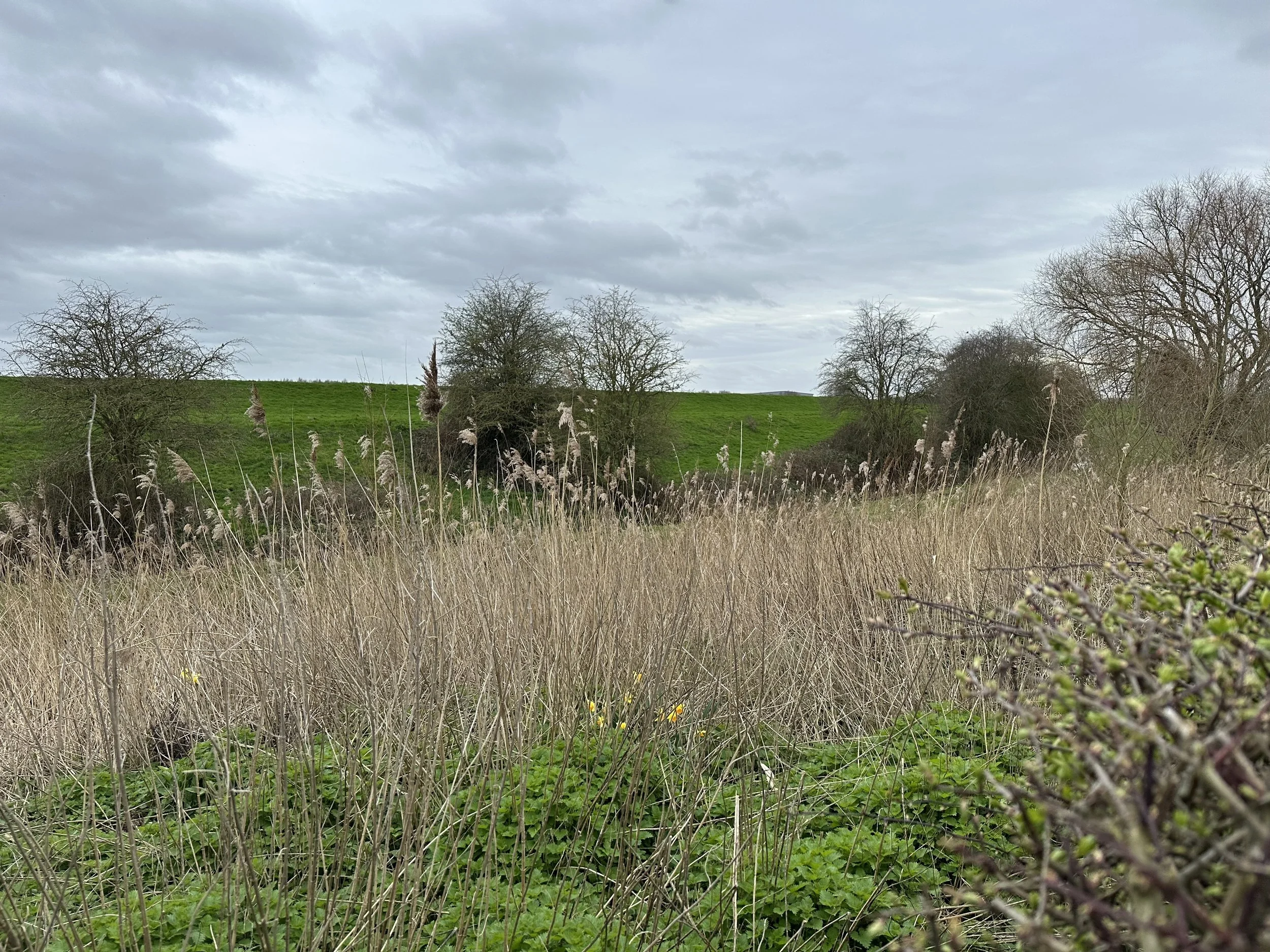
At flood-prone Fishlake, replanted reed beds mark the historic course of the River Don
The egret, brilliant white, is an alluring harbinger of climate change. Egrets never used to visit South Yorkshire. As the climate warms, they’ve taken up residence, moving north through Britain since their arrival in the 1990s. But the warming air brings more rain; as the landscape becomes more sodden and the sea creeps higher by barely perceptible fractions, the low-lying pastures around Fishlake, Stainforth, Goole and Doncaster will become ever more prone to flooding. In a few decades the fens, drained in the 17th century to enrich King Charles I and local landowners, could revert to their historic bogginess.
But the egret is no angel of destruction. It wouldn’t stop here without a plentiful supply of fish, crustaceans and aquatic insects, and the return of these species has much to do with the deindustrialisation of the late 20th century. An unintended consequence of the brutal closures of manufacturing and mining industries in the 1980s and the mass layoffs of their workers was a dramatic reduction in pollution in the Don, which used to slide through Sheffield – around 30 miles upstream from Fishlake – in an ochre ooze described in George Orwell’s The Road to Wigan Pier as ‘usually bright yellow with some chemical or other’.
As worlds of capitalism morphed – riverside steelworks replaced by a shopping mall – other, undervalued and unnoticed worlds began to reappear. A dead salmon was found by Crimpsall Weir in Doncaster, and suddenly conservationists began talking about installing fish passes and breaking up the redundant weirs that stopped the salmon migrating to their historic spawning grounds in the gravel shallows upriver.
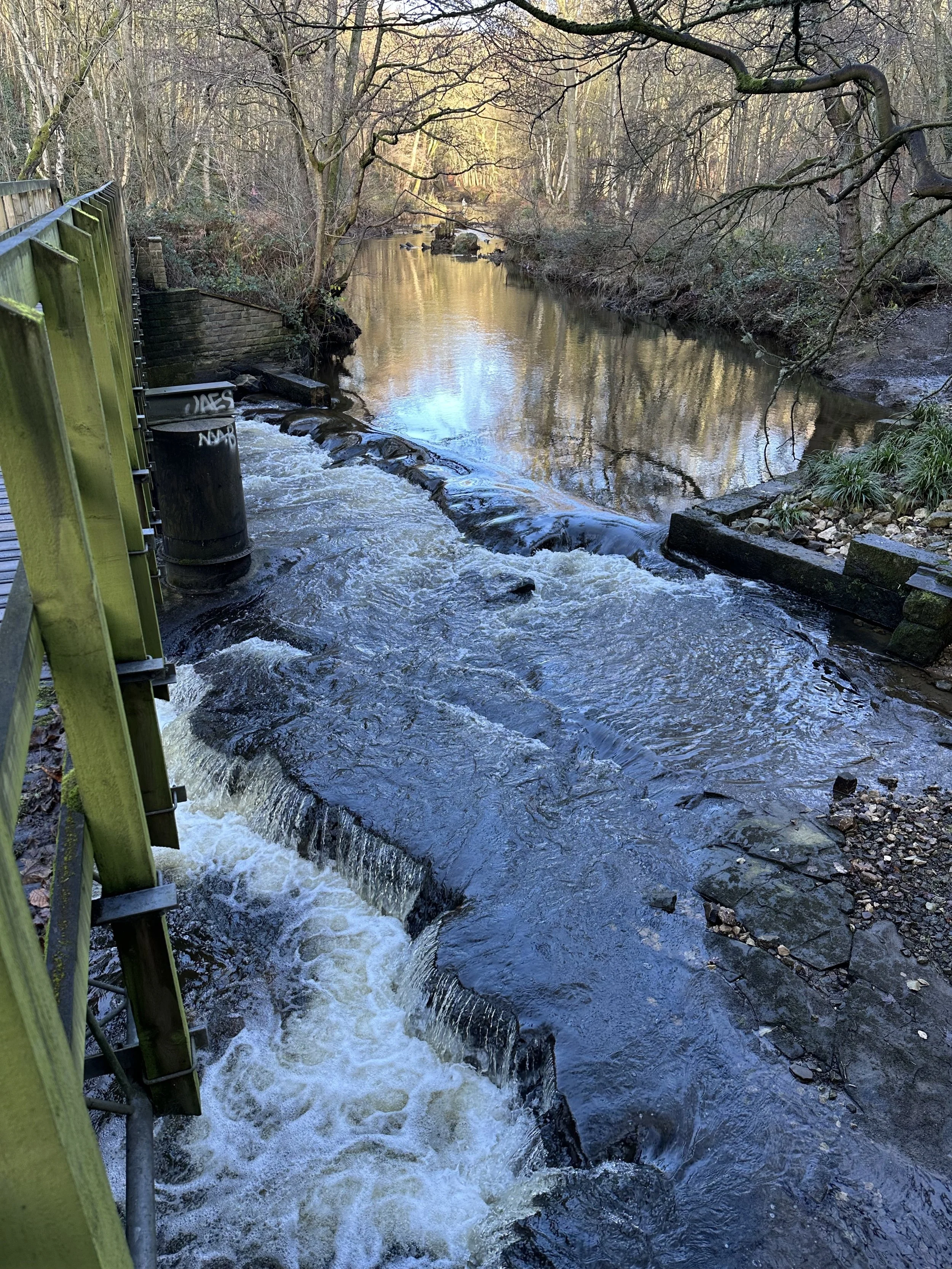
At Deepcar, north of Sheffield, the removal of a weir helps fish migrate upstream
Workers at a riverside scrapyard noticed kingfishers, and the scrapyard let some of its land become a waterside walkway. Cormorants joined the party, the sheen of their black wings blurring into the silted flow. At Kelham Island, Sheffield, Ball Street Bridge was made traffic-free, and now residents of the nearby converted factories can peer over to watch herons and sand martins.
Is this a new beginning? The emerging microworlds of new habitats on the Don are a tiny counterweight to a context of species loss. A report by Yorkshire Wildlife Trust in 2024 warned that up to 3,000 species in Yorkshire risked extinction. But as the Don does what comes naturally – letting salmon travel upstream and Japanese knotweed and Himalyan balsam float down, providing shelter and sustenance for coots and goosanders, depositing tidelines of drinks bottles and branches on banks and berms – humans, some of them, stir and start to flow differently.
Perhaps these people – let’s call them ecological citizens – have had enough of being channelled, like the Don, to serve the interests of capital. Perhaps they haven’t yet connected their love for bats or cormorants with the systems that constantly find new ways to exclude or threaten them. Maybe they simply start from what they care about, a spot where they can sit and watch the water, a safe passageway to walk or cycle, a willow by the bank, or the joy of steering a kayak through the fast-flowing shallows at Oughtibridge. For some this means sitting through meetings; for others it’s a question of painstakingly shifting hundreds of years of litter, from cannonballs to drinks cans, from the riverbed and banks.
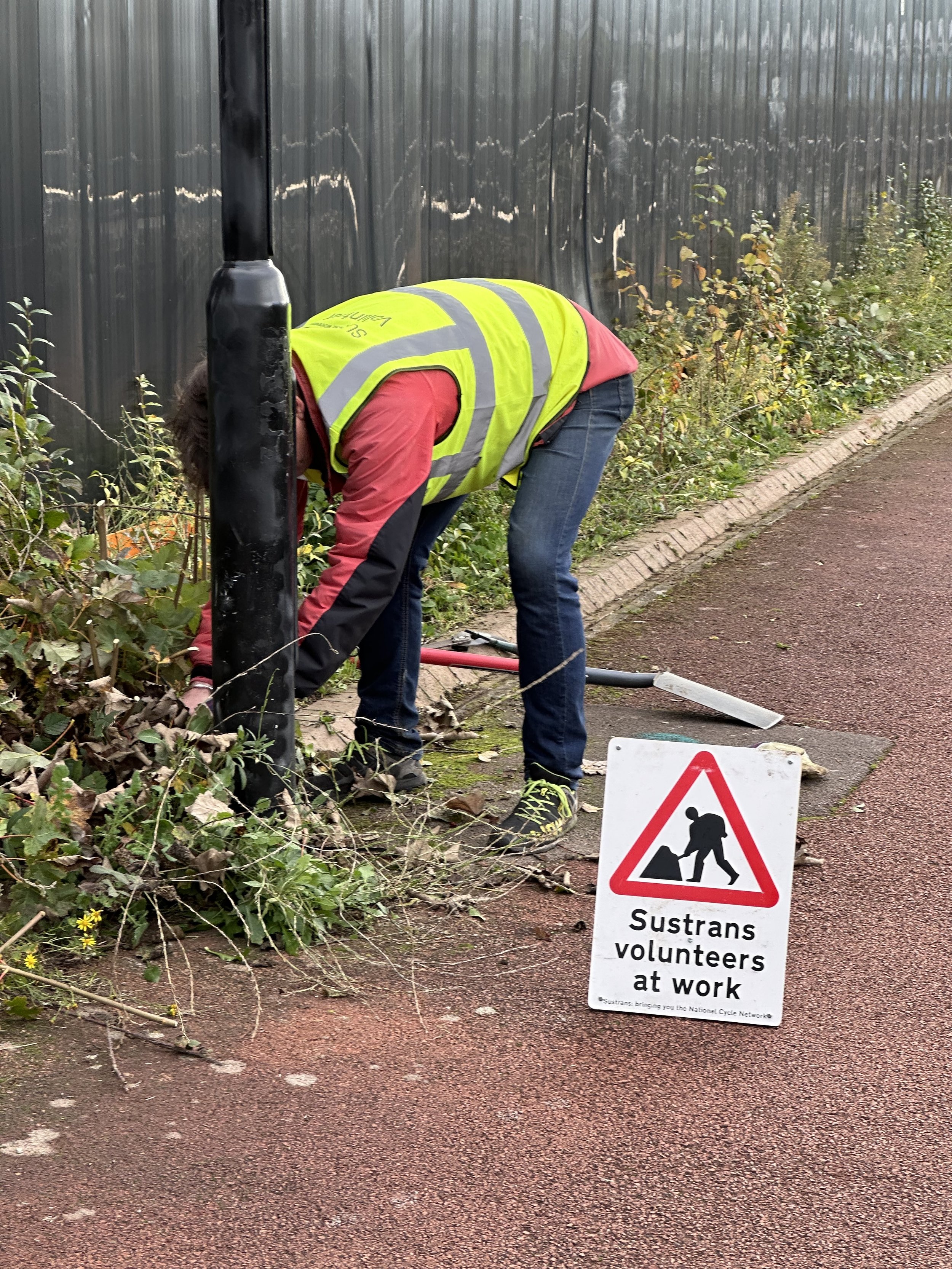
Ecological citizenship starts with small acts of care. Here, a volunteer trims back vegetation along a riverside walkway
Little by little, these citizens are joining forces with other species and the river to tease into being new worlds as old ones end. It may never be enough to offset the events and threats of floods and storms, chemical and sewage pollution, and hapless or heartless political and planning decisions. But coalitions of attention and care are becoming visible, from the interpretation boards that bring local ecologies to life to the volunteers in orange hi-vis who coppice the crack willow growing on the riverbanks or remove shopping trollies, car tyres, footballs and dumped cannabis plants from the water.
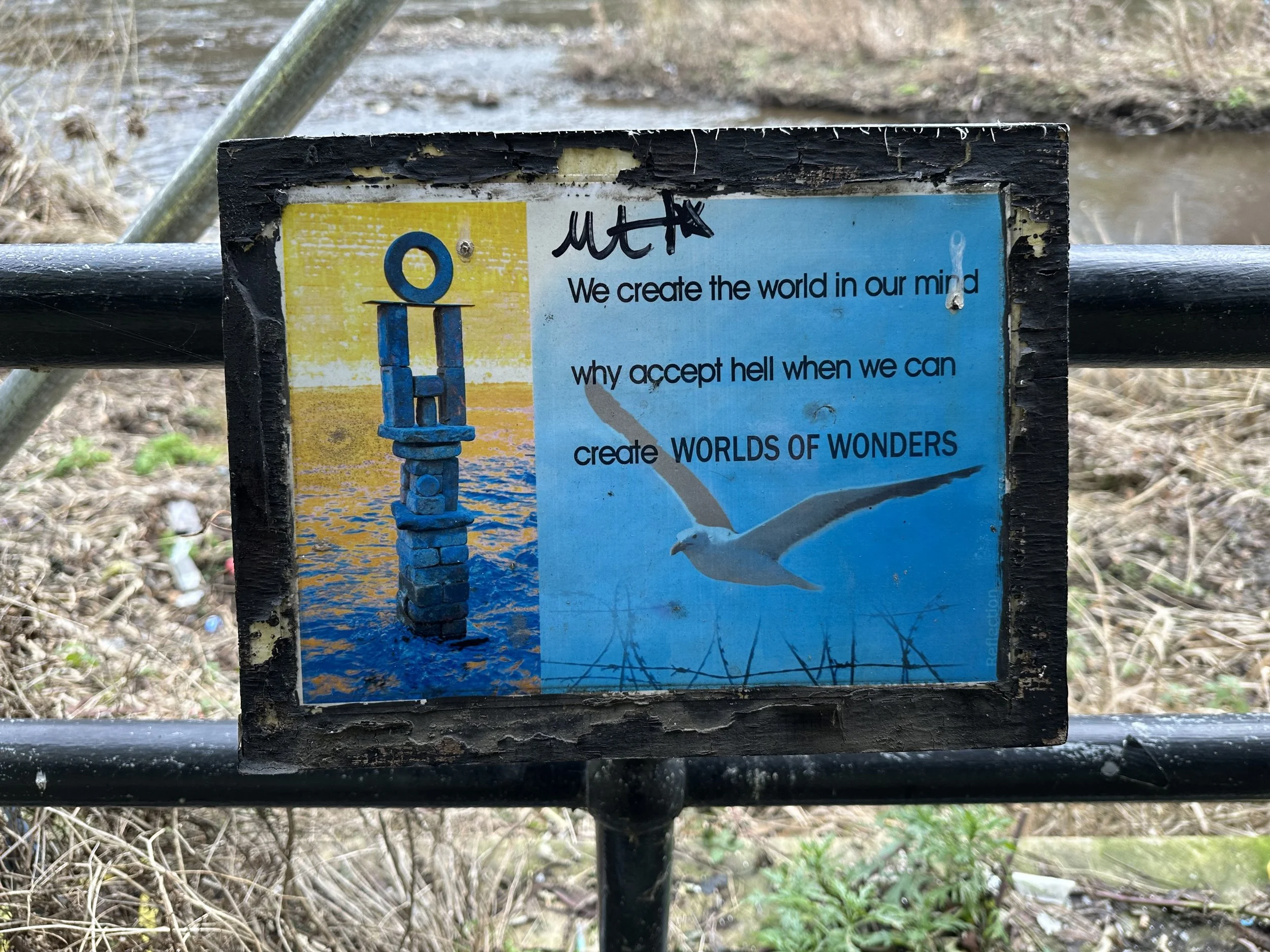
Beside the Don in Sheffield, homemade information panels recall Daniel Bustamante’s vanished river sculptures
By the bank at Smithfield Bridge in Sheffield, weather-worn panels fixed to walkway railings describe the creations of Daniel Bustamante, a sculptor from Chile who, frustrated with news of war and devastation a decade ago, made a series of temporary installations, totems of bricks and rings salvaged from the river. On one of those panels is printed: Damn those that love themselves more than they love nature and all living things. On another: Why accept hell when we can create WORLDS OF WONDERS.
Wonder starts small. A kingfisher flits, iridescent, under a bridge pier. Villagers plant reedbeds along the former course of the Don at Fishlake. On an abandoned concrete loading structure near Thorpe Marsh power station, red deadnettle and groundsel colonise the concrete. An egret feeds in a flooded swale. The end of the world begins again.
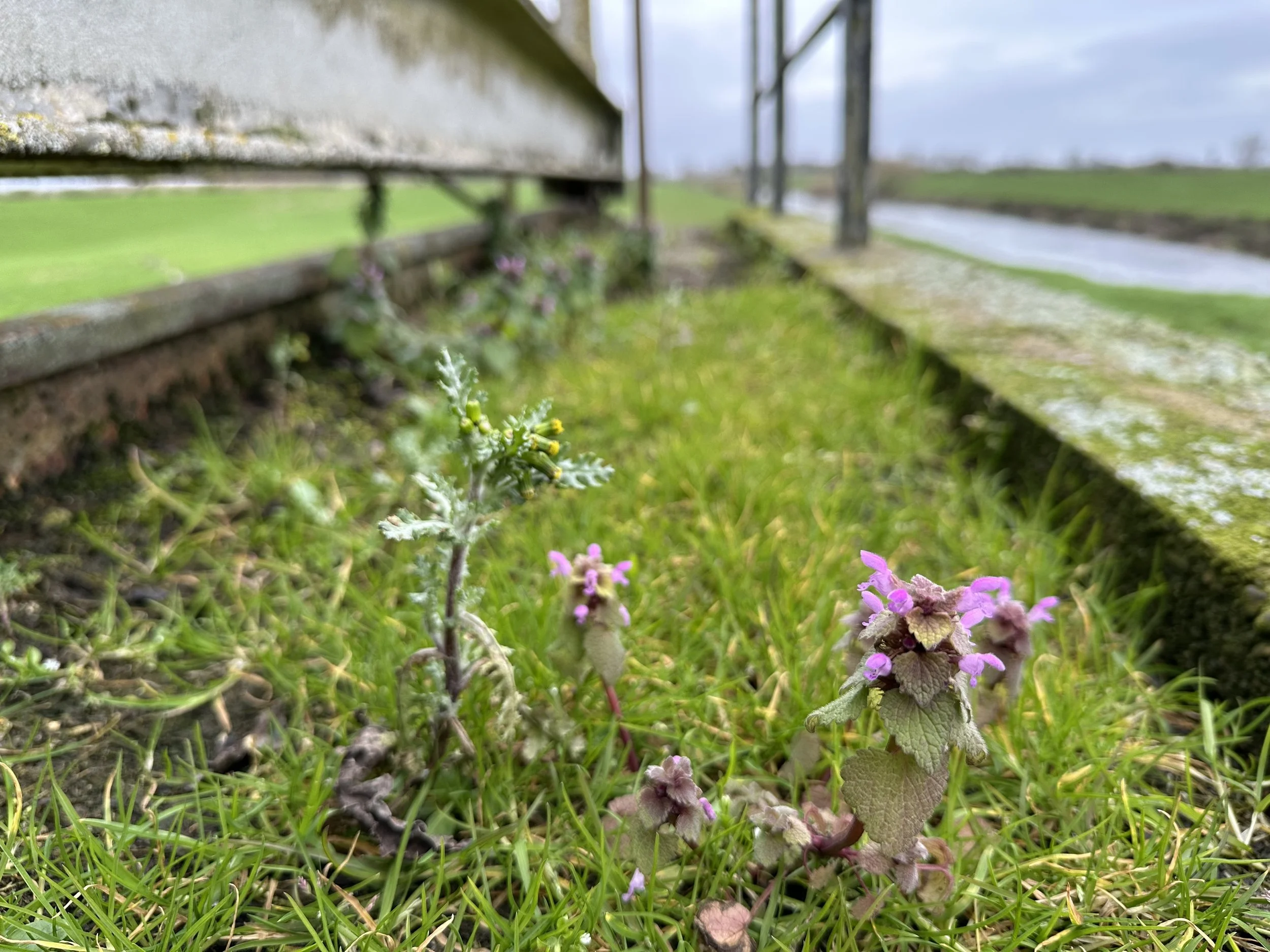
Red deadnettle and groundsel signal new beginnings for post-industrial relics at Thorpe Marsh
Julian Dobson has worked in journalism, consultancy and academia and his work has appeared in numerous publications, from The Guardian to The Rialto. He is interested in the complex trade-offs and slow labour of reimagining places. Ella Hubbard’s research focuses on place-based community environmentalism, particularly at watershed scales. This work explores human relationships with nature, more-than-human geographies, alternative economies, and rewilding. Ella has a growing portfolio of academic publications. The research described here was supported by a grant from the Ecological Citizens Network+, an EPSRC funded Network, EP/W020610/1.