
The Land of the Giants of Ice
/
By Nanouri Winchester
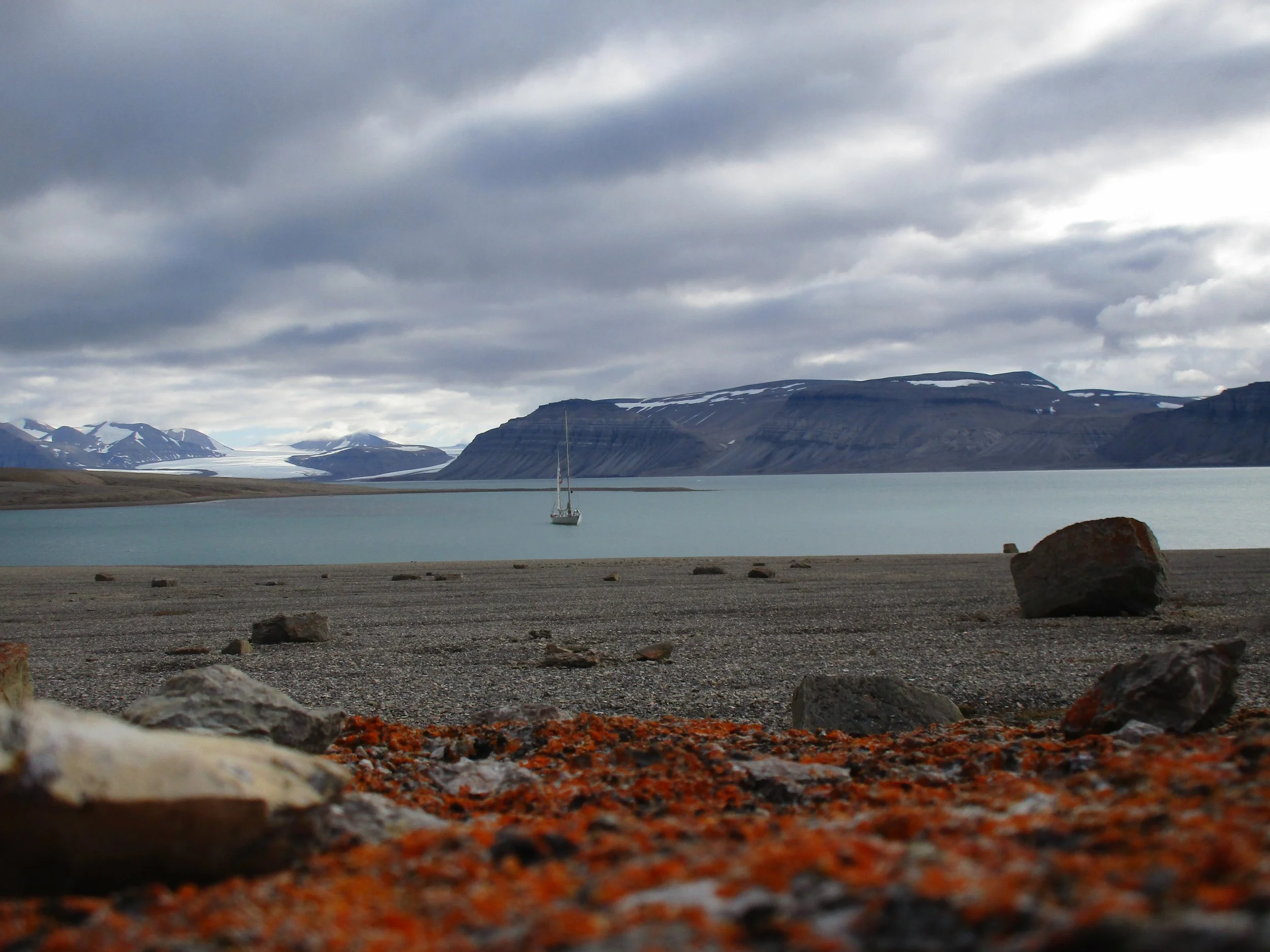
We came back to that spot
Fifteen years later.
At least, we think we did.
It was hard to tell, everything was so changed.
We’d heard the stories
Of giants of ice
Looming over the bay,
Their blue-white trail wending it’s way
Down the mountain behind.
Centuries of storming
Down to the water,
Gathering up everything in their path and
Bundling them in a frozen embrace.
Surely this wasn’t the place?
Surely we had got it wrong
For when we gazed up,
Squinting past the glinting
Arctic sun on the water,
The giants had all gone.
Where was the snow?
Where was the cold?
Where was the magnificence,
The grandeur?
The deities of old?
We stood gazing at that bare rock for what seemed like hours.
No one knew what to do.
What was there to say?
We all understood what had happened, we just didn’t see it happening this way.
Eventually,
We turned on our heels and made our retreat,
Gravel and pebbles crunching beneath,
But I paused,
Reluctant to leave,
Took one last glance
At the place they had been,
Spared a moment, a thought,
For those Giants whose hold on the land had slipped,
And with it, the age of nature supreme.
Now it was ours instead.
Some prize.
And there, by the grave,
The divot, the puddle,
The long ears of a hare twitched at me.
Her nose wrinkled in evident distaste,
Her mouth frowned, turned down at the new Queen, and her eyes—
The bottomless depth of her staring blue eyes—
Saw us for the killers we were.
I may as well have pulled the trigger, for I was nothing more to her.
Nanouri Winchester is a creative writer and theatre maker, currently living as a continuous cruiser in her narrowboat on Britain’s waterways. Her upbringing in Kenya instilled in her a deep passion for nature and the environment from an early age, and these themes are prevalent in her work. While her interpretation of ‘The End of The World’ may be a dark and morose commentary on the state of our planet today, it is also a truthful and extremely important one. This poem captures a moment she experienced in Svalbard, when she was heartbroken to see the diminished size of a once-great glacier. She hopes that her work may spark conversation and inspire change for the better of our planet.