Five Questions for... Sean Carlson

Chandler Cruttenden, Unsplash

Seán Carlson’s poem ‘Anger is a fishing trawler’ appeared in Elsewhere’s Trespass issue, and has since been featured in Verse Daily’s online poem-a-day anthology. The last line in his first stanza (“alone, adrift, at sea.”) flowed rather naturally into Elsewhere’s Adrift issue

What does home mean to you?

For years, I would have answered this in personal terms around the house where I spent most of my childhood in the suburbs of Boston, Massachusetts. Even when I lived elsewhere on my own — in Ireland, San Francisco, Australia — the question of “home” placed me, well, back at home. But during nearly a decade in New York City, where I had been born, where my wife Cathlin and I met, and where we welcomed our first child, our life there also anchored me very much at “home.” Now I feel grateful, and sometimes torn, to have known that feeling with my family across both Rhode Island, where we are at present, and Listowel, County Kerry, where my mom was born and where we were living at the time of my contribution to Elsewhere. What I’ve come to appreciate is that “home” can be less a particular place and more a sense of safety and belonging and continuity found within a place. For many, this is tied intimately to a plot of land or particular community. But when that grounding is lost or taken, is it even possible for it to again be found? Root systems can’t be transplanted if they aren’t sustained. We’re no different.

Which place do you have a special connection to?

I’ve been revising a layered essay about mushroom foraging in Poland, which has surfaced rich memories of my Polish-American grandmother (who passed away 20 years ago) and sent me revisiting old notes and photos from my travels over the years. Since first visiting roughly half my lifetime ago to our latest family trip to experience the Christmas markets there, I could catalog so many moments that stand out — from meeting cousins for the first time, returning to celebrate their weddings, and introducing my children to their children to encountering the poetry collections at Massolit bookstore, singing Johnny Cash as the sun came up at a friend’s house party in Kraków, trying a zapiekanka for the first time in Rzeszów, hiking in the Tatras, touring my sister around on her first visit, bringing Cathlin to the family farm my great-grandfather had left behind, buying our oldest daughter a balloon from a Branicki Park vendor in Białystok, waiting at bus stations and train platforms across the country during off hours, sweltering through the heat of summer with ice cream melting in Warsaw, plodding through fresh snowfall at night in Wrocław, deepening in my understanding of the struggles and horrors of history as well as the rapid changes and tensions of more recent years. I could go on.

What is beyond your front door?

Back in autumn, I was admiring three milkweed plants I planted out front a couple of years ago that between them now have thirty seed pods that will soon be ready to crack open. At the same time, my kids and I also can hardly leave the house without checking on the growth of our first pumpkins! Now, with the approach of spring, we’re getting ready to plant some new seeds, too.

What place would you most like to visit?

Too many places, for different reasons and in different ways! Working remotely before the Covid pandemic, Cathlin and I traveled around the world for a year and half with our first daughter and co-wrote a family travel blog called Bond & Thomas. Your question sent me back to re-read one of our posts, “Five places we could have gone and wish we did.” My picks at the time were Abel Tasman National Park (New Zealand), the breweries along the Dingle Peninsula (Ireland), and Traverse City, Michigan and Sleeping Bear Dunes (United States). I’ve since savored a pint at Tiġ Bhric Pub and the West Kerry Brewery, so maybe Abel Tasman and Traverse City should be next! For now, I’m hoping to eke out as much time, and writing time, as I can wherever we are.

What are you reading / watching / listening to / looking at right now?

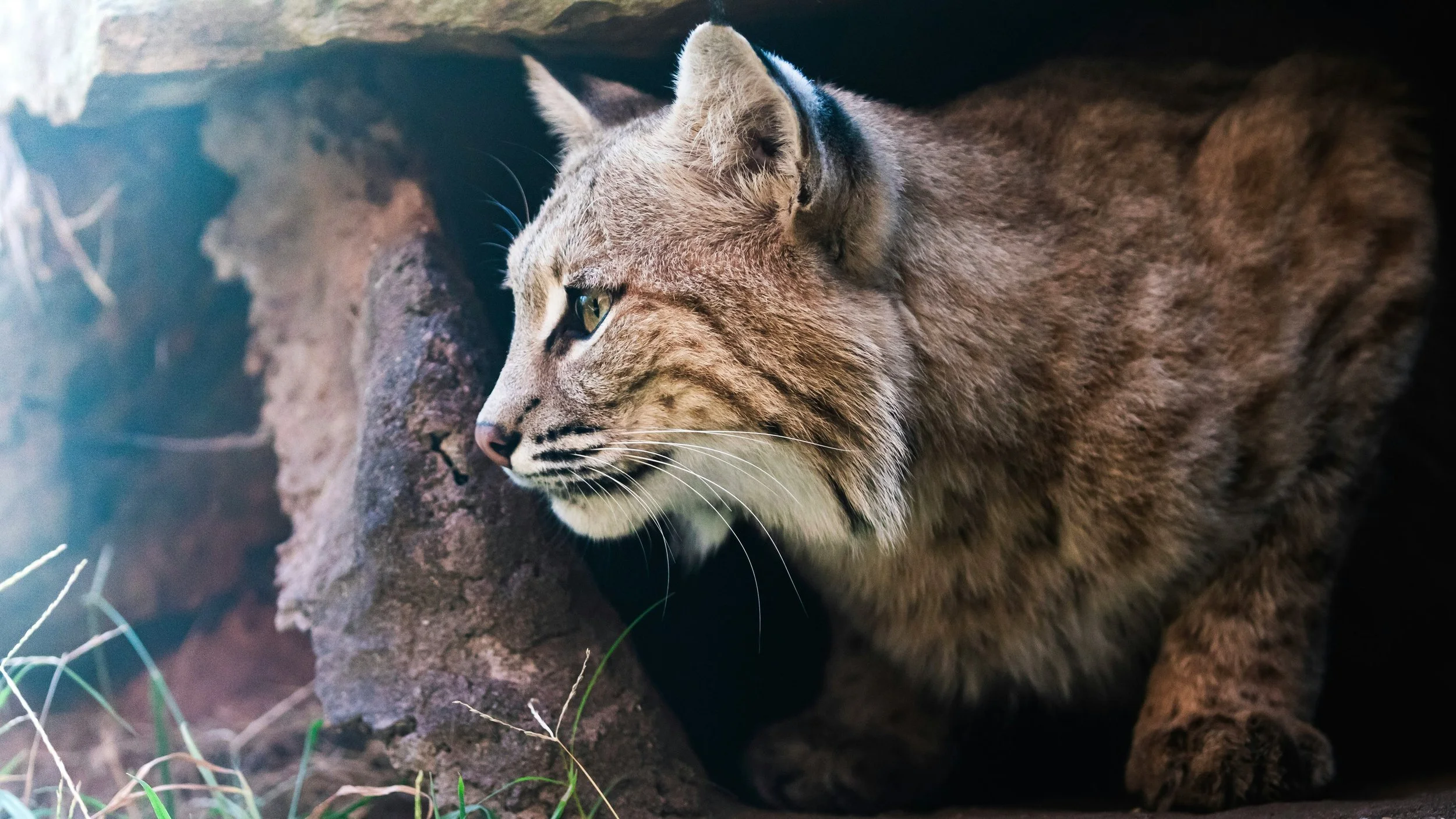
Reading: I’m still thinking about Oona Frawley’s breathtaking essay collection This Interim Time, which I reviewed last year for The Common, another fantastic journal focused on place-based writing. Watching: I hope to write something before too long on the film Secret Mall Apartment, a documentary about the artists who built a hidden residence within the walls of the Providence Place Mall here in Rhode Island. Listening to: I caught Sumac, Chepang, and Patrick Shiroishi at the Pyramid Scheme in Grand Rapids, Michigan the last time I was back visiting Cathlin’s family. Shiroishi’s experimentalism with his saxophone was simply jaw-dropping, Chepang were an absolute force with such palpable positivity and pride in their Nepali roots, and Sumac threw me back to the early days of Hydra Head Records and late-’90s Boston, in the best of ways. Looking at: Since I was young I’ve dreamed of seeing a bobcat in the wild, and I only recently had the chance to witness one hunting in our yard. My wife and children and I were all in awe while watching quietly out a window from the safety of our home.


Seán is working on a family memoir of migration, and his poetry has also been published in Crannóg, Image, The Irish Independent’s “New Irish Writing,” Ninth Letter, Ragaire, Trasna, and elsewhere. His essays have appeared recently in The Missouri Review, Modern Language Studies, and New England Review. He received a 2024 Elizabeth Kostova Foundation poetry fellowship in Bulgaria. Follow Seán’s writing updates by subscribing to his newsletter here.
Five Questions for... Becca Grady

We continue our series of occasional short interviews with contributors and friends of Elsewhere with Becca Grady, whose writing featured in our Twilight issue. 

What does home mean to you?

Home has begun to feel more like a process to me. I’ve been moving around a lot in the last decade and while some places feel more familiar to me than others, home itself has been fluid. A feeling. Home is making the bed comfortable, chopping vegetables and cooking dinner. Home is creating a safe haven. Creating care. Right now, home is also where my partner and dog are, where my extended family— chosen and given—are. And after a year away, my partner and I have just returned to New Mexico, in the southwest of the United States, a place I have lived for six years and this too feels like a kind of home.

Which place do you have a special connection to?

I love the mountains but I grew up near the ocean in Maine in the northeast of the United States, and lived for a while in Nova Scotia, Canada, so I am always dreaming about swimming in the northern Atlantic.

What is beyond your front door?

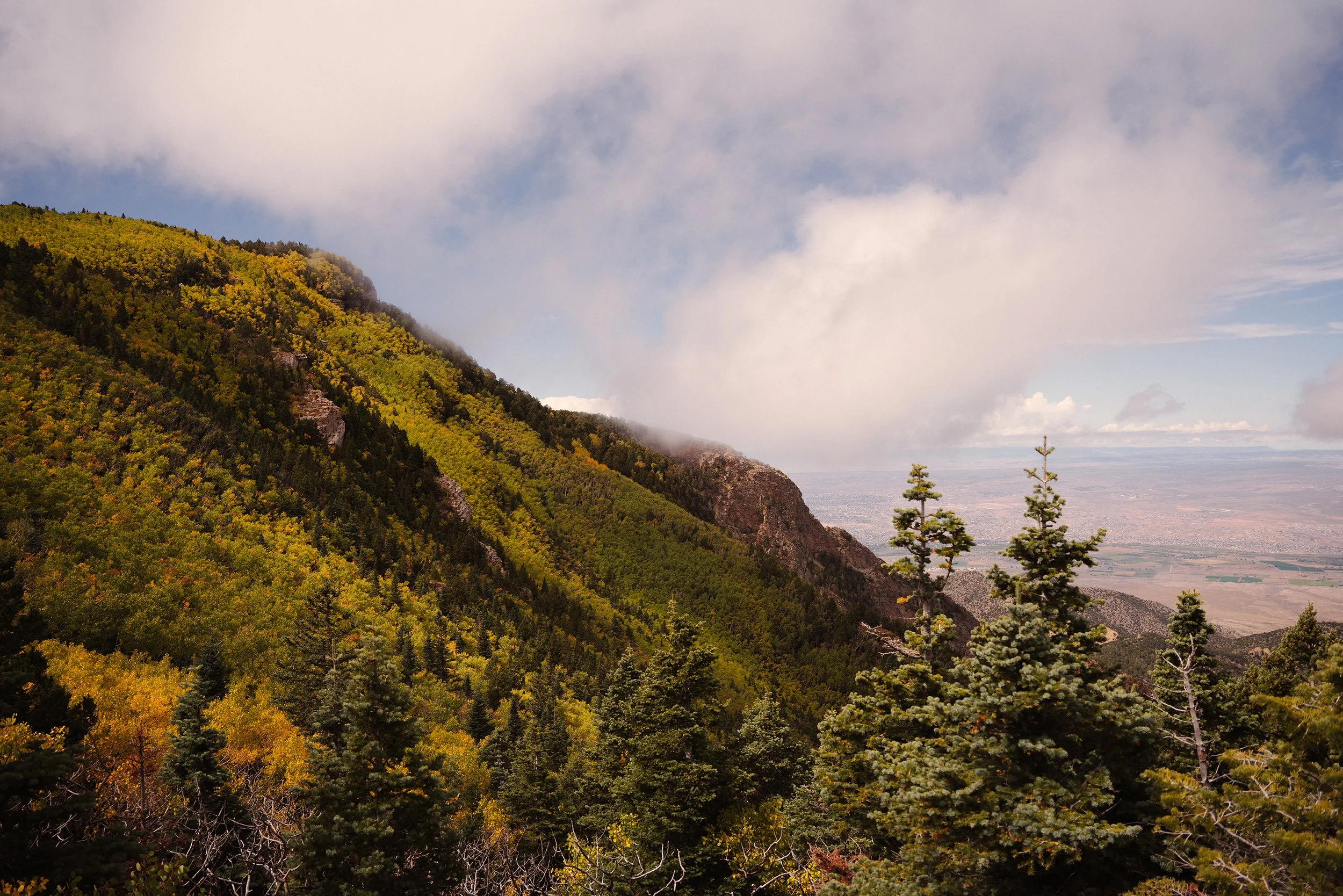
I just moved to a hill in the middle of Albuquerque, New Mexico and there is a view of Mt. Taylor in the distance. I’ve been enjoying watching it in the mornings and evenings, and the skies as storms roll through.

What place would you most like to visit?

Australia. When I was a kid, I borrowed a historical novel set in Australia from my grandmother and ever since have been fascinated by its landscapes and long complicated history—much like in the US. What first drew me in were descriptions of western Australia—big sky, red rocks and desert, and it’s interesting that I find myself living in a place with some similarities to what to the landscape I used to dream about as a kid. 

What are you reading / watching / listening to / looking at right now?

I just finished reading (and enjoying) Imogen Binnie’s Nevada, Kyo Maclear’s Unearthing and Gillian Rose’s Love’s Work. I’ve been watching 100 Foot Wave about surfing in Nazare, Portugal. Last weekend, I saw an art show called Abstracting Nature at the Albuquerque Museum with work by Agnes Martin, Joanna Keane Lopez and others, and then went record shopping to get four albums that I love: Nick of Time by Bonnie Raitt, White Chalk by PJ Harvey, Tiger’s Blood by Waxahatchee and Bright Future by Adrianne Lenker.


Becca Grady is a queer writer and artist working at the intersections of art, environmental issues and place. Her work has been supported by fellowships and workshops such as Granta, Bread Loaf, Tin House and Pocoapoco. Becca grew up in the US and Mexico, and lives in New Mexico.  

You can read ‘Attention’ by Becca Grady here.

Five Questions for... John Rooney

By Sara Bellini

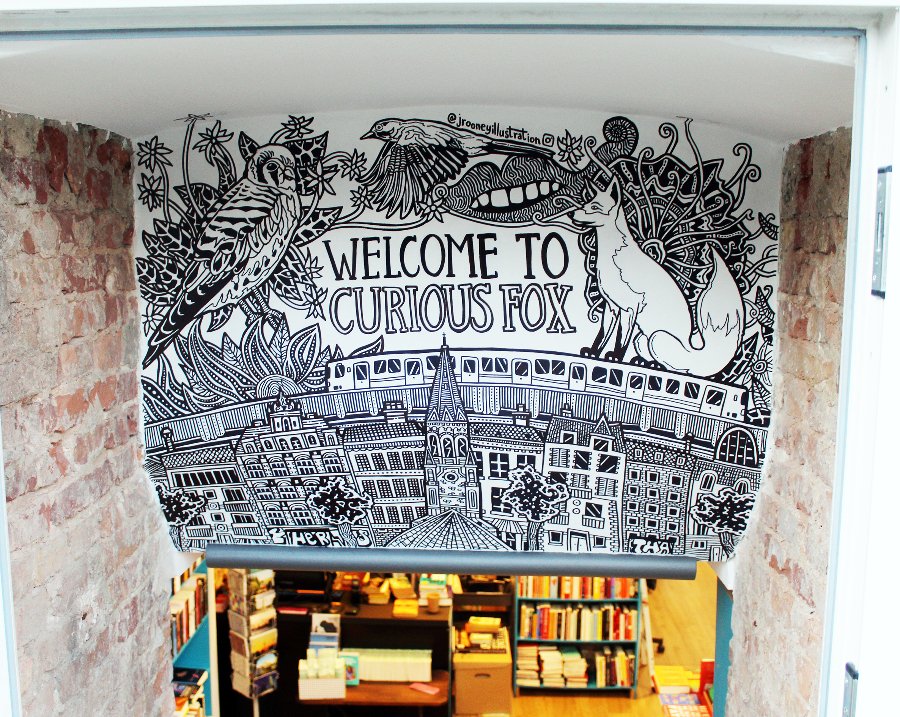
One of our favourite Berlin bookshops has recently reopened its doors - with a new look, in a new location - and we couldn’t be more thrilled. After the non renewal of their rental contract back in August, Curious Fox. had been absent from the Berlin map until this February, when it moved to Lausitzer Platz in Kreuzberg. While walking down the stairs that lead you to the bookshop, you step under a beautiful black and white mural depicting the new neighbourhood, the nearby overground train, and of course a fox.

The hand behind the artwork is that of Derry-born illustrator John Rooney. “The owners Orla & Dave are good friends of mine and asked me to work on a larger mural on the exterior of the new shop. Unfortunately I had just decided to leave Berlin at the time and thought a smaller mural inside would be more feasible. Myself and Orla are keen bird enthusiasts so I included a kestrel and a jay (which live in the trees opposite the shop). I drew some buildings from the neighbourhood too. It was a very fun way to spend my last week in Berlin.” 

You might have seen some of his works in Standart magazine or on windows and walls across Berlin - and Ireland. Drawing inspiration from pop culture (cult movies, sci-fi and literature), nature (he has a dog collage series) and architecture (check out his cityscapes), each composition strikes us for its dynamicity and layers of details, perfectly balanced between accuracy and artistry. If you are curious about the aesthetic potential of the garden spider, the common pipistrelle bat or the Portuguese man o’ war, have a look at his wildlife map of Ireland. No snakes obviously. 

In his hand-drawn bird collages and wildlife maps, John Rooney presents a place through its fauna, giving equal importance to the tiny creatures and the majestic ones. The latest addition to its portfolio is the wildlife map of Canada, with over 480 species checked by experts at the Biodôme in Montréal. 

According to his bio, “John has not stopped drawing things ever since he was the age of three”, and we are glad to hear he has no plan to stop any time soon. We caught up with him just before he left Berlin, where he had been based for the past four years, to embark on adventures around the world.

What does home mean to you?

A place where you feel at peace and have people around you that you care about. Cliched, I know, but it's that simple for me.

Which place do you have a special connection to?

I'm not sure if you'll accept a place that doesn't exist anymore but I'd have to say a pub called the 'Bound for Boston' in Derry where I spent most of my late teens / early twenties. It was always full of sound people and had great bands playing every week. I have a lot of great memories there. I do love Tempelhofer Feld in Berlin too. 

What is beyond your front door?

Not much right now to be honest. I'm living in the suburbs of Derry and the nearest pub is 15 minutes away and it's dodgy as fuck. Although there's some football pitches behind my house that have a lot of nice trees with bullfinches and siskins flying around the place.

What place would you most like to visit?

I'd love to just stand at the foot of Mount Everest just to see it and take it in.

What are you reading / watching / listening to right now?

I'm currently reading a comedy book called Mickey Doc by a Derry author called Fintan Harvey. I'm watching the Kanye documentary and also Lovecraft Country. I'm listening to some Junior Brother and a lot of Kylie, who I rediscovered after watching an episode of 'Reeling in the Years' on RTE.

John Rooney's Website
John Rooney on Instagram

Five Questions for... Alison Pouliot

By Sara Bellini

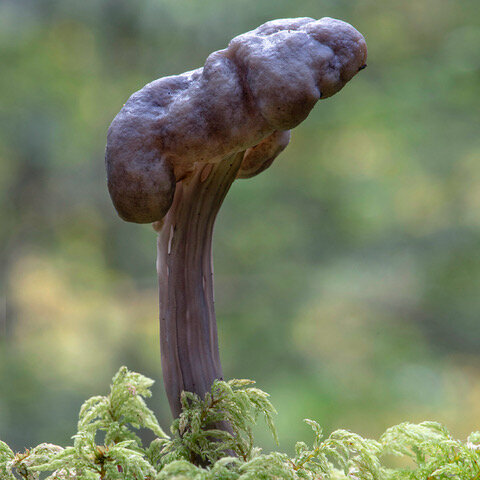
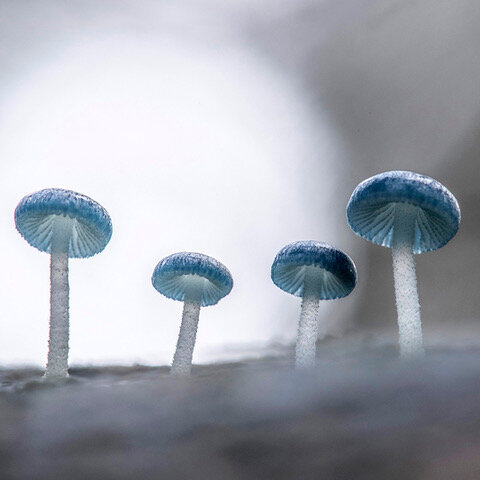
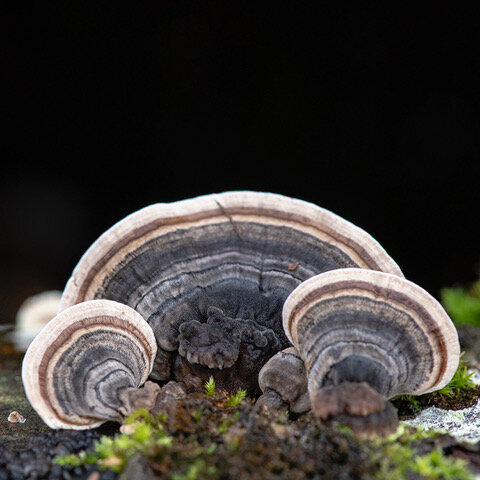
I first came across Alison Pouliot in the pages of Mervin Sheldrake’s book Entangled Life, published just a few months ago. Sheldrake introduces us to the world of fungi and their complexity: They can digest plastic and crude oil, they give us bread and medicines, and they connect plants in an underworld network. They are much more underrated than plants and animals, and yet they are extremely fascinating, if only we give them a chance to shine. 

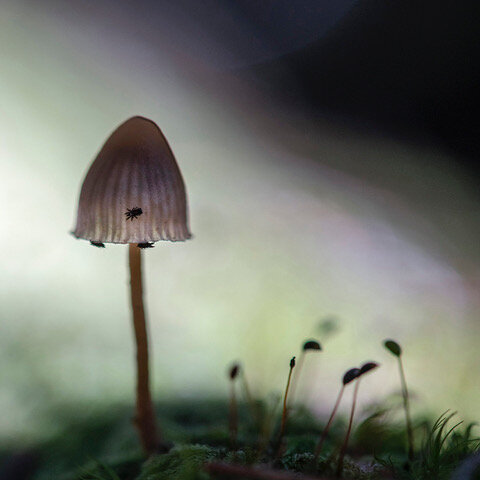
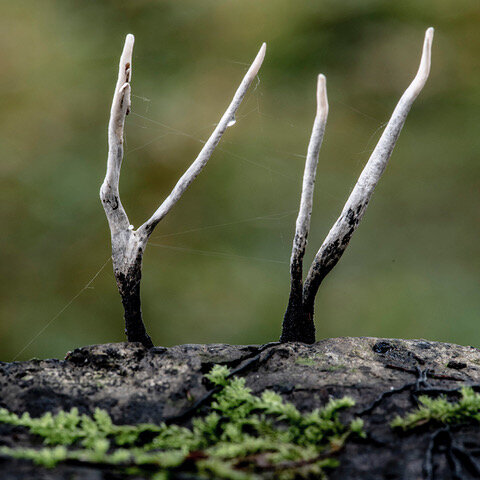
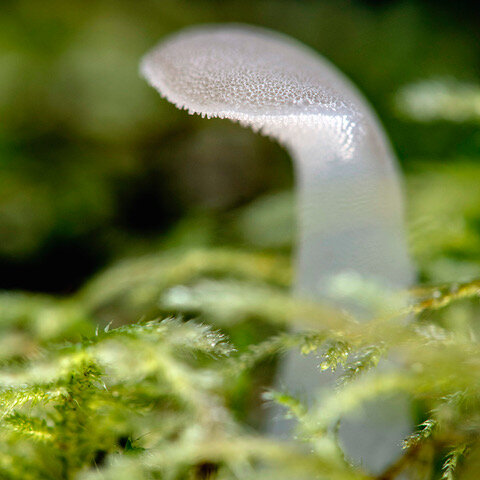
This is exactly what Alison Pouliot has been doing in her photography. With a scientific background as an ecology historian, Alison focuses on the more mysterious woodland creatures, like fungi, as well as on abandoned places bearing the traces of human disregard. 

While admiring her photo essays, it occurs to me that we don’t simply occupy the planet, we are part of it, and yet there is so much we don’t know about it. I think about how, in order to build a more sustainable relationship with nature, it’s necessary to slow down and look closely at the other part in this equation. How deeply do we understand how the environment works, what it needs, which human behaviours are helpful and which ones are destructive? It’s this attentive and caring gaze that allows Alison to capture the diversity of fungi: soft-textured geometric patterns, ghostly shapes that could be the stunning guardians of the Underworld and alien-looking mushrooms with a glam aesthetic. 

Her photography is now moving from a documentaristic to a more artistic approach: “I am striving to produce work that might just touch someone somewhere and make them feel differently about the world. It’s a time of such radical change and also a time of opportunity to test the waters and do things differently. I guess it’s often times of adversity that bring out the most innovative or creative or inspirational aspects of one’s work.”

Alison’s plans for the new year start with the publication in March of Wild Mushrooming, a book she had been working on for the past five years with mycologist Tom May. The book approaches foraging from the point of view of conservation and ecosystem balance. Alison lives between Australia and Switzerland and we caught up with her after she had just completed a series of six short videos on fungi and was back in Europe for the cold season. 

What does home mean to you?

I’m not sure that I’ve ever really worked that out. It’s certainly not a physical place. I’ve straddled both hemispheres for the last two decades (so that I can have two autumns a year and get myself a double dose of fungi) so I don’t really have a sense of a particular ‘place’ called home. In a sense I feel like I’ve been on the move all my life as we moved around a good bit in my childhood as well. I have few material possessions and find it easy to make a nest and feel comfortable pretty much anywhere, so long as there’s clean air, natural surrounds and little concrete or noise. When people talk about ‘settling’ or ‘settling down’ or getting ‘tenure’ in a job, it makes me shudder.

Which place do you have a special connection to?

Oh wow, that’s a big question. I have a short list of several hundred... Anywhere in the field really, the more remote and less inhabited the better. Of course, as an Australian and having spent many years exploring that continent, I feel incredibly connected to it, especially to the remote and wide open spaces of the interior. The blank spaces on the map, those often ungraspable, indeterminate, shimmering places that can feel so old, so solid, yet like a dream. I can’t get enough of them!

But as I’m writing these words, I’m actually wondering if one can ever really feel ‘connected’ to a place, or do we just feel comfortable or familiar? I mean, of course it’s more palpable than that. Sure we can feel a powerful inexplicable affinity, or something bigger more visceral, a physical bodily sensation, an intensity that we feel in one particular place and not another, an attachment of sorts that can be profound, but is that really ‘connection’? I know when I return to my grandmother’s home in Tasmania, now occupied by new residents, that I feel an overwhelming and inextricably entwined sense of emotion and memory solely linked to that place, but I’m not sure that I’d call it connection.I’ll have to give that some more thought. 

One of the things I love about Australia is its unpredictability, its extremes and its resistance to being controlled and regulated (as one sees, for example, in Europe) although we’re trying out hardest to do so. I love that it’s not ‘comfortable’, that it resists, that it’s so highly changeable. That it’s elusive and often incomprehensible. For me it begs one not to linger too long. It’s unsettling. It’s dis-placing. Perhaps I’m just more comfortable on the move.

What is beyond your front door?

Do you mean the flap of my tent? Wow, a wonderland of textures. A bruising storm front and ever changing light. 

What place would you most like to visit?

I’m not sure that it’s ‘a’ place, a geographically defined place. A particular location. It’s anywhere that sparks my imagination and reverberates in such a way that excites or inspires or makes me feel vertiginous. Or perhaps where there’s something I feel or experience or taste that I’ve not done before. Or likewise, where a sense of intense familiarity can be just as compelling. While going back to loved places can be powerfully nostalgic or reassuring, I also think ‘going back’ can be hard. The world is changing so fast and it’s easy to become attached to the idea of how a place once was, and hence, once can quickly feel disappointed or disenchanted. 

What are you reading / watching / listening to right now? 

I’ve got several books on the go but am utterly engrossed in As we have always done by Leanne Betasamosake Simpson. An incredible piece of writing. I’m also re-reading some of the work of that amazing Alaskan anthropologist Richard “Nels” Nelson who died just over a year ago.

I’ve always got the radio or a podcast on and have just been listening to Nahlah Ayed’s program called Ideas on CBC (Canada) Radio. Am now listening to Far and Wide on RRR (Melbourne independent radio station). Otherwise everything from Anouar Brahem to Khruangbin to Carbon Based Lifeforms...  As for viewing I’ve been watching some short docos on AeonVideos.

Alison Pouliot's website
Alison's video The Kingdom Fungi

Five Questions for... Malte Brandenburg

Photo: Malte Brandenburg

Photo: Malte Brandenburg

By Sara Bellini

Malte Brandenburg is a photographer based in Copenhagen. In his creative practice he looks for simplicity and symmetry and in the past he has often found them in Berlin buildings. Housing spaces are explored both in their aesthetics as well as their urbanistic context and social value. After the pandemic changed his travelling plans, Malte is now finalising some projects while exploring the familiar streets of Copenhagen with his camera. 

What does home mean to you?

That is a tricky question for me as I left my home town Berlin almost thirteen years ago and moved to Copenhagen. I still feel attached to Berlin, but at the same time the city becomes more and more foreign to me. And vice versa Copenhagen was for a number of years just a city I lived in, without the feeling that this is my home. It was somewhat in between, which was strange. However, after a while I found the right corner here for me and finally clicked with Copenhagen. Strangely though, I also feel more independent from where I am, as long as I'm with my family, it's difficult to describe. I guess they are my own little biotope :-).

Which place do you have a special connection to?

I have a very special connection to a place in Berlin called Gropiusstadt, a settlement of various tower blocks designed by Walter Gropius in the south of Berlin. I grew up nearby and had a couple of friends there and also had to pass through to get to the local swimming pool, which is why I spent quite a bit of time between these tower blocks. It always felt like a very surreal place to me, because of the sheer amount of concrete reaching into the sky.

Photo: Malte Brandenburg

Photo: Malte Brandenburg

I could not fathom that almost 50 000 people lived there. Also from a sociological point of view it's a quite interesting place and how it has changed within a relatively short period of time. This place was one of the first topics I was drawn to when I started to focus my photography more and more on urban architecture. I still return to Gropiusstadt on a regular basis.

What is beyond your front door?

Beyond my front door there are friends, a nice park and the beach, which I appreciate a lot. About 40 meters away there is also one of the best bakeries in town with shelves of sourdough bread!

What place would you most like to visit?

I would like to travel through Eastern Europe, all the way to Russia. I am fascinated by the culture and especially the food.

What are you reading / watching / listening to right now?

I am currently reading Agent to the Stars, a novel by John Scalzi about an alien race on earth that hires a PR agent in order to manage the revelation of their presence to humanity - it's hilarious! I also just finished The Last Dance, the Michael Jordan documentary. One of the best documentaries I have seen. I might be biased though, as he was a bit of a childhood idol. In terms of music, I listen a lot to Moi Caprice these days, a Danish band I discovered by accident, because the lead singer's daughter goes into the same class as my son.  

*

Find out more about Malte Brandenburg on his website and Instagram.

Five Questions for... Jessica J. Lee

IMG_6298.JPG

Two years ago we reviewed Turning, her memoir about swimming in the lakes around Berlin. This autumn Jessica J. Lee is back with the autobiographical Two Trees Make a Forest: On Memory, Migration and Taiwan. She is an environmental historian, writing tutor, nature writer and editor of The Willowherb Review, an online platform for nature writing by writers of colour. Jessica writes with the precision of a botanist but without the pretence that nature writing has no singularity, discarding the old cliché haunting the genre: that we all experience the environment in the same way, that diversity doesn’t matter and doesn’t exist. 

 What does home mean to you?

Multiplicity. It’s taken me a really long time to realise that home didn’t have to be singular, that I didn’t need to pick one place to call home. Both my parents are immigrants, and I’ve been an immigrant myself: instead of seeing that as a kind of “dislocation”, I’ve made a conscious choice to see that as productive, as a way of saying I belong to many places. I was born in London, Ontario, which people seem to find confusing because I lived in London, England for so long. Halifax (in Nova Scotia). Toronto. Berlin. Taipei. 

Which place do you have a special connection to?

I wrote my PhD dissertation about Hampstead Heath, which I lived next to through my early twenties. There was a beautiful lime tree that I used to hang out under, reading, resting, dreaming, crying: it bore witness to a lot of my most transformative moments in young adulthood. The tree came down in a storm in 2012, but the spot where it stood still draws me in. I have its leaf tattooed on my arm. 

 So I’d say there, but also: the bay at my family’s cottage in Canada, the cafe window in Berlin where I usually sit and write, the Taiwanese breakfast shop in Taipei where I get cold soy milk and hot shaobing youtiao. 

What is beyond your front door?

My street has one of the most beautiful views in Berlin, I think: it’s abnormally long and tree-lined and lovely. To the left, you’ll find more children and ice cream shops and wine bars and pet stores than necessary, and to the right you’ll find a busy road with a tram that races back and forth over the old Berlin Wall border all day. There’s a spicy hand-pulled noodle shop not far away, which is probably the best thing within walking distance. 

 What place would you most like to visit?

This is an impossible choice! There are so many countries I’ve yet to visit—Japan, Norway, New Zealand—but if I can be really specific, I’ll say Jiaming Lake in the Central Mountains of Taiwan. It’s a teardrop of a lake at the top of the mountains, famous for being a shallow, glassy mirror of the sky. People used to say it was formed by a meteor strike, but it was actually formed by glacial movement. But it’s a nightmare to hike to because of permits, the logistics of getting to the trailhead, the three-day trek, etc. I’ve twice had journeys to the Jiaming cancelled, so it’s become something of an obsession for me to one day actually make it there. 

What are you reading / watching / listening to / looking at right now?

I have the bad habit of reading many books at once. Currently, Brandon Shimoda’s The Grave on the Wall and Yoko Tawada’s The Last Children of Tokyo during the day, and Ben Aaronovitch’s The October Man as bedtime reading. I watch too much television—it’s one of the only ways I can switch off at home—so I’m currently finishing with Jane the Virgin. And for music, I’ve returned to Japanese Breakfast’s Soft Sounds from Another Planet on repeat. 

Jessica on Twitter
Website
The Willowherb Review


Five Questions for... Will Burns

Photo: Wendover Woods, courtesy of Will Burns

Photo: Wendover Woods, courtesy of Will Burns

We are extremely pleased to welcome the poet Will Burns to Elsewhere: A Journal of Place for the next in our series of “Five Questions” interviewers with writers, artists, practitioners and indeed anyone for whom place is central to their work, whatever that may be. You might have spotted Will on these virtual pages recently as we reviewed the new album Chalk Hill Blue that he made with Hannah Peel, a thoughtful and thought-provoking collection of poetry and music rooted in the landscapes of Buckinghamshire where Will lives.

Named as one of the Faber & Faber New Poets for 2014 and the poet-in-residence at the wonderful Caught by the River, Will’s poetry evokes a strong sense of place and was praised by The Guardian for its “quiet intelligence and subtle ways of seeing”, a description that we can only wholeheartedly endorse. A regular live performer, Will has read at festivals around the UK including Port Eliot, Green Man and Glastonbury and you can catch him at a number of festivals this summer as he tours Chalk Hill Blue with Hannah Peel.

On with the interview...

What does home mean to you?

Like most people I suspect, ‘home’ is a bit of a complicated word for me. It definitely applies to Wendover, the village in Bucks where I live now and lived from the age of about ten until I left home. And even after I left I’ve always come back. Sometimes only for a few months or so, and sometimes out of necessity - but I suppose the point is it’s always there, which is a function of home I think. I have to say London too. I was born there, and  I’ve lived there, in various spots, almost as many years as Wendover, all told. But London’s such a big thing isn’t it? The little areas you get to know might feel like home for the period you know them, but change is so fast there that you leave and a year or so later it feels entirely alien.

Which place do you have a special connection to?

I’m going to say the Rough Trade shop on Talbot Rd. My Dad was one of the owners of the Rough Trade shops until about three years ago, and I grew up seeing him in that shop as a child. Then I ended up working there in my twenties. I was there a few days ago and I hadn’t been there for a couple of years, and I realised just how burned into my consciousness and imagination the place is. Some of the posters, the counter, the architecture, the smells of the place. What a strange contradiction a record shop is - it changes completely every week when a new batch of releases goes up on the walls, in the racks in the windows, and yet at the same time it’s not changed for thirty years.

What is beyond your front door?

The main high street in Wendover. Although that section is actually part of the Ridgeway, so you’re on an ancient path the moment you put a boot out the door. It’s a classic market town high street with an abundance of charity shops. We’ve resisted chains for the most part though, so it retains a sense of itself. Take the road left out of the door and up the hill and you follow the Ridgeway onto the scarp. Ten minutes and you’ve got views across the whole vale. Nobody talks about the Chilterns really but they are a very beautiful place.

What place would you most like to visit?

I’d love to go to Iceland sometime. I’ve always loved the Sagas and the history of Northern Europe. But India as well. My grandfather was born there and it was him who inculcated my love of wildlife, partly through his stories of India. It has sort of remained as an unscratched itch ever since.

What are you reading / watching / listening to / looking at right now?

A new album by my all time favourite band came out today, so I’ll be with that non-stop for the foreseeable future. That’s Union by Son Volt. My capacity for listening to them is pretty much infinite. And I’ve not really been able to stop reading One Lark, One Horse by Michael Hofmann since it came out. I’m one of these obsessive types I think who re-reads and listens to things once I’ve fallen for them.

***
Will Burns website
Twitter

Five Questions for... Alice Maddicott

IMAGE: Alice Maddicott

IMAGE: Alice Maddicott

We return to our semi-regular series of short interviews with contributors to Elsewhere and other friends of the journal. Today we have five questions for Alice Maddicott, whose essay 'Farewell, for you are changing' about Tbilisi in Georgia appeared in Elsewhere No.05. You can find out more about Elsewhere No.05 and order your copy here.

What does home mean to you?

Home for me will always be Somerset, though I think we have many potential homes - cities and countries that just click with us, where such strong memories are formed that they become part of our construction of identity and place in the world. Home is also imagination for me - imaginary versions of real places - strong dreams cities that are recognisable yet so different... Challenging yet comforting.

Where is your favourite place?

I have a couple - one is definitely the depths of the woods on the Wiltshire Somerset border where I live - I can walk for miles without leaving the trees and you never see a soul. There's nowhere like it atmosphere wise... The other is the old side streets of Tbilisi I write about in my piece - the crumbling glazed carved wooden balconies - the whole city feels like family to me.

What is beyond your front door?

A moated castle! Village shop and square, a feral hen... Then forests, then high downs, towns scattered around. But I have always wished it could change like in Mr Benn - through the door to another land. Whimsy perhaps, but I think it's good to hold on to these ways of thinking about place.

What place would you most like to visit?

I've always had a fixation with Mongolia, but have never been. The fjordlands of New Zealand too, really appeal. In general I'm a far South or North person rather than tropical - the wilds of Norway... Lakes of Finland... Kizhi Island... Forests, mountains and water, or cold desert...

What are you reading/listening to/looking at right now?

The poetry of Chika Sagawa - amazing Japanese modernist for the first half of the 20th century. Re reading Ann Bridge too - I love how her novels read like travel writing, based on the places she got to know as a diplomat's wife. Music wise I'm back to my long term love of Dirty Three's "Whatever you love you are" album. I also collect old found photos and recently been getting fascinated by really old portraits of people with their pets - strangely moving...

Visit Alice’s website here