A Christmas Message from Elsewhere

Dear Fellow Travellers,

As Christmas approaches and 2016 draws to a close, we are about to take a little bit of time out from our continuing journeys to Elsewhere and reflect on the year that is about to end. For many people around the world, this has not been a good year, and with sadness and anger we reflect on our capacity as humans to do harm to one another. At the same time, out of so many terrible events always come stories of resistance, defiance and hope, and it is in that spirit that we have to look forward. 

Over the past year, both of us have been thinking a lot about how what we do – in our personal life, our work and with the journal – can make a positive difference, in however small a way, to the challenges we are faced with. Sometimes it feels like art, literature and culture in general are inadequate in their response to great tragedy, but at the same time, these things can all play a vital role in furthering understanding, communication and forging links across borders, boundaries and those other things that divide us.

It is to this end we have been considering the future of Elsewhere as we have reached the end of the initial four-edition cycle that we tentatively mapped out ahead of our crowdfunding campaign almost two years ago. We are about to take a couple of weeks off, and then in January we will be back with an announcement of what we have planned for the journal in 2017, in print and online. It has been a rewarding and challenging couple of years, but we have loved the work and the sense of community that surrounds the project.

There is more to come. Thanks for all your support up to now,

Paul & Julia
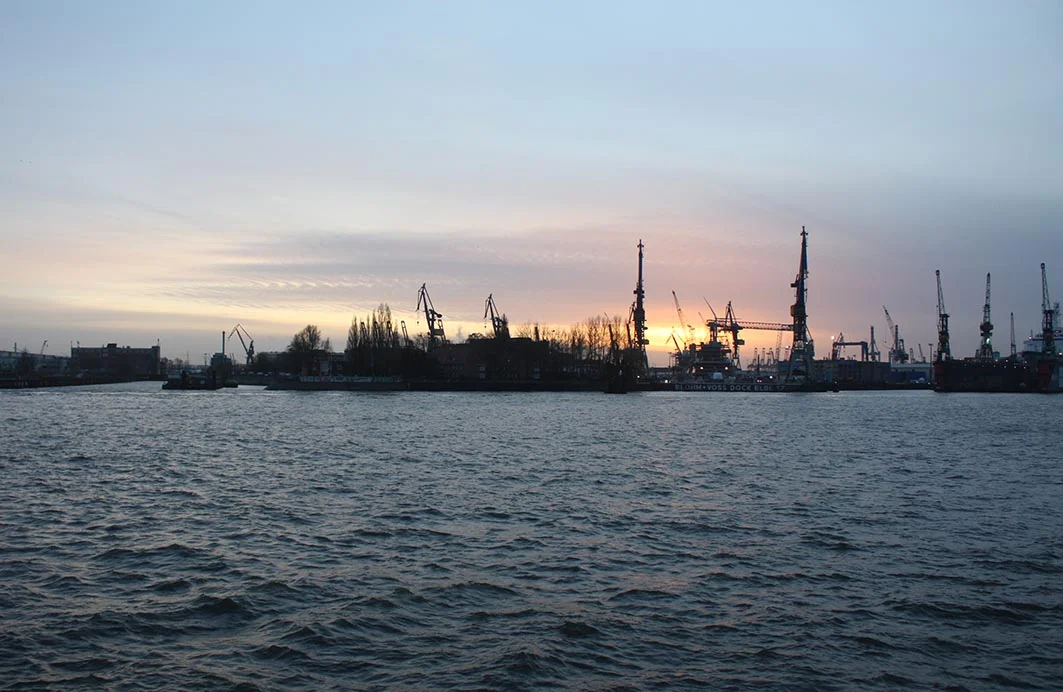
Berlin & Hamburg, Christmas 2016

Place on paper: More joy of maps

Bartholomews.jpg

(Image: Bartholomew’s map of Merseyside, 1934)

We are delighted when something we do – whether in the journal or here on the blog – inspires a response. The following piece by Chris Hughes about a lifetime interest in maps and the depiction of place, was sent as a reaction to some of the stories and interviews with cartographers in Elsewhere No.04:

By Chris Hughes:

Want to know where you are? Driving to a place you don’t know? Mist comes down on the mountain?  Check the map. Or the A to Z. Or that sketch on the back of an envelope.

But one way or another you need a map. That map might well be on your phone, tablet, satnav  or a print out from your PC, but it’s still a map. However large, folded maps, books of town maps and even atlases still offer an accurate and detailed picture of a place that you can use for navigation, to learn about a place or simply to enjoy the experience of seeing a large picture of a location, and I have used and enjoyed – and even drawn – many different kinds of maps for many years.

As a boy, I enjoyed visiting my Uncle Norman and looking at his Bartholomew maps, so beautifully coloured with tones of green, brown, blue and shaded to bring out the hills, mountains and valleys. Alfred Wainwright, the great guidebook writer and illustrator, loved his Bartholomew maps even though he based his own maps on the Ordnance Survey. And what about the OS? What a brilliant organisation, that has created the most comprehensive set of maps of the UK at a variety of scales and showing the minutest of details. They are still being constantly updated, these days using aerial photographs of the most incredible resolution to make the latest maps.  Almost every walker that goes into the hills, everyone who has good sense at least, carries a map along with the compass, to ensure correct navigation and safety, even if they possess the latest GPS as insurance against the failures of batteries and satellite connections. 

I went on to study geography and constantly drew small maps in notebooks, especially for the wretched exams, ending up with a degree dissertation containing many detailed maps of a small area of Snowdonia, all painstakingly drawn with my favourite Rotring pens, sitting in our flat in the depths of urban Bootle! The photographs included have faded badly but the maps are still vibrant. 

Later in my working life I had to find my way to schools in unfamiliar towns and cities all over England, well before the satnav era. My collection of A to Zs grew steadily and never failed to help me find my way to the location. 

Map collecting is obviously a big interest for many people and I could easily have joined them at one time; the beautifully illustrated map covers of the 1950s and 1960s are especially valued. I have a small number of cyclists maps which are fascinating in the details included. Sustrans guides to the cycleways of the UK are continuing the history of cycling maps in a modern fashion.

I have just enjoyed a first visit to the United State, driving through six of the great National Parks of California, Utah and Arizona and yes, maps were with us to help us find our way. Sure enough the satnav could not take us to every destination, but with the maps we got there in the end. I could not think about visiting a new place without having a map, still enjoy working out a new path and feel reassured that I have a collection of maps, guidebooks and A to Zs on the shelves to refer to when needed.

You can get your copy of Elsewhere No.04, which has a strong emphasis on maps and cartography, via our online shop.


The stories in the ruins: St Peter's, Cardross

Just outside the city of Greifswald, on the German Baltic coast, stand the ruins of the Eldena Abbey. Construction began in the early 13th century and was completed by 1500. In 1535, however, the Abbey was dissolved and over the centuries fell into dereliction. Eldena has been a ruin then for far longer than it was ever operational, and in the early decades of the 19th century, became a key inspiration for the painter Caspar David Friedrich, whose images of the ruin helped cement its place in the German cultural imagination; a place it holds to this day.

What is it about ruins that fascinate us? Undoubtedly there is some aesthetic quality to be found in a crumbling building, something which has inspired many explorers, artists and other wanderers over the years, from Friedrich picking his way through the grounds of Eldena to the 21st century Urbexer, climbing through a broken window to capture high-resolution images of abandoned swimming pools, factories and cinemas.

Ruins also give us a link to the past, helping explain the stories that got us from there to here; the changes in politics, religion, society and culture in general. What led this building to be built? What led this building to be abandoned? What does it mean today? All these questions, that hover above the peeling walls and collapsed roofs of ruins, can help us tell the story of a place.

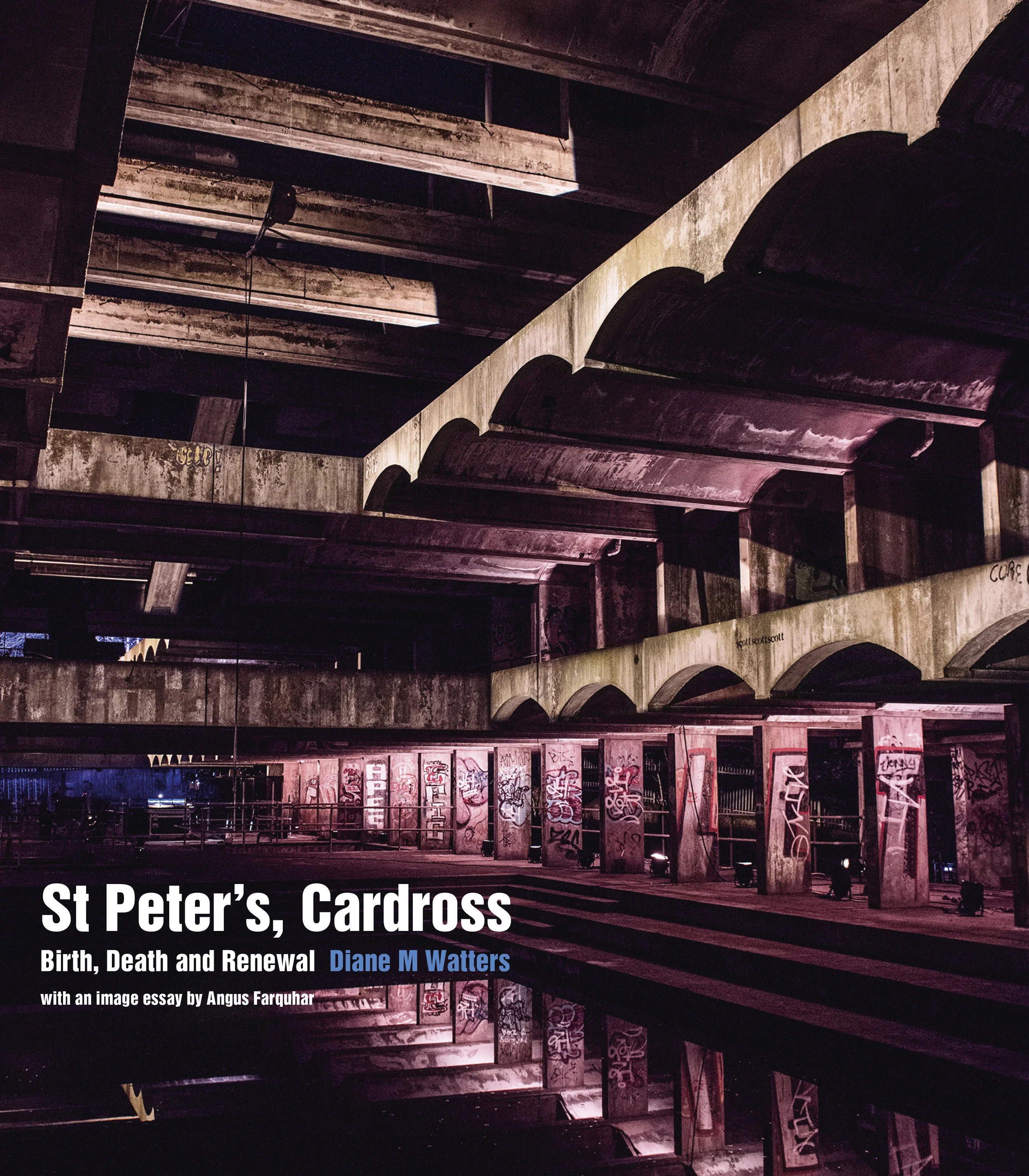
The ruins of St Peter’s College has stood on a hill above the village of Cardross in Scotland for over thirty years. Built as a seminary, St Peter’s fulfilled its original role for a mere fourteen years, from 1966 to 1979. From the beginning, the design of the building made it difficult and expensive to maintain. It was a striking example of Modernist architecture, one that would be simultaneously lauded as one of Scotland’s finest 20th century buildings and derided as one of its worst, and from the most of its abandonment developed “a mythical, cult-like status among architects, preservationists and artists.”

Today, fifty years after it opened its doors, St Peter’s College is in the process of a renovation that will allow its renewal as a cultural space, to be ready sometime in 2019. To celebrate the anniversary of St Peter’s, and to reflect on its history and its story, the architectural historian Diane M Waters has traced this story of an architectural failure which morphed into a tragic, modernist myth in St Peter’s, Cardross: Birth, Death and Renewal. Within the pages of the book, published by Historic Environment Scotland, is also an image essay by Angus Farquhar which tells the story of Hinterland, an event that was intended to re-introduce St Peter’s as a place of creativity and inspiration.

With plenty of images and illustrations to help tell the story, St Peter’s, Cardross is a fascinating look at the history of a building, and how the dynamics of the world around it have shaped its story, both as a seminary and, later, as a ruin that inspired generations of artists and dreamers. Farquhar writes, close to the end of the book, of the cleanup process at the site:

I was worried whether the site clearance would ‘ruin the ruin’. What if the powerfully desolate character which had attracted so many people to visit and make work there over the last two decades was erased? What if, in becoming safe, it would also become bland? But week by week the original lines of the building were rerevealed, showing the experimental and sculptural qualities of the design to startling effect. As it was cleared of debris a new clarity and lightness pervaded the different spaces.

In Eldena, just outside Greifswald, the University of Greifswald hold concerts, theatre performances among the ruins of the Abbey during the warmer months of the year. As well as inspiring buddy artists and photographers, who wander through the red brick ruins, it has become a place of continuing art and culture; it may have been built as an abbey, but its legacy is centuries of artistic and creative inspiration. St Peter’s, standing above Cardross, is another “beautiful ruin” of a very different time and place, but one which looks as if will become an inspiration for years to come.

SPECIAL CHRISTMAS OFFER: buy St Peter’s, Cardross now for £20 (RRP £30) with free UK P&P using the code STPETERS20. (Offer valid until 20 December 2016). Buy online here.

The Memory Band: A Fair Field

In Elsewhere No.01, published in June 2015, we spoke to the musician Stephen Cracknell  about his work and, in particular, the music he releases as The Memory Band, that “imaginary band, built inside a computer and made flesh by the contributions of numerous musicians.” We asked Stephen to be our first interviewee in the pages of Elsewhere not simply because we love the music of The Memory Band, but also because within all the recordings, there is a strong sense of landscape, history and place to be found, alongside the beguiling mix of digital sounds, acoustic instruments and traditional melodies.

The new album – A Fair Field – just released on Static Caravan Records is no exception:

The Memory Band navigate a dream landscape of fading identity, dredging up forgotten histories from old maps, half-filled diaries, government records and lists left inside magazines detailing obsolete television schedules. The music was fed by stories of magical hares and the recollections of ballad sellers bearing placards at the great fairs of times past, the fields of which now lie buried beneath leisure centres, electricity substations, and retail parks. It traces the connection between the headstone of a man killed in Norfolk by the sails of a windmill, the first observations of solar flares, incendiarism, council estates and an old man’s recollection of ploughing the land by starlight in another time.

One of the great appeals of The Memory Band is shear depth of the influences and mix of ingredients that goes into each song.  Take The Bold Grenadier, which you can listen to via the link below. This is The Memory Band’s version of a traditional tune that was arranged by Richard Rodney Bennett for the 1967 film Far from the Madding Crowd. In the spoken word introduction, we hear the voice of Vashti Vincent, who was recorded in the village of Sixpenny Handley in Dorset, England, in 1954, in which she tells the story of how her father bought a ballad about a 19th century murder at a Sheep Fair:

From the vinyl album 'A Fair Field' on Static Caravan. Our version of Richard Rodney Bennett's arrangement of a traditional tune from John Schlesinger's 1967 film version of Far From The Madding Crowd.

Stephen has written about that episode, and more on the creation of A Fair Field and the places that inspired it on Caught by the River.  A Fair Field by The Memory Band is available on Static Caravan Records. The interview with Stephen Cracknell appeared in Elsewhere No.01, which you can buy in our online shop here.


Caught by the River: An Antidote to Indifference

A personal reflection by Paul Scraton:

I can remember the moment I ‘discovered’ Caught by the River very clearly. I was sitting in a café in Berlin with my friend Paul Sullivan and we were discussing bits and pieces to do with his Slow Travel Berlin project. As we talked, he tapped on the keys of his laptop and said to me, “here, have a look at this. I think you’ll really like it…”

I made a note of this website and that evening spent some time taking a closer look. It can be hard to describe exactly what it is… a collection of writing, films, music and more, that are somehow connected and yet are eclectic enough that each visit to the website brings you into contact with something you may have never discovered otherwise. On the about page of their website they tell their story in more detail, but at its core, Caught by the River was “conceived as an online meeting place for pursuits of a distinctly non-digital variety: walking, fishing, looking, thinking. Birdsong and beer. Adventure and poetry. Life’s small pleasures, in all their many flavours. It was – and still is – about stepping out of daily routines to re-engage with nature. Finding new rhythms. Being.”

Beyond the website, Caught by the River has grown to encompass a print fanzine and books; music releases under their own Rivertones record label; appearances at festivals and events of their own, and all along they have kept their core philosophy intact. I feel extremely proud to have been published on Caught by the River, but more than that I have enjoyed being part of this community of folk who follow and support the website and that have provided me with a key link “back home” from my actual home in Germany.

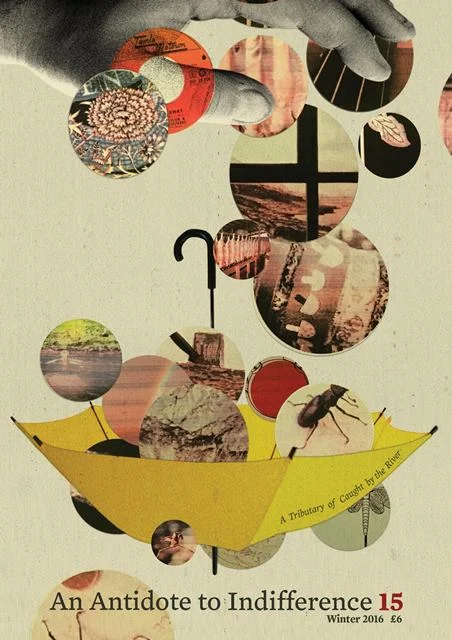
Along the way I have made friends through Caught by the River, many virtual and some in “real life.” Jeff, Andrew, Robin and Diva have also been a great support for Elsewhere from the very beginning, promoting our crowdfunding campaign, running extracts on the website and competitions through their newsletter. Last week, Caught by the River published their fifteenth edition of their print fanzine An Antidote to Indifference, which – disclaimer alert – features a piece I wrote early this year about the Magnetic North and their album Prospectof Skelmersdale.

As well as some previously published work from the website such as my essay on music and place, An Antidote to Indifference also includes original prose and poetry created especially for the fanzine. Including work from, among many other talented folk, Rob St John, Luke Turner, Melissa Harrison, Martha Sprackland and Keshia Glover, the issue has been lovingly put together by Diva Harris, strikingly designed by Louise Mason and deserves a place on the shelf or rolled up in the rucksack of anyone who, despite everything, sees this “world full of endless discovery, innovation, poetry…”

If ever we needed an antidote to indifference it is now. 

An Antidote to Indifference costs six British pounds and can be ordered directly here.

The Library: Down to the Sea in Ships by Horatio Clare

Read by: Marcel Krueger

I awoke on the ferry from Cherbourg to Rosslare from ferry dreams, getting lost while searching for the ferry port in a small Italian seaside village in my slumber. Outside the cabin window, in the violet early autumn dawn I could see the dark shape of Cornwall; St. Ives, perhaps, or Tintagel, across the calm and dark blue sea. I knew that the old ferry that I was sailing on, built in 1987 in Finland, was crossing one of the more busy shipping lanes in the Irish Sea, but of other ships, or the men manning them, there was nothing to be seen. For miles there was only the calm sea, the dark shape of the land and a few seagulls hanging over the waves.

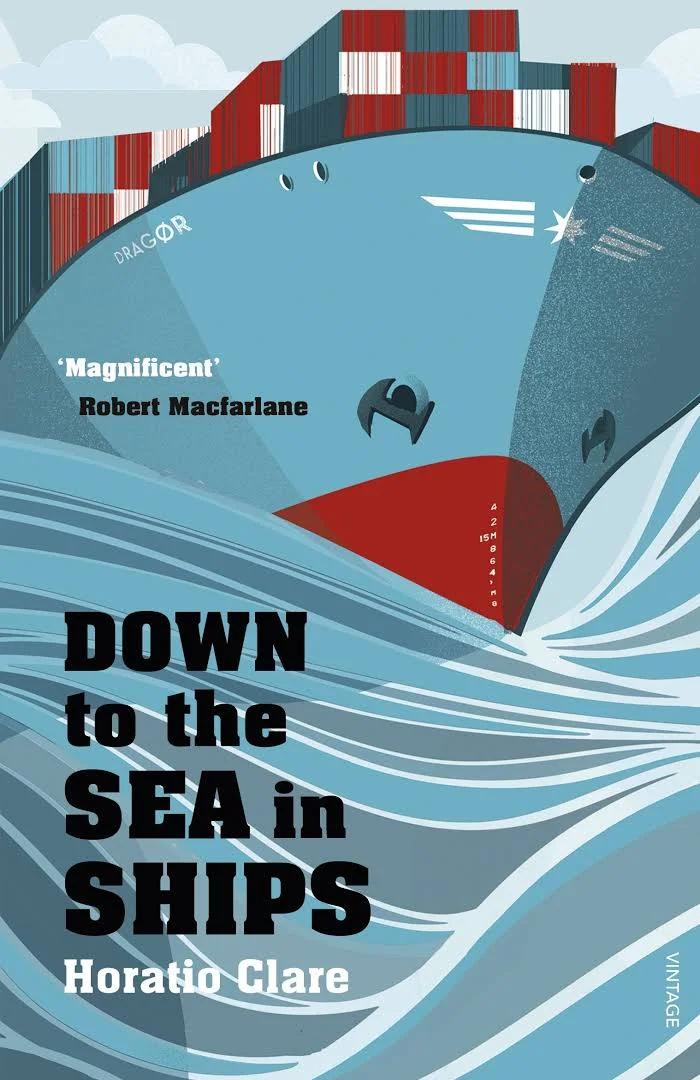
To make the world of the men and their ships – the countless trade vessels and tankers crisscrossing the world’s oceans under the authority of commerce – visible for us landlubbers is the declared intention of Horatio Clare and his book. Joining two very different container ships on their journeys from Felixstowe to Los Angeles and Antwerp to Montreal, he provides us with both a vivid portrait of modern-day sailors and their ships, and an oral history of merchant sailing and its many disasters. He first boards the Gerd Maersk, a large modern container ship sailing around half of the globe under the command of Danish officers and with a mainly Filipino crew (Filipino merchantmen make up an astonishing 75% of the world’s merchant crews) and uses the many stops and locations on the route not only to paint a picture of the daily routine on merchant ships, but also to view his contemporary surroundings through the eyes of past chroniclers of the sea and to present the history of merchant sailing.

Coleridge makes an appearance, and Hayklut, and of course there is Conrad as well. Clare talks about sea battles in the Mediterranean, about grumpy Chinese pilots and all the contents of the containers, forever unseen to the men shipping them. His second journey on board the Maersk Pembroke is quite a different one, on an old ship that does not stop anywhere between leaving the berth and reaching her destination. As Clare states, 'I wanted storms and I wanted a ship nothing like the great Gerd.' This second part of the book and its somewhat narrower setting is mostly concerned with the weather, and uses Richard Woodman's brilliant book The Real Cruel Sea as groundwork to contemplate the fight of the US and UK merchant navies against both the sea and German submarines between 1939 and 1943.

After the first few pages I became somewhat apprehensive, as here Clare seems to praise the sailors and their employer (and provider of the author’s passage on the ships), the Danish shipping giant Maersk, to the skies.  But reading on, the author does not shy away from addressing all the (for us consumers unseen) issues of modern merchant sailing: the fact that Filipino merchantmen are paid 25% less than their European counterparts purely based on their nationality, and that even today stowaways are still being set adrift, sometimes. He also speaks about the environmental influences of commercial shipping and our influence on the world's oceans, about that the ships only use the crudest of fuels when on the high seas:  

'Seen from the perspective of the deep we are alien, a quasi/Martian species inhabiting a universe of almost entirely different physical and temporal conditions. As the Gerd pounds on far above it is as if she is a spacecraft, one of many in her vastly high orbit. Now and then one gropes down, blindly, with a net. Plunder and pollution are our only contributions to the worlds under the sea.'

But this is not a mere criticism of commerce and the men keeping its containers safe for us. Clare, an acclaimed journalist and writer, manages to weave personal portraits of the ship’s officers and crews, their motivation and dreams, into a wider narrative of men at sea. With its fine observations and evocative prose, Down to the Sea in Ships is one of those rare non-fiction books that the reader can get properly lost in, despite its portrait of the reality of life at sea. In here are pirates, lost fleets on a bitter lake, hundreds of birds hitching rides on ships, and the prohibition of beer on most modern merchant vessels. The Germans have a word for such a book – a Schmöker – a huge tome that is perfect to get lost in on long rainy afternoons in armchairs. Or on ferry voyages across the Irish Sea.

Down to the Sea in Ships is published in hardcover by Chatto & Windus and in paperback by Vintage.

You can read more reviews by Marcel in all four editions of Elsewhere, available via our online shop.

Postcard from... Conakry

By Tim Woods:

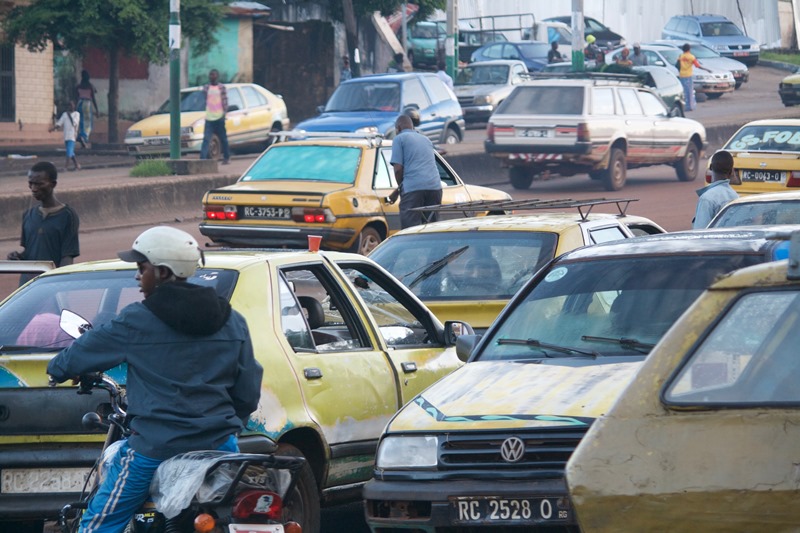
Conakry is a city with few options. Surrounded on three sides by the Atlantic, the only direction in which it can expand is inland. New apartment buildings rise rapidly in the hills to the northeast, with poorer dwellings springing up wherever there’s a gap in between. Yet the city’s heart remains in Kaloum, out on the peninsula’s furthest tip and where the main port, markets, office blocks and government ministries are found.

The result? Traffic clogs the three main highways to Kaloum from before sunrise to long after dusk. My taxi to Ratoma – barely a quarter of the way through the city’s total area – takes more than two hours; the driver’s frequent attempts at a short cut being beaten by potholes, floods or others with the same idea. 

“Traffic’s quite a problem in Conakry,” I venture.
 “Problems have solutions,” he smiles. “Here, traffic is just life.”

The Library: Yugoslavia, My Fatherland by Goran Vojnović

Read by: Paul Scraton

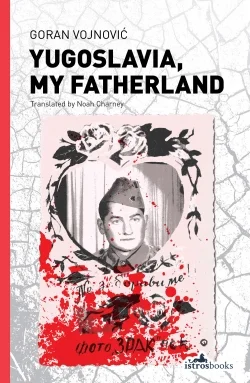
In the departure lounge of Ljubljana airport, two hours early for our flight back to Germany, I pulled a book out of my bag and start to read. Two flights and about five hours later I read the final page as the plane made the final approach to Berlin’s Tegel Airport. I had crossed the Alps and the heart of Germany, but really I had been in the countries of the former Yugoslavia, as explored through the eyes of a narrator who has discovered, sixteen years after he believed his father was dead, that in fact that this barely remembered man who was an officer in the Yugoslav People’s Army is actually alive and living in hiding, a fugitive of the Hague as a wanted war criminal. Yugoslavia, My Fatherland by Goran Vojnović tells the story of the narrator’s journey to find his father, a journey that causes him to reflect on how the disintegration of his family is tied to the disintegration of the country, and the world, that they used to call home.

I came to this book by coincidence – the man sitting next to me on my flight out to Ljubljana a week earlier was reading (in Slovenian) a book by Goran Vojnović who was then profiled (in English) in a magazine I picked up at the airport, waiting for my bags to appear. I have long been interested in the history of the former Yugoslavia; ever since I was a student in Leeds starting out my degree only two years after the Dayton Peace Accords had brought to an end the conflict in Bosnia and Herzegovina that had played out on our teatime television screens throughout my teenage years. Reading about Yugoslavia, My Fatherland in the magazine was what led me to a book described by the English publishers as a work that “deals intimately with the tragic fates of the people who managed to avoid the bombs, but were unable to escape the war.”

Goran Vojnović was born in Slovenia in 1980 and is a well-respected director and screenwriter as well as being a bestselling novelist. I would love to speak to him at some point about how much of the background of his protagonist – school experiences in Ljubljana in the 1990s for instance – reflect his own, as the power of this novel is in how Vojnović manages to explore the break-up of Yugoslavia from the multitude of perspectives in the different parts of the former Federal Republic, allowing all voices to have their say without, it seems to me, judgement or bias one way or the other. One of the finest scenes in the book is when his new classmate in Ljubljana, where the teenage narrator has moved with his mother from Pula, Croatia via Belgrade and Novi Sad, explains what is happening in Yugoslavia via the nationalities of the other children in the class.

Throughout the book the narrator remembers the slow collapse of the world of his childhood through remembered scenes in apartments, the tone of the newsreaders on the evening television and the atmosphere in Ljubljana where he lives but never quite feels at home. The other strand of the story is of course the present-day search for his father, and the impact of the knowledge of the crimes he is alleged to have committed in a village in Slavonia. The story is told in a matter-of-fact, sometimes humorous tone, and Vojnović certainly has a flair for set-piece scenes, both in the description and the dialogue, but what is most impressive is how the battle of ideas that reflects battles taking place elsewhere in real life, and the complexity of personal identities both in the time of the disintegration of Yugoslavia and today, are told through the multitude of characters who appear in the book. This is impressive writing, and one of the best tellings of the Yugoslavia story that I have read.

This is a novel about place, about memory, and about how the world of our childhood can be destroyed so that it no longer exists, even if it remains a name on a map. Along the way it deals with a number of signifiers of home and belonging, from the behaviour of guests at a wedding to the differences in language, not only between the Slovene his mother insists on using when they move to Ljubljana and the Serbo-Croatian that has been the family language up to that point, but the differences within the latter, when his Bosnian classmates make fun of the narrator as he speaks the Italian-tinged version of his childhood home on the coast.

Goran Vojnović tells this story in relatively straightforward language, but the more you read the more you realise how complex the novel is as it creates this portrait of a disintegrating country through the personal story of a disintegrating family. It is a reminder of the power of literature, and of fiction, to help us come to the essential truth of history and its impact on people. Much credit must go to the translator Noah Charney and the publishers Istros Books for bringing it to an English-speaking audience as this is an important and powerful book, and one which deserves to be read as widely as possible.

Yugoslavia, My Fatherland by Goran Vojnović, translated by Noah Charney, is available via the publishers, Istros Books.