

Kolkata and its Nobel Legacy: A Palimpsest Scripted in Time
/
By Neelakshi Ghosh
Since my late twenties, when I moved out of hometown, Kolkata (erstwhile Calcutta), there has always been a longing, as Maya Angelou would say, ‘to be at home, wherever I find myself’. The various cities in England, dotting my career journey, almost always fulfilled that longing: the blend of spices on a ‘curry night’, the ‘uncomfortably comfortable’ shared legacy of museum artefacts, and in the chance finding of commonality in language, within the diverse milieu of its national health service. As I was planning my weekend getaway to Sweden and Norway, I felt it would be far-fetched to look for home in Scandinavia; to the best of my knowledge, the Viking ships never sailed round the Cape of Good Hope, as their mainland European counterparts did. But I found my hometown, in my very first touristic sojourn on arrival in Stockholm. Climbing up the steps of the Svenska Akademien, in celebration of those who had conferred the greatest benefit to humankind, I found Kolkata, past and present intertwining, much like a palimpsest; memorialising the legacy of six Nobel laureates.
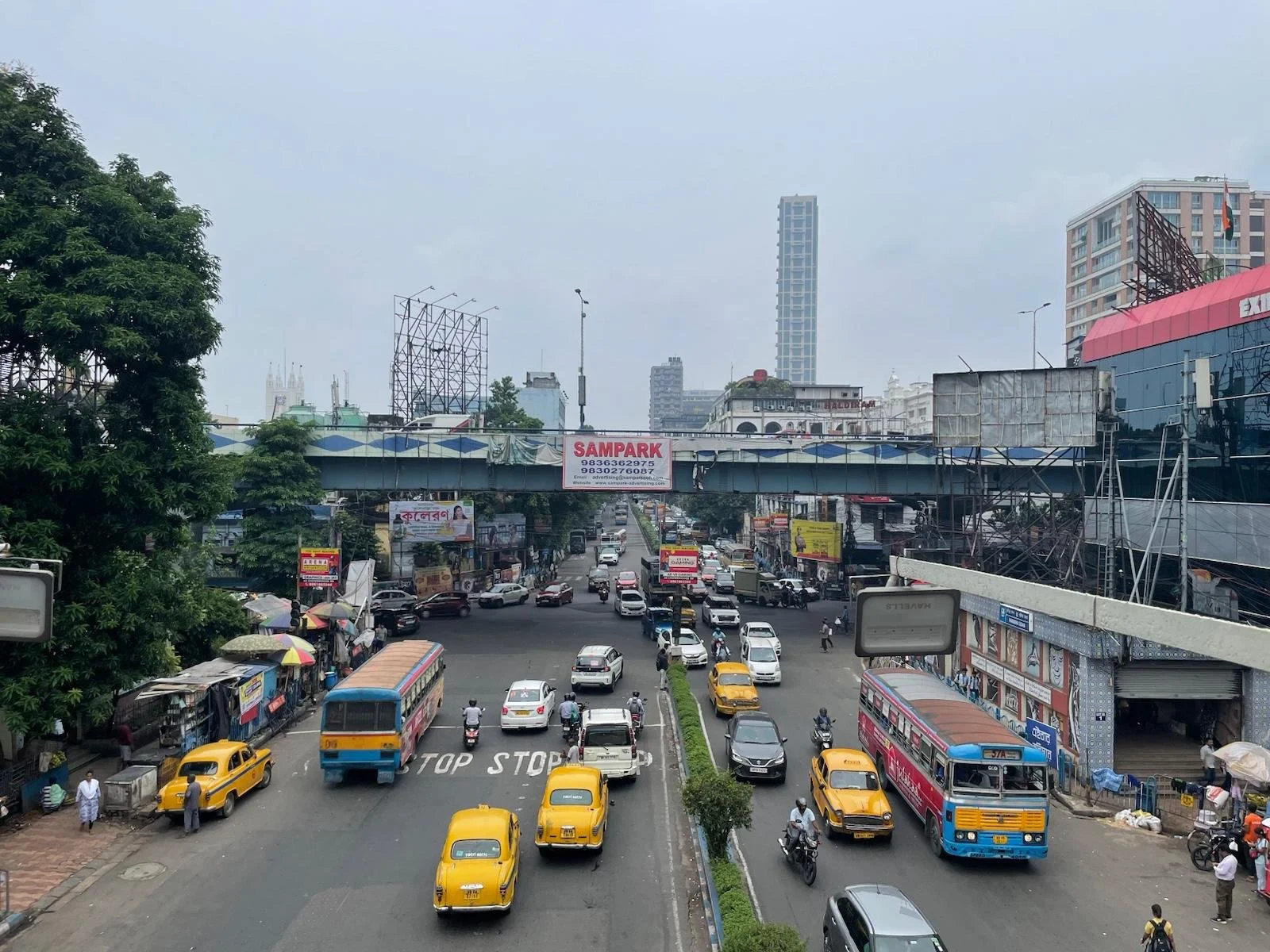
For a city like Kolkata, once you unravel the layers of summer dust, the monsoon downpour and the winter smog, you would be surprised at this feat. A fortified riverine port, built by the East India Company in the late 18th century, Calcutta lost its status of capital city (of British India) to the historical grandiosity of Delhi. Its left-wing state politics always put its citizens in opposition to the national narrative. The city heaves underneath teeming millions: its own and many others who took refuge from the political turmoil of neighbouring Bangladesh, and from the rising sea level threatening the surrounding Gangetic delta. Yet at times, Kolkata emerged, paradoxically, at the cross-roads of the journeys of poets, saints, scientists and statisticians, strong enough to nurture them all.
The cobbled heart of Stockholm old town was a sharp contrast to the bustling roundabout in central Kolkata, where stands Presidency General Hospital - one of the oldest medical facilities from colonial India. One would almost miss the twin pillars, now painted in drab, municipal blue, at the northern perimeter of the campus; it bears a plaque, within a palimpsest of political graffiti, declaring, ‘In this laboratory Surgeon Major Ronald Ross I.M.S. in 1898 made the great discovery that malaria is conveyed by the bite of a mosquito’. Ronald Ross received the Nobel Prize for Physiology/Medicine in 1902, making him Kolkata’s very first Nobel Laureate, besides also being the first Briton to win the prize. No wonder the city’s earliest years were marked by colonial ambition, as the British sought to inscribe their power in the subcontinent, while the fledgling city, with its tropical humidity and the almost mythical vitality of its inhabitants, continued to tussle with the might of an empire. Malaria occupies a unique place in human history, affecting our neolithic ancestors and accounting for up to five percent of all human deaths every year. As Ross had himself written, ‘with tears and toiling breath, I find thy cunning seeds, O million-murdering death’. His discovery of the life cycle of the malarial parasite paved the way for one of the greatest medical inventions of the 21st century – the malaria vaccine.
As I stared at the glistening blue of the Baltic Sea, layering my archipelago boat tour, I knew this wasn’t just a passive glitter, but a living language of dancing light particles, whispering stories too subtle to hear. It is the story of C.V. Raman; a story heard from my physicist father, standing next to a marble bust in the University of Calcutta. Raman, with scraps of colonial neglect - dusty lenses, stopwatches, and quartz filters - showed how the scattering of light rays makes the colourless ripples of the sea look blue to the ordinary eye. As the first non-European to win the Nobel Prize in Physics in 1930, C.V. Raman illuminated a path for India and for science, proving that truth could be found not just in Western innovation, but in the quiet resolve of minds that dared to ask questions. Kolkata attempted to write over its colonial history with the vernacular, the indigenous pulse of Bengali life, reaffirming its rootedness in intellect and innovation, the ripples of which would be felt for years to come.
Crossing borders – lines drawn in sand and sea – even with the most legitimate of documents, is always daunting. This is where I least expect a human connection; yet the immigration officer, on my entry to Oslo, sitting on his high chair inside the glass booth, joined the dots between my tropical hometown and the Scandinavian cities. ‘Ah, you were born in the city of Mother Teresa!’ he exclaimed. Across the barrier, together we relived the image of the diminutive woman, draped in blue and white; her frail hands touching the most impoverished and forgotten members of society, her Missionaries of Charity serving as an altar to them. In 1979, the Nobel Peace Prize recognised Mother Teresa’s boundless compassion, but Calcutta had already named her its saint. A city that cares remains etched as my birthplace on my travel document, while a palimpsest of rubber stamps, from a million journeys across borders, validated my belonging elsewhere.
Back in the building of Svenska Akademien, which houses the Nobel Prize Museum, Kolkata’s palimpsest unfolds as a collective memory, where empire, resistance, nostalgia and hope coexist. The artefacts breathe more than history: the display of names and commendations ushering in a silence of reverence and trembling, at the edge of discovery. Amartya Sen and Abhijit Banerjee, both alumni of Presidency College in Kolkata at a time when the city’s institutions were dismantling the legacies of their colonial past, were recipients of the prize in Economic Science, in 1998 and 2019. The display of Sen’s bicycle, a ride that brought him closer to the communities in rural Bengal, and Banerjee’s textile tote bags, woven by the village women, speaks of their relentless pursuit for economic and social justice.
But my true claim to finding home amidst these medallions was in the museum shop: a copy of Gitanjali on the shelves – the book of ‘song offerings’ - its verses, soaked in devotion and melancholy, written in the Bengali language and translated into English by Rabindranath Tagore. Tagore, the first non-European to win the Nobel prize for literature in 1913, and in any discipline, acknowledged his prize with the words - ‘thou hast brought the distant near and made a brother of the stranger’ – steering Kolkata from underneath the colonial shadow and onto the path of globalisation. As a Bengali and an Indian, I grew up with Tagore: through his prose and poetry in the school curriculum and beyond, his songs and lyrics defining every emotion in life, and in the pride in singing the national anthem of independent India. Tagore’s Nobel Prize was not merely his—it belonged to a language, its people and a nation awakening in freedom. Gitanjali celebrates the sovereignty of reasoning – fearless reasoning in thoughts and actions - that, if relived in today’s fragmented world, would still lead the way for the greatest benefit of humankind. And even with the continued attempt at having all history ‘scraped clean and reinscribed as often as was necessary’ (George Orwell), the palimpsest of the Nobel legacy - of individuals, who dared to dream differently and valiantly dream beyond borders - will allow everyone to truly have a home where they find it.
Neelakshi is a paediatric doctor, born in India and currently living in London, working for the NHS. Stories were all that she could carry with her as a career migrant - unchecked through customs and not limited by airline baggage allowance. These stories about people, places and of a life, that celebrates the diversity, kept her connected to her roots back in India, and helped her build ‘a home away from home’ here in the UK.