
A82
/
By Fiona M Jones
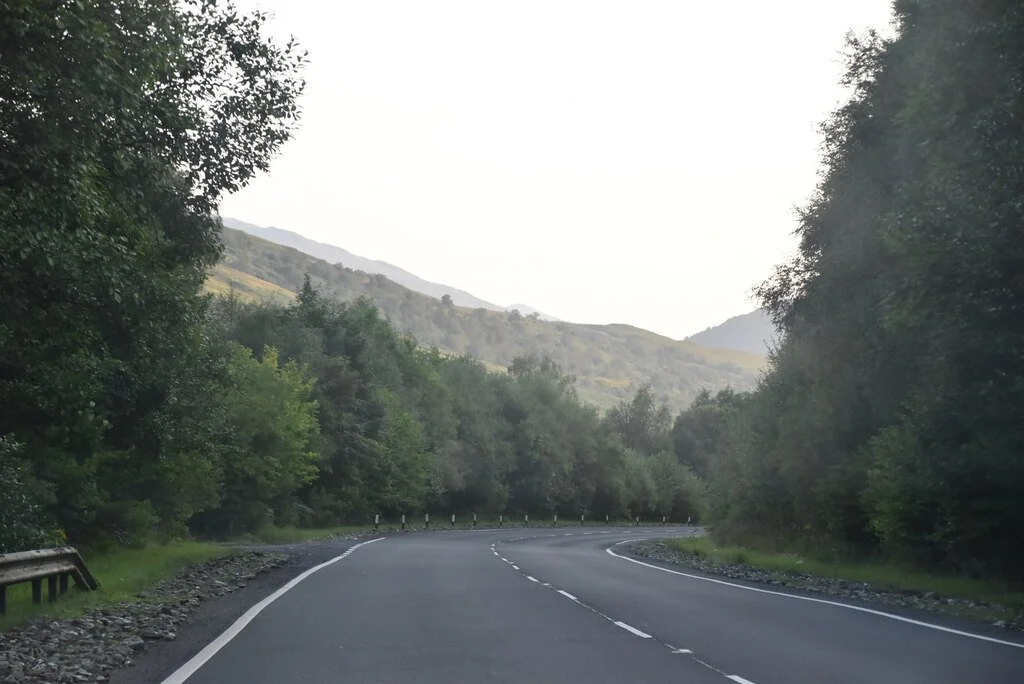
The snowgates open in spring, giving access across the Highlands towards Fort William. The road takes long, gradual uphills, and then mile follows long-curving mile, sometimes near the valley floor, sometimes hugging the steep rocky slopes that disappear most days into a low grey sky heavy with moisture. White threads of water punctuate darkness of heather; streaks of whiter snow still grip the northern faces. You are seasonal like a migratory bird, passing through this place in its gentler times, cautious even now for flash flood or rockfall, aware that today’s story only stands until tomorrow’s elements overwrite it.
The land still marks its tectonic birth—its ancient vulcanism and folding of Earth’s crust into ridge after mountainous ridge, higher by far than the heights we gaze at today.
These mountains remember best their centuries and millennia under ice, when the young landscape, cracked and scoured by a long-impacted mix of snow and rock, hollowed into wide U-shaped valleys and narrowing peaks.
This place records the halting recession of ice in its lochans and moraines, and tells more recent tales of gullying water and sliding scree: the yearly advance of sparse plant cover followed by wilder weather that reopens peak and slope to grey crumbling ground.
These highlands will remember us for only as long as the road runs with traffic and our small far-flung buildings encroach. A very short stretch of decades would undermine our careful structures or obliterate them under rockfall; and this landscape would brood once more over its long slow ages of ice and water.
Fiona M Jones writes short dark fiction, nature-themed CNF and sometimes poetry. Her work is published in literary magazines and anthologies everywhere except Antarctica, and most of it sits somewhere here: https://fionamjones.wordpress.com/